WorldParticle AI Model Aims to Be the GPT Moment for Scientific Simulation by Unifying Physics Across Materials and Scales

Researchers from the Massachusetts Institute of Technology (MIT), the University of British Columbia (UBC), and a consortium of global institutions have unveiled a groundbreaking artificial intelligence framework known as WorldParticle. Designed to function as a universal foundation model for physics, WorldParticle is capable of simulating everything from the granular behavior of shifting sand dunes to the complex folding dynamics of protein molecules. By bypassing traditional rule-based coding and instead learning the underlying physical dynamics of matter directly from particle movements, the system represents a significant leap forward in computer graphics, scientific modeling, and artificial intelligence.
The development team, whose research is slated for formal presentation at the upcoming ACM SIGGRAPH Conference and Exhibition on Computer Graphics and Interactive Techniques in Asia, envisions the framework as a foundational milestone. Their ultimate objective is to trigger what they describe as a "GPT moment" for numerical simulation, moving the scientific community away from custom-coded, single-purpose software toward a versatile, out-of-the-box model capable of adapting to entirely unencountered physical scenarios.
Main Facts and Core Architecture of WorldParticle
At its mathematical and computational core, WorldParticle operates by breaking down any simulated object or substance into thousands or even millions of tiny, three-dimensional spatial coordinates referred to as particles. This methodological approach relies on a Lagrangian representation, which tracks the individual trajectories, velocities, and properties of these particles continuously across space and time.
Traditionally, scientific simulations require researchers to manually define the governing differential equations that dictate how a specific material—such as water, steel, soft tissue, or powder—behaves under various forces. These complex equations must then be translated into discrete numerical algorithms that specialized solvers can compute. Because every material regime follows different physical laws, scientists have historically relied on entirely separate software pipelines to study fluids, rigid bodies, and deformable objects.
WorldParticle eliminates this fragmented approach. Rather than programming an equation into the system, the researchers trained a specialized deep neural network to learn the universal mechanics of motion and interaction directly from data. Much like how large language models predict the next word in a sequence of text to generate human-like prose, WorldParticle predicts the sequential physical states of a system one time-step at a time. The model ingests the initial three-dimensional positions and intrinsic physical properties of the particles, evaluates external forces acting upon them, and outputs their updated configurations for subsequent frames.
To ensure high fidelity when dealing with external physical disturbances—such as a massive ocean wave crashing against a rigid concrete seawall—the architecture employs a modular separation strategy. Before calculating a simulation step, the system isolates external impulse forces from the internal state of the material. Once the baseline particle movements are predicted, the model integrates the external forces back into the environment, dynamically adjusting its predictions based on how those forces alter the object’s physical integrity. This decoupling and recoupling mechanism allows the AI to generalize seamlessly to novel materials, changing environmental parameters, and extreme force profiles that were never explicitly introduced during its training phase.
Overcoming Computational Bottlenecks Through Scalability Engineering
One of the most persistent hurdles in particle-based simulation has been the immense computational overhead associated with tracking millions of individual points. As the scale of a simulated environment increases, the memory and processing requirements quickly overwhelm standard hardware architectures, causing computational bottlenecks that restrict the complexity of the models.
To address this limitation, the research team engineered an advanced particle-merging and compression technique. This algorithm intelligently groups and compacts particles in regions where ultra-fine spatial resolution is less critical, while retaining dense particle fidelity in areas undergoing intense mechanical stress, deformation, or interaction. According to lead engineers on the project, achieving true generalizability required extensive architectural modifications and fine-tuning to ensure the framework remained scalable across diverse hardware environments without sacrificing numerical accuracy.
Chronology and Collaborative Development
The genesis of the WorldParticle framework stems from years of collaborative research bridging computational physics, machine learning, and computer graphics. The initiative was spearheaded by a multidisciplinary team led by Peter Yichen Chen, a former MIT postdoctoral researcher now serving as an assistant professor at the University of British Columbia, alongside Minghao Guo, an MIT postdoctoral researcher and co-lead author.
The core research group also includes UBC graduate students and co-lead authors Caoliwen Wang and Siyuan Chen, as well as Wojciech Matusik, a professor of electrical engineering and computer science at MIT who directs the Computational Design and Fabrication Group within MIT’s Computer Science and Artificial Intelligence Laboratory (CSAIL). The broader collaborative effort integrated researchers from prestigious institutions worldwide, including Georgia Tech, Inria, Meta, the University of Pennsylvania, the University of Utah, the University of California at Los Angeles (UCLA), and the University of Hong Kong.
The formal dissemination of the research began with the release of the open-access technical paper on arXiv, laying the groundwork for the upcoming debut at ACM SIGGRAPH Asia. The timeline reflects an accelerating trend within the scientific community to apply generative artificial intelligence and world models—systems originally engineered to predict environmental dynamics for robotics and video generation—to rigorous scientific domains.
Comparative Performance Data and Empirical Results
To validate the efficacy and versatility of WorldParticle, the researchers tested the framework across six distinct physical regimes, comparing its performance against established numerical simulation baselines. The tested scenarios included granular materials, complex deformable objects, fluids, and molecular structures.
The empirical results demonstrated notable improvements in both computational speed and physical realism. In simulations involving granular substances, such as collapsing sand piles, traditional numerical methods frequently suffered from artifacts, occasionally leaving particles spuriously floating in mid-air due to numerical instability. WorldParticle, by contrast, accurately modeled the continuous frictional interactions and cascading geometry of the collapsing granular medium without generating anomalous physical artifacts.
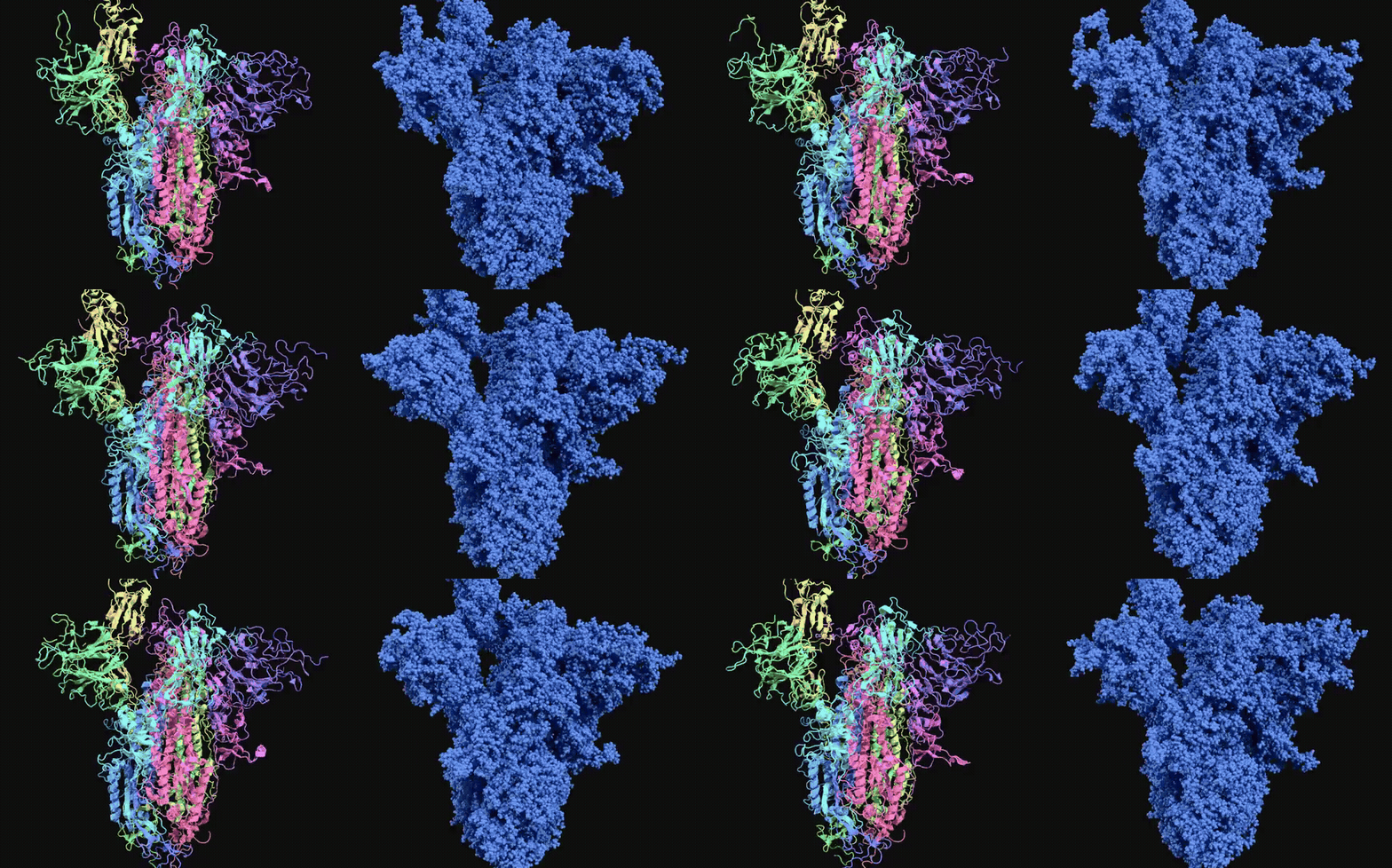
In the realm of biochemistry, the model exhibited extraordinary performance advantages. When tasked with simulating the time-dependent structural changes of protein molecules, WorldParticle completed the simulations approximately 100 times faster than conventional numerical solvers while maintaining high structural precision. This dramatic acceleration opens new avenues for structural biology, where researchers routinely simulate millions of molecular conformations to understand disease mechanisms and engineer novel therapeutics.
Official Statements and Researcher Perspectives
The implications of transitioning from fragmented, equation-based simulation software to unified AI foundation models are profound, according to the project’s principal investigators.
“We want to have a GPT moment for simulation,” stated Peter Yichen Chen, co-corresponding author of the study. “Every time people want to build a simulator for a particular physical phenomenon, they need to code it up from scratch. Our vision is to have a foundation model that works out of the box for any scenario you want to simulate. This is a first step in that direction.”
By unifying disparate physical regimes into a single computational architecture, scientists gain the unprecedented ability to model interactions that cross traditional disciplinary boundaries. Minghao Guo, co-lead author and MIT postdoc, highlighted the cross-domain potential of this integration: “If you study deformable objects and fluids, you would need two simulators—one for each physical regime. But if you unify them into one model, maybe you could couple the physics of these two processes and gain insights into new problems?”
Furthermore, the researchers emphasize that the framework’s ability to learn underlying dynamics rather than relying on hardcoded constraints positions it as an exploratory engine for unobserved phenomena. Rather than merely confirming known physical laws, foundation models of this caliber may eventually assist researchers in identifying anomalies, formulating new hypotheses, and characterizing complex physical systems that defy traditional analytical mathematics.
Broader Impacts, Implications, and Future Horizons
The introduction of WorldParticle arrives at a critical juncture for both industrial engineering and fundamental scientific research. By providing a general-purpose simulation framework, the technology holds the potential to streamline workflows across multiple high-tech sectors.
In robotics, engineers developing soft grippers and autonomous systems designed to interact with delicate or deforming environments often struggle to simulate contact physics accurately in real-time. A unified particle model could allow soft robots to learn manipulation tasks safely within high-fidelity virtual environments before deployment in the physical world.
In the life sciences, extending the model beyond structural proteins to encompass RNA evolution, cellular mechanics, and metabolic pathways could dramatically accelerate drug discovery and synthetic biology. Similarly, astrophysicists examining macroscopic phenomena—such as gravitational interactions, stellar collisions, and galactic mergers—frequently rely on distinct hydrodynamic codes that could theoretically be unified under a generalized particle-based machine learning paradigm.
Looking ahead, the research team plans to aggressively expand the capabilities of WorldParticle. Future development phases will focus on scaling the architecture to handle even larger particle counts, incorporating multi-scale physical interactions, and refining the model for domain-specific scientific applications. Ultimately, the authors view this initiative as the foundational architecture for an all-encompassing simulation pipeline dedicated to accelerating human scientific discovery.
“We see the unification of computation and science giving us new insights and tools to discover physical phenomena or explain some unexplainable physical phenomena,” Guo concluded. “With a unified model, we could unlock many discoveries that we can’t even imagine.”