The Evolution of Agentic AI Architecture: From Orchestrated Loops to Intelligent Swarms by Mid-2026

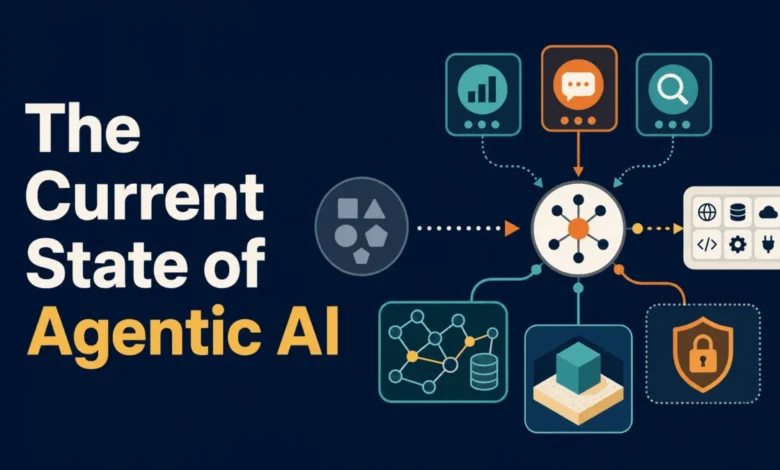
The landscape of artificial intelligence agent architecture has undergone a profound transformation by mid-2026, marking a significant departure from the rudimentary, orchestrated reasoning loops that dominated the field just a year prior. This evolution is characterized by the ascendance of multi-agent swarms, a shift towards native reasoning capabilities within foundation models, and the critical standardization of tool protocols through the Model Context Protocol (MCP). These developments are reshaping how AI systems are designed, deployed, and integrated, moving the focus from intricate prompt engineering to the sophisticated orchestration of specialized AI entities.
The Paradigm Shift: From Brute-Force Orchestration to Native Intelligence
In the not-too-distant past, the construction of AI agents was largely defined by brute-force orchestration. Engineers meticulously hand-crafted complex reasoning and acting (ReAct) loops, wrestling with brittle prompt chains, and attempting to push single, monolithic language models to simultaneously manage planning, tool execution, and context. This approach, while foundational, proved to be inefficient and prone to failure, particularly as the complexity of tasks increased. The era of the all-encompassing, do-it-all agent is now clearly waning.
Mid-2026 sees a more fractured and specialized ecosystem. Foundation models have begun to integrate "System 2" thinking – more deliberate, analytical reasoning – directly into their core architectures. This has fundamentally altered the role of the AI engineer. Instead of painstakingly prompting agents to perform complex cognitive tasks, engineers are now tasked with designing the underlying infrastructure that enables these specialized agents to communicate and collaborate effectively. The focus has shifted from coaxing individual models to perform multifaceted tasks to orchestrating a symphony of smaller, purpose-built AI agents.
1. Deconstructing Reasoning: Transitioning Away from External Orchestration Loops
One of the most dramatic changes has occurred at the core of how AI agents process information and make decisions. Previously, established patterns like "Plan-and-Execute" and "Reflexion" relied heavily on external code to simulate a step-by-step thought process. This involved forcing a model to think, critique its own output, and iterate until a satisfactory result was achieved. While effective for certain applications, these external loops introduced significant latency and token overhead, as the system simulated cognitive processes that could, in principle, be handled natively.
The current generation of foundation models, by mid-2026, are capable of native test-time computation. They can now generate hidden reasoning tokens, explore multiple solution branches internally, and self-correct before presenting a final output. This inherent capability renders much of the previously essential scaffolding for simulating reflection redundant. For AI architects, this means a reduced need for complex orchestration frameworks designed solely to enable planning or reflection. Frameworks like LangChain and LlamaIndex, while still valuable for many purposes, are no longer the primary tools for forcing models to introspect and correct errors.
The contemporary architecture delegates these cognitive loops to the models themselves. The responsibility of the external orchestration layer is now refined to focus on crucial system-level functions: efficient routing of tasks, robust state management across distributed agents, and seamless environment execution. By offloading the cognitive burden to the AI models, engineering efforts can be redirected towards more strategic challenges, particularly the decomposition of complex work across multiple, specialized agents. This shift liberates developers to invest in building the intelligent "sandbox" in which these advanced agents operate, rather than micromanaging their internal thought processes.
2. The Rise of Agent Swarms: Specialization as a Strategic Imperative
With individual agents now capable of sophisticated internal reasoning, the critical question facing production teams has become: what should a single agent be responsible for? The emergent consensus points towards extreme specialization – assigning as little as possible to any single agent. The previous model of attaching dozens of tools to a single, large language model created significant bottlenecks. This led to the widespread adoption of agentic swarms, a paradigm that leverages collections of smaller, highly specialized agents communicating via standardized protocols.
Instead of a monolithic agent burdened with numerous functionalities, modern systems are architected as a network of microservices, each performing a distinct, focused task. For instance, a single complex query might be handled by a swarm comprising:
- A Triage Agent: Responsible for understanding the user’s intent and routing the request to the most appropriate specialist.
- A Data Fetching Agent: Exclusively tasked with querying databases or APIs to retrieve raw information.
- A Data Analysis Agent: Designed to process and interpret retrieved data, identifying patterns and generating insights.
- A Report Generation Agent: Focused on synthesizing findings into a coherent and user-friendly report.
While this might seem like a mere redistribution of complexity, the key insight is that this distributed complexity becomes manageable, testable, and replaceable. Each specialized agent can be optimized independently, allowing for the use of smaller, more cost-effective models for specific tasks while reserving larger, more powerful models for critical routing and synthesis functions. This modularity fosters agility, enabling rapid iteration and easier debugging.
A basic swarm pattern often involves a designated "triage" agent that acts as the initial entry point. This agent, equipped with tools to identify the nature of a request, can then dispatch it to a specialist agent. For example, if a user asks about Q2 churn rate correlation with support ticket volume, the triage agent might identify the need for database queries and subsequent analysis. It would then delegate the data retrieval to a "Data Fetcher" agent, which in turn, after executing read-only SQL queries, might use a TransferCommand tool to hand off the fetched data and context to an "Data Analyst" agent. This analyst agent, proficient in tools like Python’s pandas, would then perform the necessary calculations and generate insights.
This pattern emphasizes statelessness at the individual agent level per invocation, but statefulness across the system as a whole. This separation of concerns is crucial for efficiency and scalability. It allows for leaner context windows for individual agents, reducing computational cost and latency. The handoff mechanism, facilitated by specialized "transfer" tools, ensures that control and relevant data are passed seamlessly between agents, maintaining the integrity of the overall task execution.
3. The Universal Translator: Standardization via Model Context Protocol (MCP)
Connecting these specialized agents to the vast array of real-world systems and data sources that users interact with has historically been a significant hurdle. The integration of APIs, a process previously requiring custom schema writing, intricate HTTP request handling, and the often-frustrating parsing of arbitrary JSON errors, has been a source of considerable friction. Each new integration demanded a significant engineering effort, essentially reinventing the same foundational integration wheel.
The current state of tool calling, as of mid-2026, is increasingly defined by the Model Context Protocol (MCP). This open standard has emerged as a universal adapter, bridging the gap between AI models and both local and remote data sources. MCP fundamentally simplifies the integration process by providing a standardized interface.
| Old Paradigm (Pre-2025) | Current State (Mid-2026) |
|---|---|
| Hardcoded API keys directly into agent environments. | Agents connect to an isolated MCP server for secure access. |
| Engineers wrote custom JSON schemas for every tool. | MCP servers automatically expose available tools and resources. |
| Agents directly executed API calls inline. | Execution occurs on the MCP server, separating concerns. |
This standardization revolutionizes how agent swarms interact with external systems. Teams can now integrate pre-built GitHub MCP servers, Slack MCP servers, or PostgreSQL MCP servers into their swarms without needing to write extensive, custom API wrappers for each. While robust credential management on the server-side remains a critical security consideration, the overall integration surface area has been dramatically reduced, accelerating development cycles and improving system robustness. The implications are far-reaching, enabling faster deployment of AI agents in complex enterprise environments that rely on diverse software ecosystems.
4. Building Persistent Memory: The Power of Memory Graphs
A significant promise of agentic AI, articulated in earlier roadmaps, was the development of agents capable of learning from their own execution history. This aspiration is now materializing in production systems through the implementation of memory graphs. The distinction between per-call statelessness and system-level memory is crucial here. While individual agents remain stateless for each invocation, ensuring lean context windows, the overall system maintains persistent memory through graph databases like Neo4j or other managed alternatives.
This persistent memory is often injected directly into the agent’s context pipeline. During swarm execution, a specialized "Memory Agent" operates asynchronously in the background. Its sole purpose is to analyze the main swarm’s trajectory, extract salient facts, and systematically update the memory graph. This process allows the AI system to learn and adapt over time without requiring constant fine-tuning of the underlying foundation models.
The practical implementation of memory graphs typically involves several steps:
- Trajectory Analysis: The Memory Agent continuously monitors the execution path of the primary swarm.
- Fact Extraction: It identifies and extracts key pieces of information or insights generated during the swarm’s operation.
- Graph Update: These extracted facts are then used to update a graph database, creating persistent relationships and knowledge structures.
- Contextual Augmentation: For future tasks, relevant information from the memory graph can be retrieved and injected into the context of the swarm, enriching its understanding and improving decision-making.
This approach represents a fundamental shift from prompt engineering to "context engineering." By meticulously managing and augmenting the context provided to agents, systems can compound knowledge and improve performance incrementally, fostering a more intelligent and adaptive AI architecture. This continuous learning mechanism is particularly valuable in dynamic environments where data and operational contexts evolve rapidly.
5. Navigating the Expanded Attack Surface: Security in Swarm Architectures
The proliferation of multi-agent systems connected via universal protocols has, inevitably, expanded the attack surface. Concerns regarding indirect prompt injections, which can hijack automated workflows, have intensified. The swarm architecture, while offering significant advantages, can structurally exacerbate these threats.
The danger lies in the very mechanism that makes swarms powerful: the ability for one agent to transfer context and control to another. When Agent A, which might have access to sensitive external data sources like emails, can pass control to Agent B, which possesses database access, a malicious instruction embedded within an email could potentially pivot laterally through the entire swarm. This mirrors traditional network intrusion patterns, where a vulnerability in one system can be exploited to gain access to others. The handoff mechanism, essential for swarm functionality, also becomes a critical vulnerability point.
In response to these escalating threats, several defensive strategies are emerging as crucial for enterprise adoption:
- Runtime Sanity Checks: Implementing robust checks at agent handoff points to validate the intent and content of transferred information, preventing malicious instructions from propagating.
- Least Privilege Principle: Ensuring that each agent operates with the minimum necessary permissions, thereby limiting the potential damage if compromised.
- Output Filtering and Validation: Employing specialized agents or mechanisms to scrutinize the outputs of other agents before they are acted upon or presented to users, acting as a final layer of defense.
While these defenses are not yet universally standardized, they represent the active frontier in production agentic security. Any organization deploying swarms into production environments must consider at least one of these strategies as a foundational security requirement. The implications for businesses are profound, as robust security measures are paramount for building trust and ensuring the safe, scalable operation of sophisticated AI systems.
The Path Forward: From Curiosity to Engineering Discipline
Agentic AI has definitively transitioned from a research curiosity to a mature engineering discipline. This evolution is marked by real constraints, identifiable failure modes, and critical design decisions that span every layer of the AI architecture. The foundational primitives—tool calling, intelligent routing, and native reasoning—are rapidly maturing, laying the groundwork for more sophisticated systems.
The primary leverage for innovation now resides in the systems layer. This includes the intricate design of swarm topologies, the architecture of memory systems that enable continuous knowledge compounding, and the establishment of robust security boundaries that permit safe operation at scale. The teams excelling in this domain are not solely pursuing smarter individual agents; they are focused on constructing more resilient, specialized, and secure swarms.
For organizations embarking on new agentic AI projects, the recommendation is clear: select a proven architectural pattern, implement it at a manageable scale, and instrument it meticulously for monitoring and analysis. The architectural intuitions developed through building and operating a three-agent swarm are directly transferable to orchestrating systems with dozens, or even hundreds, of specialized agents. This iterative, systems-centric approach is paving the way for a new generation of intelligent, collaborative AI that will redefine the capabilities of automated systems across industries.
Related posts: