The Great Jewelry Transfer: Navigating the Trillion-Dollar Legacy Hidden in Heirloom Collections

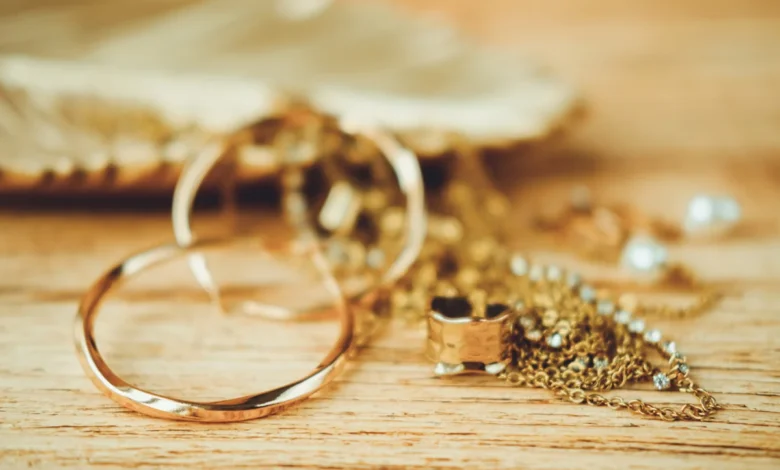
When financial planners and economists discuss the Great Wealth Transfer—the massive intergenerational handoff of assets currently underway—the discourse is almost exclusively dominated by paper wealth. Retirement accounts, brokerage portfolios, real estate holdings, and private business interests are the standard units of measure for this monumental transition. Yet, hidden beneath these balance sheets lies a secondary, often overlooked, layer of wealth: the vast, decentralized repository of precious metals, gemstones, and horological assets stored in residential safes and jewelry boxes worldwide.
Estimates from Cerulli Associates suggest that approximately $124 trillion will change hands by 2048, with $105 trillion flowing directly to heirs. While the majority of this sum is held in traditional financial instruments, a significant, non-trivial portion exists as physical, tangible property. It is estimated that nearly half of all gold ever mined throughout human history remains in circulation today in the form of jewelry. As baby boomers—the wealthiest generation in history—begin to pass their estates to millennials and Gen Z, the world is not merely witnessing a transfer of capital; it is witnessing the onset of the Great Jewelry Transfer.
The Complexity of Tangible Inheritance
Unlike a public equity portfolio, which comes with clear tax documents, performance histories, and current market valuations, inherited jewelry is often shrouded in ambiguity. Heirs frequently encounter a collection of items with significant sentimental weight but zero accompanying provenance or appraisal data. This creates a fundamental friction point: the collision of emotional history and objective financial value.
For the average heir, the questions are practical and often difficult to answer without professional assistance. Is a piece constructed of 14-karat or 18-karat gold? Is the stone a high-quality diamond or a synthetic substitute? Does the value reside in the raw materials, the craftsmanship of a specific jeweler, or the "vintage" status of a luxury brand? In the absence of an estate-planning framework that accounts for these items, heirs are often forced to make rapid, under-informed decisions during a period of bereavement.
The Generational Shift in Consumer Behavior
The urgency of this transition is amplified by a seismic shift in how younger generations perceive ownership. While previous generations often viewed the accumulation of heirlooms as a duty to preserve family lineage, millennials and Gen Z are increasingly prioritizing minimalism and sustainability. Research into modern estate management indicates that younger heirs are less likely to hoard physical clutter and more inclined to curate a small, meaningful collection of pieces that align with their personal aesthetic.
This behavioral shift is occurring in lockstep with the "Resale Revolution." According to data from Deloitte, the U.S. resale market is projected to reach $73 billion by 2028. This move toward circular commerce has destigmatized the act of purchasing pre-owned luxury items, transforming what was once a niche activity into a mainstream, environmentally conscious lifestyle choice. For inherited jewelry, this means the end of the binary choice between keeping an item forever or selling it for the price of its scrap metal. Instead, a sophisticated, secondary market is emerging, where items can be appraised, refurbished, and reintroduced to a new owner who values the history and the craftsmanship.
Chronology of the Market Evolution
The secondary jewelry market has historically operated as a fragmented, opaque ecosystem. To understand the current trajectory, one must look at the evolution of the trade over the past two decades:
- The Era of Traditional Liquidation (2000–2010): The market was dominated by local "cash for gold" storefronts. During this period, the primary driver for selling inherited jewelry was the spot price of precious metals. Little attention was paid to the artistic or brand value of the pieces, leading to the systemic melting down of countless historical items.
- The Rise of Online Intermediaries (2010–2020): The emergence of digital auction platforms and e-commerce marketplaces brought increased visibility to the secondary market. Consumers began to realize that their items might hold more value than a simple weight-based appraisal.
- The Infrastructure Phase (2020–Present): Companies such as The Alloy Market have begun to standardize the valuation process. By integrating real-time calculators and professional appraisal infrastructure, these organizations are shifting the power dynamic from the intermediary to the consumer. This era is defined by transparency and the development of a "circular lifecycle" for luxury goods.
Data-Driven Implications for the Wealth Transfer
The sheer volume of jewelry currently held by aging populations suggests that the market for estate jewelry will face a massive supply influx over the next two decades. Analysts note that as these assets hit the secondary market, the traditional supply chain for fine jewelry will be forced to adapt. Brands are already responding; the number of fashion and luxury jewelry houses hosting their own certified resale platforms on their websites increased by 325% between 2021 and 2025.
This transition has profound implications for financial advisors and estate attorneys. If a client’s estate includes significant jewelry, it should theoretically be treated with the same level of care as a stock portfolio. This includes:
- Professional Appraisals: Establishing a baseline value for insurance and tax purposes.
- Estate Distribution Planning: Explicitly noting jewelry in wills to prevent familial conflict, as these items are often the most contentious assets to divide.
- Circular Planning: Assessing whether the items should be maintained as family heirlooms, sold to generate liquidity, or repurposed into new, wearable designs.
The Role of Emerging Infrastructure
The future of the Great Jewelry Transfer depends heavily on the development of digital infrastructure. As the market moves away from the "pawn shop" model of the past, technology is being used to bridge the information gap. Modern platforms now offer upfront valuation tools that allow users to compare the intrinsic value of metals against the market premium of a designer name.
Industry experts argue that this technological leap is necessary to prevent the loss of historical value. When an heir knows the true worth of a piece, they are less likely to accept a low-ball offer from an intermediary, and more likely to seek a route that preserves the item’s value—whether that involves selling it to a collector or recycling the materials through a transparent, audited channel.
Broader Economic and Sustainability Impacts
The transition also intersects with global sustainability trends. Recycled gold and repurposed gemstones have a significantly lower carbon footprint than newly mined materials. As environmental, social, and governance (ESG) criteria become more prevalent in consumer decision-making, the secondary jewelry market is uniquely positioned to benefit. By keeping high-value pieces in the circular economy, society reduces the demand for new mining operations, effectively turning the "Great Jewelry Transfer" into a massive, global recycling effort.
However, the industry faces challenges. The lack of standardized grading for antique jewelry—compared to the strictly regulated grading of diamonds by institutions like the GIA—remains a barrier to market efficiency. For the market to reach its full potential, trust must be established through independent, third-party authentication.
Conclusion: A New Era for Tangible Assets
The Great Jewelry Transfer is not merely a transfer of physical objects; it is a transition of history. As trillions of dollars in wealth shift between generations, the physical items that families have collected over the last century are being reassessed, repurposed, and redistributed.
The institutions that succeed in this environment will be those that provide clarity, transparency, and education. By shifting the focus from the opaque, fragmented processes of the past to a modern, data-driven approach, the next generation of heirs can ensure that the value—both emotional and financial—of their family legacies is preserved. The Great Jewelry Transfer serves as a stark reminder that while financial statements provide the ledger of our lives, our jewelry often holds the physical evidence of our history. Whether these items are kept, sold, or reimagined, the primary objective remains the same: to transition these assets with the dignity and valuation accuracy they deserve. As this massive movement continues through 2048, the intersection of technology, sustainability, and personal legacy will remain the defining feature of the secondary jewelry market.