What Are Diffusion Language Models and Why Are They Different From GPT?

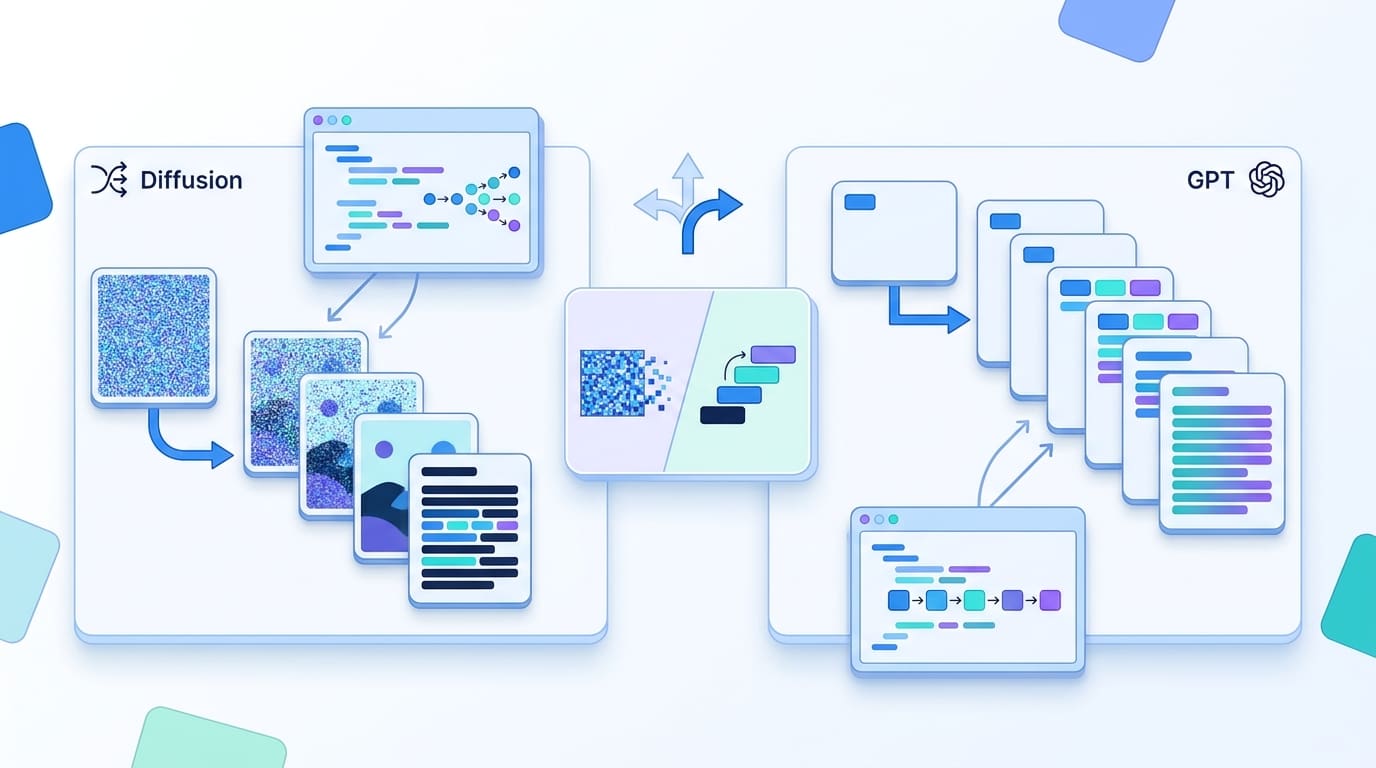
The landscape of generative artificial intelligence is undergoing a significant architectural shift as researchers move beyond the traditional autoregressive paradigm that has dominated the industry since the inception of modern Large Language Models (LLMs). While models like GPT-4 and its predecessors have set the benchmark for human-like text generation through token-by-token prediction, a new wave of "diffusion language models" is challenging the efficiency of this serial process. By utilizing iterative refinement rather than linear completion, these models represent a potential departure from the computational bottlenecks inherent in current state-of-the-art architectures.
The Autoregressive Standard: The Serial Bottleneck
To understand the significance of diffusion-based approaches, one must first examine the constraints of the dominant autoregressive model. Autoregressive LLMs function by predicting the next token in a sequence based entirely on the preceding context. Mathematically, the probability of a sequence ( x = (x_1, dots, xN) ) is defined as the product of conditional probabilities: ( p(x) = prodi=1^N p(x_i mid x1, dots, xi-1) ).
This architecture introduces a fundamental "serial dependency problem." During inference, the model cannot generate the fifth word until the fourth has been finalized, which in turn depends on the third, and so on. While this approach allows for high-quality, coherent text generation, it is computationally expensive and slow for long-form content. Because every token must be calculated sequentially, the time required to generate a response grows linearly with the length of the text, creating a significant latency hurdle for real-time applications.
The Diffusion Paradigm: Parallel Refinement
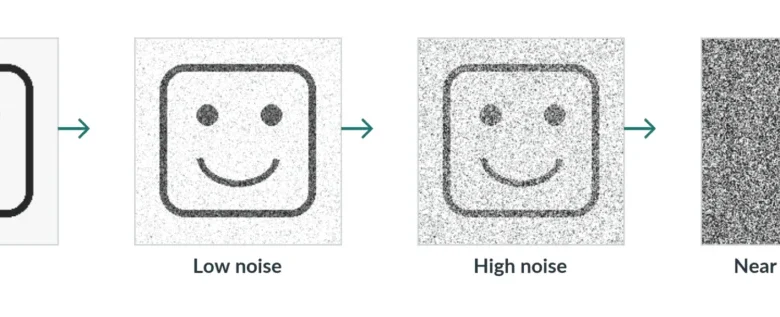
Diffusion models, originally popularized in the domain of image synthesis via the 2020 Denoising Diffusion Probabilistic Models (DDPM) framework, operate on a different principle: global refinement. Instead of building a sentence from left to right, a diffusion language model begins with a noisy or masked representation of the entire output and iteratively clears the "noise" to reveal the final sequence.
The core distinction lies in the generation objective. While an autoregressive model asks, "What is the most likely next word?", a diffusion model asks, "How can I refine this entire sequence of tokens to be more coherent?" This allows the model to predict multiple positions simultaneously. In early rounds of generation, the model may suggest low-confidence tokens across the entire length of the output, progressively refining those predictions as the number of inference steps increases.
A Chronology of Innovation (2025–2026)
The transition from conceptual research to actionable LLM architecture gained significant momentum in early 2025. The following timeline highlights the rapid evolution of this field:
- February 2025 (LLaDA): The release of LLaDA (Large Language Diffusion Attention) marked a turning point, demonstrating that transformer architectures could be trained to perform masked token reconstruction effectively, showing parity with traditional models in specific benchmarks while offering parallel generation capabilities.
- June 2025 (Mercury): Researchers introduced Mercury, a model specifically optimized to handle discrete token diffusion, addressing the difficulty of applying Gaussian noise to non-continuous text data.
- Late 2025 (Gemini Diffusion): DeepMind’s integration of diffusion techniques into the Gemini ecosystem signaled that major industry players were treating these architectures as viable alternatives for production-grade inference.
- 2026 (DiffusionGemma): Google’s open-weights release of DiffusionGemma provided the broader research community with the tools to experiment with lightweight, diffusion-based text generation, effectively democratizing the technology.
Technical Mechanisms: Forward vs. Reverse Diffusion
The efficacy of these models rests on two distinct phases: the forward process and the reverse (denoising) process. In image generation, the forward process involves adding Gaussian noise to pixel data until it is indistinguishable from random static. In text generation, where data is discrete (tokens), the forward process typically involves masking.
A sentence is systematically corrupted by replacing a percentage of its tokens with a [MASK] identifier. The model is then trained to predict the original tokens given these masked inputs. At inference, the process is inverted: the model starts with a sequence of masks and uses its learned parameters to "fill in the blanks." This is an iterative process; the model may perform several passes, updating its predictions for all tokens until the sequence reaches a state of high confidence.
Comparative Analysis: Autoregressive vs. Diffusion
| Feature | Autoregressive (GPT-Style) | Masked Diffusion |
|---|---|---|
| Generation Order | Left-to-right (Serial) | Global/Parallel (Iterative) |
| Dependency | High (current depends on all previous) | Low (positions refined simultaneously) |
| Inference Latency | High (proportional to length) | Lower (fixed number of steps) |
| Primary Use Case | Long-form, conversational, creative | Structured, fast-turnaround, iterative |
Implications and Industry Challenges
Despite the promise of faster inference, the adoption of diffusion models is not without challenges. One of the primary criticisms involves the "revision" problem: because diffusion models refine the whole sequence, they may change previously "set" tokens in later iterations, which can lead to instability in longer, complex narratives. Furthermore, determining the optimal number of sampling steps is a delicate balance; too few steps lead to low-quality text, while too many negate the speed advantages of the parallel architecture.
The industry is currently exploring hybrid approaches. Some experts argue that the future of LLMs lies in architectures that use diffusion for the high-level planning or "drafting" of text, followed by an autoregressive pass for fine-tuned completion. This synthesis could potentially leverage the speed of diffusion with the grammatical precision of autoregressive models.
Future Outlook
The shift toward diffusion language models signifies a departure from viewing text generation as a strictly sequential linguistic process. Instead, it frames language generation as an optimization problem over a global state. While it is unlikely that diffusion will entirely replace autoregressive models in the near term—particularly given the massive existing infrastructure built for GPT-style inference—the integration of these methods is inevitable.
As researchers continue to refine samplers and improve the efficiency of the denoising objective, we are likely to see models that are not only faster but capable of performing complex revisions to generated text without the need for manual prompt engineering. The fundamental question—"Do language models need to generate one token at a time?"—is no longer merely theoretical. As benchmarks continue to close the performance gap, the industry appears to be moving toward a future where generation speed and coherence are no longer mutually exclusive.
For those tracking the evolution of AI, the transition to diffusion represents a maturing of the field, shifting focus from "what" these models can produce to "how" they produce it most efficiently. As of late 2026, the consensus remains that while diffusion is not a panacea, it is an essential component of the next generation of high-performance artificial intelligence.
Related posts: