Google Unveils Its Annual Holiday 100 Gift Guide to Capture Emerging Consumer Trends and Search Behavior

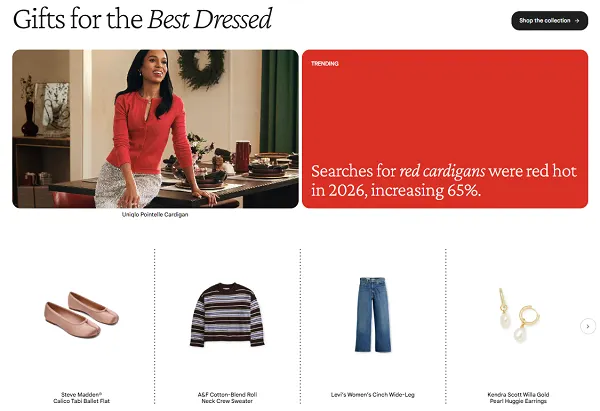
As the critical year-end shopping season approaches, Google has officially released its highly anticipated annual Holiday 100 gift guide, offering a comprehensive snapshot of the products, brands, and search terms that have captured the public imagination over the past year. Published on Monday, the guide serves a dual purpose: it acts as a curated catalog for holiday shoppers seeking inspiration, and it functions as a powerful market research tool that decodes evolving consumer behavior for brands, retailers, and digital marketers.
The release of the Holiday 100 is accompanied by a dedicated interactive mini-site, engineered to help users navigate through a diverse array of product categories. Each category is meticulously organized, providing visitors with granular data regarding surging search trends alongside highlighted products. Furthermore, these product highlights integrate seamlessly with Google’s AI Mode overview, offering shoppers detailed, synthesized insights into why specific items are trending and where to find them. By leveraging the immense scale of Google Search data, the tech giant continues to bridge the gap between raw consumer intent and actionable retail discovery.
Background and Context of the Holiday 100 Initiative
To fully understand the significance of the Holiday 100, one must examine the shifting landscape of digital commerce and consumer research. Over the past decade, Google Search has transformed from a simple navigational tool into the primary starting point for consumer discovery. Long before shoppers step foot inside a physical storefront or add an item to an e-commerce cart, they turn to search engines to compare specifications, read reviews, and gauge cultural relevance.
Google launched the Holiday 100 franchise several years ago to capitalize on this data trove. While traditional holiday gift guides published by lifestyle magazines are often driven by editorial curation, sponsorships, or brand partnerships, Google’s guide is fundamentally empirical. It is built entirely on measurable search volume and year-over-year growth metrics. This data-driven approach gives the Holiday 100 a distinct credibility among economists, retail analysts, and brand strategists who view the list as a reliable barometer of broader economic sentiment and cultural shifts.
In recent years, the retail sector has faced unprecedented volatility, driven by shifting macroeconomic conditions, fluctuating inflation rates, and rapid changes in digital media consumption. Consumers are increasingly deliberate with their discretionary spending, researching purchases extensively before committing. Against this backdrop, the 2026 Holiday 100 arrives at a crucial moment, capturing how modern shoppers navigate value, novelty, and utility during the most lucrative retail period of the year.
Chronology and Evolution of Google’s Seasonal Insights
The path leading to the 2026 Holiday 100 reflects Google’s broader integration of artificial intelligence and advanced data analytics into its consumer-facing products.
Earlier in the year, Google began rolling out enhanced AI-driven search capabilities, transforming how users interact with product queries. The introduction of AI Mode overviews in shopping searches marked a pivotal shift from static web links to dynamic, conversational summaries that aggregate user reviews, price comparisons, and product specifications in real-time.
As the calendar turned toward the second half of the year, Google’s internal analytics teams began tracking seasonal search velocities across millions of inventory items. By late summer and early autumn, preliminary trend data began isolating breakout categories—ranging from wellness and home automation to sustainable fashion and niche hobby gear.
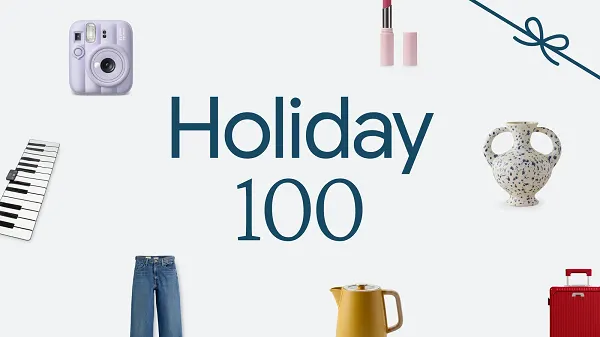
The culmination of this months-long data aggregation process is the newly published Holiday 100 list. By structuring the findings into specialized digital storefronts within the mini-site, Google has streamlined the journey from data insight to consumer action. Industry observers note that this release cycle closely mirrors the timeline adopted by major enterprise retailers, who finalize their fourth-quarter inventory and marketing campaigns months in advance to align with emerging search velocity curves.
Detailed Breakdown of the 2026 Mini-Site and Category Architecture
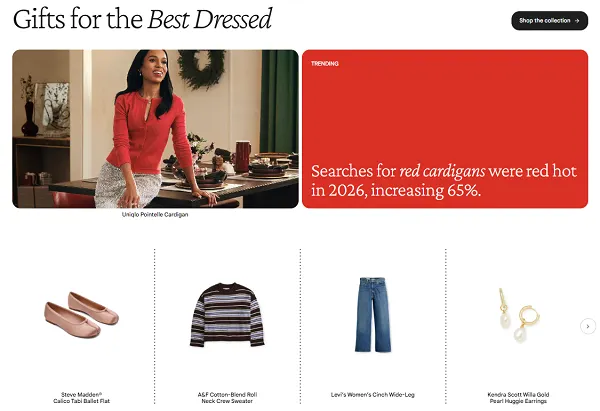
The dedicated mini-site for the 2026 Holiday 100 is designed with user experience and analytical depth in mind. Visitors navigating to the platform are greeted by a clean, visually driven interface that categorizes the top 100 items into distinct market segments, such as electronics, home goods, apparel, beauty, and wellness.
Each category overview is paired with specific contextual data points. For instance, rather than simply listing a viral kitchen appliance or a sought-after wearable device, Google provides qualitative and quantitative metrics explaining the trajectory of the search term. This includes data points indicating percentage surges in year-over-year interest, regional popularity variations, and related secondary queries that reveal why consumers are searching for these items.
A standout feature of this year’s implementation is the deep integration of AI Mode overviews. When a user clicks on a highlighted product within the guide, they are not merely redirected to a standard product landing page. Instead, they are greeted by a comprehensive AI-generated summary that synthesizes expert reviews, common consumer questions, price ranges across the web, and availability metrics. This integration underscores Google’s broader corporate strategy to weave generative artificial intelligence into every facet of the search and shopping journey, making the discovery phase more informative and frictionless.
In addition to the curated product lists, Google has spotlighted 10 overarching rising trends for 2026. These overarching themes transcend individual product brands, capturing macro-level shifts in consumer lifestyle choices. Whether the data points toward an increased demand for at-home wellness solutions, a resurgence in tactile offline hobbies, or a preference for sustainable, durable goods, these 10 trends provide a narrative framework that helps brands contextualize the raw numbers.
Supporting Data and Market Research Implications
While consumer-facing holiday guides are often viewed as lighthearted seasonal content, the data underpinning Google’s Holiday 100 holds immense value for enterprise market researchers and digital marketing agencies.
In modern retail, timing and relevance are everything. Brands that fail to align their digital advertising spend and inventory allocation with organic search trends often find themselves outpaced by competitors who successfully anticipate consumer demand. According to recent digital marketing benchmarks, search interest spikes typically precede actual purchasing behavior by anywhere from two to six weeks. By identifying these surges early, brands can optimize their paid search campaigns, fine-tune their social media advertising angles, and adjust supply chain logistics to prevent costly stockouts during peak shopping weekends like Black Friday and Cyber Monday.
Furthermore, the 2026 data highlights the growing influence of discovery-led commerce. Consumers are increasingly open to discovering new brands through algorithmic recommendations and AI-assisted search summaries, challenging the dominance of traditional brand loyalty. For small and medium-sized enterprises (SMEs), this leveling of the playing field is significant; a niche product that manages to capture organic search interest can ride a wave of digital momentum straight into the Holiday 100, gaining massive visibility without requiring a multi-million-dollar traditional advertising budget.
Industry Reactions and Expert Analysis
Retail analysts and digital marketing experts have been quick to dissect the implications of the 2026 Holiday 100 release.
"Google’s annual gift guide has evolved far beyond a simple shopping list," notes a prominent retail technology strategist. "It is an empirical mirror of consumer consciousness. By examining what people are actively searching for in large volumes, brands gain a rare, unbiased look into consumer priorities during a economically sensitive period."
Marketing agencies have similarly praised the integration of AI-driven summaries within the guide’s architecture. Industry insiders point out that as consumers grow more accustomed to conversational AI assistants in their daily search routines, platforms that seamlessly blend product discovery with synthesized research will dominate the e-commerce funnel. Google’s ability to connect a surging search term directly to an AI Mode overview represents a masterclass in reducing friction in the buyer’s journey.
At the same time, some consumer advocacy groups and retail economists offer a nuanced perspective, noting that while search volume reflects high interest, it can occasionally be susceptible to concentrated social media marketing campaigns or algorithmic amplification. Nonetheless, the sheer volume of data processed by Google ensures that the overarching trends mapped out in the Holiday 100 remain robust indicators of aggregate market demand.
Broader Impact on Marketing Strategies and the Retail Landscape
The publication of the Holiday 100 serves as an immediate call to action for the marketing community. As brands finalize their fourth-quarter media plans, the insights embedded within Google’s latest data release offer a strategic roadmap for navigating the competitive holiday season.
For digital marketers, the primary takeaway is the necessity of agility. The rising trends identified in the guide demonstrate that consumer preferences can shift rapidly in response to technological innovation, economic pressures, and cultural moments. Marketing campaigns that rely on static, pre-planned messaging risk falling flat if they do not adapt to real-time search velocity. By monitoring the specific query data highlighted in Google’s categories, marketing teams can dynamically adjust their keyword targeting, ad copy, and content marketing strategies to capture high-intent traffic.
From a broader retail perspective, the Holiday 100 underscores the ongoing convergence of search engines and shopping platforms. As Google continues to refine features like AI Mode overviews and interactive mini-sites, the boundary between searching for information and completing a transaction continues to blur. Retailers that optimize their digital storefronts to integrate smoothly with Google’s data ecosystems will likely capture a disproportionate share of holiday revenue.
Ultimately, Google’s 2026 Holiday 100 gift guide is much more than a collection of trendy gift ideas. It is a comprehensive data-driven chronicle of contemporary consumer behavior, offering invaluable foresight for shoppers seeking the perfect gift and vital strategic intelligence for businesses navigating the complexities of the modern digital marketplace.
Related posts: