When Modern CSS Increases Frontend Complexity: A Guide to Balancing Local Simplicity and System Architecture

The evolution of modern CSS over the past several years has given developers powerful native tools designed to reduce reliance on JavaScript. Features such as container queries, the :has() relational pseudo-class, and native nesting allow engineers to replace dozens of lines of scripting logic with streamlined stylesheet rules. On paper, these pull requests often present an appealing profile: a net-negative diff where lines of removed code far outpace the lines added. However, recent developer discourse and architectural analysis suggest that while these modern features simplify local code snippets, they can inadvertently introduce substantial complexity into the wider frontend application.
The Illusion of Local Simplicity Versus System Complexity
The friction between localized code reduction and overarching system complexity has become a central topic of discussion within the web development community. Front-end engineers frequently experience the satisfaction of replacing heavy JavaScript utilities—such as ResizeObserver instances used for responsive component styling—with lightweight native CSS declarations. Yet, this localized optimization often occurs without accounting for how the new styling rules interact with legacy code, existing layout structures, and the browser rendering engine.
This architectural tension gained renewed attention following the publication of Igor Roztropiški’s April 2026 essay, “Modern Frontend Complexity: Essential or Accidental?” Roztropiški’s exploration into browser evolution and architectural overhead sparked widespread debate across developer forums, including a notable thread on Reddit that drew extensive commentary. While some developers argued that modern native features successfully eliminate unnecessary third-party abstractions and frameworks, others cautioned that reducing lines of code does not inherently equate to a reduction in cognitive or systemic load.
The core challenge lies in the migration process. Greenfield projects benefit immediately from native CSS capabilities, but established applications often undergo piecemeal updates. When a behavior is migrated to CSS without fully decommissioning the corresponding JavaScript logic or accounting for cascade implications, developers risk creating multi-owned components where disparate systems attempt to control the same element’s behavior.

Scenario Analysis: The Hidden Costs of Native Features
To understand how system complexity manifests, industry observations point to four primary scenarios where modern CSS features intersect with existing application architecture.
-
The Dual-Ownership Conflict: When a component migration replaces a JavaScript-driven class toggle with a CSS container query, incomplete cleanups often leave legacy selectors intact. If an update is later made to the CSS breakpoint while the old JavaScript observer remains active in a separate file, the component can enter unhandled intermediate states. The element effectively answers to two different owners, resulting in unpredictable layout behavior that is difficult to trace.
-
Unintentional Layout Shifts via Block Formatting Contexts: Declarations such as
container-type: inline-sizedo more than simply enable container queries; they simultaneously apply style and inline-size containment and establish a new block formatting context. This single property can abruptly alter layout behaviors—such as stopping margin collapse, modifying how elements interact with floats, and causing content-sized flexible containers to collapse to zero width if explicit dimensions are missing. -
The Overreach of Relational Selectors: Advanced selectors like
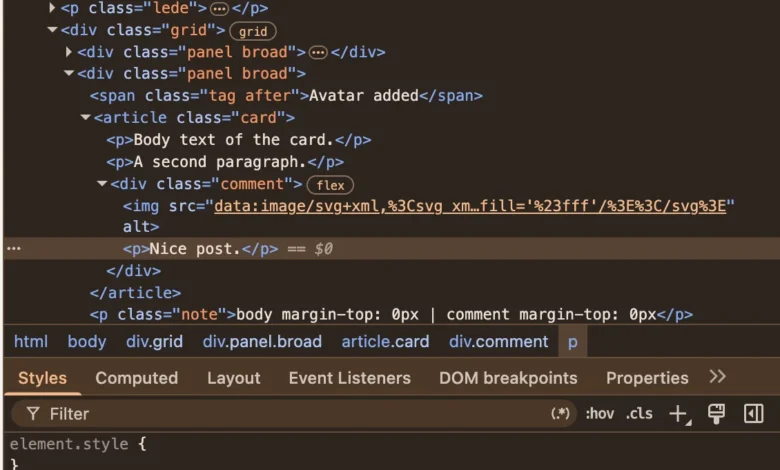
:has()and native nesting streamline stylesheets but can inadvertently expand the scope of a rule. A selector designed to target a specific card layout containing a hero image may inadvertently strip margins from nested components, such as user comments, that happen to share the same DOM hierarchy. Because these states change dynamically at runtime, debugging layout anomalies becomes significantly more arduous. -
Rendering Performance and Style Recalculations: The assumption that moving logic from JavaScript to CSS universally improves performance is not always borne out in complex DOM trees. Browser rendering engines handle global style recalculations differently depending on selector complexity. In extensive lists, poorly scoped
:has()selectors combined across stylesheets can trigger unnecessary restyling cascades affecting thousands of elements simultaneously, leading to frame drops during user interactions.
Industry Perspectives and the Reality of Migrations
The debate surrounding frontend complexity underscores a fundamental divide between theoretical architecture and practical maintenance. Proponents of native CSS argue that modernizing stylesheets reduces reliance on heavy JavaScript frameworks and leverages browser optimizations natively built into rendering engines. Conversely, pragmatic engineers emphasize that software maintenance is predominantly defined by migrations rather than greenfield builds.
When developers execute refactoring tasks under tight deadlines, the compounding effects of dual-ownership, altered formatting contexts, extended selector weight, and rendering overhead frequently emerge post-deployment. These issues rarely manifest as catastrophic application failures; instead, they appear as subtle, intermittent visual regressions—such as misaligned headings, missing cards on dashboard views, or erratic spacing variations.
Establishing a Rigorous Migration Checklist
To mitigate the architectural risks associated with modern CSS adoption, engineering teams are increasingly urged to implement structured evaluation protocols prior to merging pull requests. Industry best practices recommend addressing key diagnostic questions before replacing JavaScript logic with native styles:
- Ownership Verification: Has all legacy JavaScript logic, including event listeners and class toggles, been completely removed if functionality is successfully migrated to CSS?
- Scope and Containment Analysis: Have the structural side effects of properties like
container-typeor advanced pseudo-classes been evaluated against neighboring layout contexts, floats, and flex containers? - Specificity and Cascade Review: Does the introduction of native nesting,
:has(), or cascade layers respect the existing stylesheet hierarchy without inadvertently overriding unrelated components? - Performance Profiling: Have rendering traces been captured to ensure that complex selectors do not trigger excessive element restyling across large DOM structures?
- State Testing: Have dynamic runtime states—such as user-generated content or responsive breakpoint thresholds—been thoroughly tested to prevent unhandled intermediate layouts?
- Documentation and Handoff: Are the architectural changes and rationale clearly communicated within the pull request description to assist future maintainers?
Broader Implications for Frontend Engineering
The ongoing transition toward capability-rich CSS represents a significant maturation of web standards, empowering developers to build sophisticated interfaces with fewer dependencies. However, these advancements necessitate a shift in how engineering teams approach code reviews and refactoring. As browsers assume greater responsibility for layout calculation and conditional styling, the architectural burden shifts from writing imperative scripts to maintaining declarative consistency across the entire application ecosystem.
Ultimately, achieving a simpler, more maintainable frontend requires looking beyond local code reductions. True architectural simplification occurs only when new native features are introduced with a comprehensive understanding of their systemic interactions, ensuring that local efficiency does not come at the expense of global predictability.