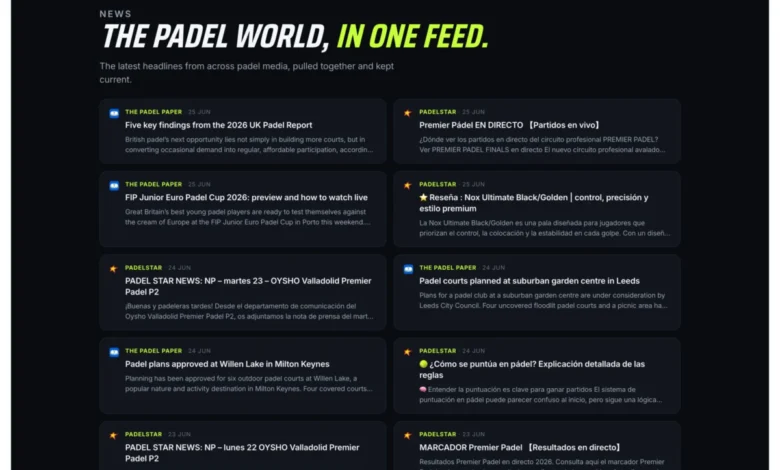
News aggregation sites place significant technical demands on their underlying architecture, requiring systems that can ingest thousands of external data points while maintaining rapid page load speeds and real-time content freshness. Historically, content management systems like WordPress have excelled at the "plumbing" of these sites—handling feed ingestion, deduplication, and scheduling—but have struggled to deliver high-performance front-end experiences. As traffic scales, the overhead of traditional themes often results in sluggish response times, prompting developers to pivot toward headless architectures that decouple content management from delivery.
The emergence of the Astro framework has provided a viable solution to this performance bottleneck. By utilizing WordPress exclusively as a backend administrative hub and leveraging Astro to handle the front-end rendering, developers can achieve a synthesis of robust content management and lightning-fast delivery. This architectural shift represents a maturation of the headless movement, moving away from monolithic platforms toward a modular stack optimized for speed and scalability.
The Architectural Shift: Why Headless Matters
The fundamental challenge of a news aggregator is the inherent contradiction between its backend workload and its front-end requirements. An aggregator must constantly fetch, normalize, and store data from disparate RSS and Atom feeds. WordPress remains the industry standard for these tasks due to its mature plugin ecosystem, which allows for sophisticated field mapping, image handling, and automated scheduling without requiring custom-built middleware.
However, once the data is stored, the traditional WordPress front-end—often burdened by bloated theme code, excessive JavaScript, and database queries on every page load—becomes a liability. A headless approach treats the front-end as a read-only environment. Since users typically do not engage with dynamic features like logins or form submissions on an aggregation stream, the necessity for a traditional CMS front-end is effectively eliminated. By serving content via static HTML or edge-cached responses, developers can achieve near-instantaneous load times, significantly improving both user retention and search engine optimization (SEO) performance.

Astro’s design philosophy aligns perfectly with these requirements. By shipping zero JavaScript by default and rendering content as static HTML, it minimizes the browser’s workload. For data-heavy sites that rely on a wall of feed items, this efficiency is paramount.
Technical Implementation and Data Management
Transitioning to this architecture requires a shift in how content is ingested. The most effective method involves utilizing specialized plugins such as WP RSS Aggregator, specifically employing the "Feed to Post" functionality. By importing external content as native WordPress posts or custom post types, the data becomes immediately accessible via the WordPress REST API or WPGraphQL.
This approach offers several technical advantages. First, it bypasses the limitations of lightweight feed-item storage, which is often not exposed through API endpoints by default. Second, it creates a structured data layer that can be queried with precision. When configuring the connection, developers typically rely on the WordPress REST API for simple, low-overhead queries. However, for more complex data structures involving taxonomies or related media, WPGraphQL provides a more efficient mechanism, reducing the risk of over-fetching data.
The following example illustrates how a simple Astro component queries the REST API to populate a news feed:
---
const res = await fetch("https://cms.example.com/wp-json/wp/v2/posts?per_page=20&_embed");
const posts = await res.json();
---
<ul>
  posts.map((post) => (
    <li>
      <a href=`/article/$post.slug`>post.title.rendered</a>
    </li>
  ))
</ul>
Addressing the Challenge of Content Freshness
One of the most significant hurdles in adopting a static-first architecture is maintaining the illusion of a live, dynamic feed. Because static sites are built at a specific moment in time, content imported after a build will not appear until the next deployment. To solve this, developers have adopted three distinct strategies based on the required "freshness" of the content.

1. Scheduled Rebuilds
For sites where content updates occur on an hourly basis, triggering a rebuild via a webhook after each import is the standard solution. When the WordPress cron job finishes an import, it sends a signal to the hosting platform (such as Vercel, Netlify, or Cloudflare Pages) to initiate a new build. This keeps the site fully static and optimized for performance.
2. On-Demand Rendering
For sites requiring near-real-time updates, developers can utilize server-side rendering (SSR) for specific routes. By setting export const prerender = false in an Astro file, that specific page is rendered on the server at the moment of the request. To prevent excessive load on the WordPress database, this method is almost always paired with an edge cache, which serves the content for a set duration (e.g., five minutes) before re-querying the CMS.
3. Client-Side Islands
For "live" widgets, such as a ticker or a sidebar of breaking news, client-side rendering is the most effective approach. The page loads as a static shell, and a small, interactive JavaScript "island" fetches the latest items directly from the browser. While this content is not indexed by search engines, it serves as an ideal solution for secondary feeds that do not need to contribute to SEO.
Operational Best Practices
To ensure long-term stability, developers must address two common failure points: the WordPress cron system and media handling.
In a headless environment, the standard WordPress cron—which relies on site visitors to trigger scheduled tasks—often fails because nobody visits the WordPress front-end. To maintain a consistent feed, developers must disable the default pseudo-cron and implement a system-level cron job that executes wp-cron.php or the CLI command wp cron event run at regular intervals. Failure to do this is the most frequent cause of "stalled" aggregators.

Furthermore, image management is critical. Developers should configure their aggregation plugins to "sideload" remote images into the local WordPress media library. This ensures that the front-end pulls images from a stable, controlled URL rather than relying on external, unpredictable servers, which protects the site against broken links and external hotlinking policies.
Implications for the Media Landscape
The adoption of headless WordPress and Astro signals a broader trend toward "decoupled" publishing, where the editorial workflow is separated from the user experience. By offloading the rendering layer to a specialized framework, media companies and independent aggregators can significantly lower their infrastructure costs while simultaneously increasing site performance.
Analysis suggests that this model is particularly beneficial for sites focused on high-volume content curation. By reducing server-side processing, site operators can handle larger traffic spikes with fewer resources. Moreover, because the aggregated content is handled as a structured dataset, it becomes easier to integrate future-facing technologies, such as AI-driven content summarization or advanced cross-platform syndication.
As the web continues to favor speed and core web vitals as ranking factors, the transition to headless architectures is likely to accelerate. While the initial setup requires a deeper understanding of API-driven development compared to traditional WordPress theme customization, the long-term benefits—superior performance, increased reliability, and a more robust foundation for scaling—make it a compelling choice for modern content aggregation platforms.
In conclusion, the pairing of WordPress and Astro offers a sophisticated, professional-grade solution to the complexities of news aggregation. By leveraging the specific strengths of each tool—WordPress for the complex, administrative data plumbing and Astro for the performant, user-facing delivery—developers can create a resilient system that satisfies both the need for constant, real-time updates and the requirement for a fast, SEO-optimized front-end experience.