TikTok Upgrades Symphony AI Suite with Advanced Dreamina Seedance Video Generation and Expanded API Capabilities

The digital marketing landscape is undergoing a fundamental transformation as artificial intelligence transitions from a novelty tool into the foundational infrastructure of ad creation. Amidst this rapid evolution, TikTok has announced a sweeping set of upgrades to its Symphony AI creative suite. By integrating the latest generation of Dreamina Seedance models, expanding multimodal reference capacities, rolling out an updated Symphony API, and broadening access to BytePlus utility tokens outside of North America, the platform is giving brands unprecedented firepower just in time for the peak holiday shopping season. These strategic enhancements aim to streamline the production pipeline for marketers, allowing them to scale high-performing, hyper-localized, and visually polished video advertisements with minimal friction.
Main Facts and Core Upgrades to the Symphony Platform
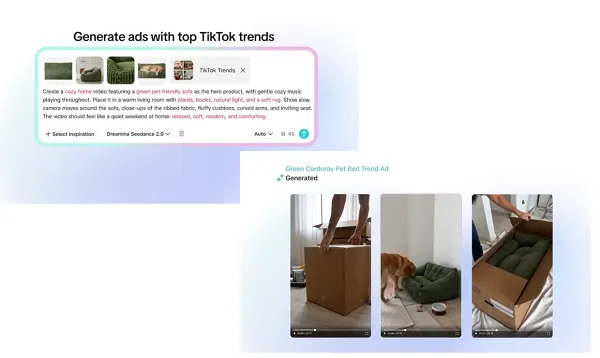
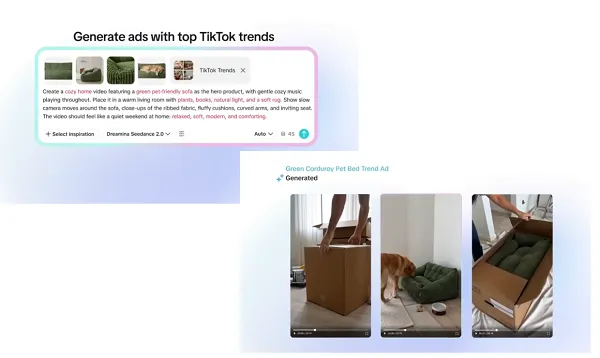
TikTok’s flagship AI-powered ad creation suite, Symphony, is receiving a major technical overhaul designed to eliminate traditional bottlenecks in digital video production. At the heart of this update is the integration of the newest Dreamina Seedance video generation models directly into the Symphony Agent tool. This development marks a substantial leap forward in how automated systems interpret prompts and render complex visual narratives.
The most notable improvements center on capacity, duration, and fidelity. Advertisers can now upload up to 50 multimodal references—including a combination of source images, raw video clips, and audio tracks—representing a dramatic increase from the previous limit of nine references. This expanded contextual window allows the AI to better understand brand guidelines, stylistic nuances, and product specificities, yielding outputs that align much more closely with established corporate identities.
Furthermore, the duration of AI-generated clips has doubled. While earlier iterations capped automated video generation at 15 seconds per prompt, the updated Dreamina Seedance models can now produce continuous video sequences lasting up to 30 seconds. This extended runtime opens up new creative possibilities for narrative arcs, product demonstrations, and multi-step tutorials within a single generated asset.
In terms of visual quality, TikTok reports that the upgraded models deliver significantly sharper imagery, superior lighting dynamics, and enhanced character consistency across multiple video frames. For marketers who have historically struggled with the flickering, morphing, or uncanny valley effects common in early generative video, these technical refinements promise a more professional, broadcast-quality finish.
Complementing these front-end creative tools is the launch of an updated Symphony API. This interface allows advertisers to integrate Symphony’s generation capabilities directly into their proprietary content management systems and internal creative workflows. Instead of operating solely within TikTok’s native ecosystem, brands can now programmatically generate and test ad variations at scale within their own operational software.
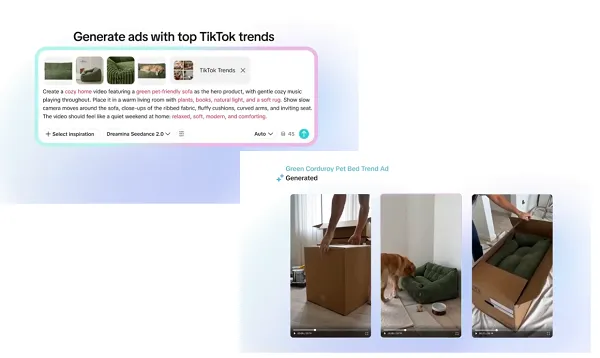
Finally, TikTok has expanded access to BytePlus tokens for international markets. Starting November 9, advertisers located outside of North America can purchase BytePlus tokens to power their use of the Dreamina Seedance models through Symphony. BytePlus, the enterprise technology arm of TikTok’s parent company, ByteDance, manages the underlying artificial intelligence infrastructure and cloud services that support these advanced computational workloads. By facilitating broader token acquisition, TikTok is ensuring that global brands have equal access to faster video generation speeds, higher-resolution outputs, and diverse aspect ratios.
Chronology and Evolution of TikTok’s AI Strategy
To fully understand the significance of the latest Symphony updates, it is necessary to examine the chronological progression of TikTok’s artificial intelligence initiatives over recent years. The platform’s journey into automated ad creation did not happen overnight; it is the result of a deliberate, multi-phase strategy aimed at lowering the barriers to entry for digital advertisers.
The groundwork was laid as ByteDance increasingly poured resources into proprietary foundational models, positioning itself alongside Western tech giants in the generative AI race. Initially, these tools were deployed internally to improve content moderation and algorithmic recommendations. However, as generative tools matured, the company recognized a lucrative commercial opportunity in helping brands produce native-feeling content without the traditional overhead costs of production agencies, lighting rigs, and professional talent.
In the early stages, TikTok introduced basic automated editing tools, text-to-speech generators, and simple scriptwriting assistants. These tools were well-received by small and medium-sized businesses (SMBs) that lacked dedicated marketing departments. However, enterprise-level brands often found the outputs too rudimentary for high-stakes campaigns.
Recognizing the need for enterprise-grade solutions, TikTok officially consolidated its commercial creative offerings under the "Symphony" banner. The Symphony suite was designed to serve as an end-to-end AI assistant for marketers, handling everything from script ideation and translation to automated video production and script optimization.
Throughout the past year, iterative updates have progressively added multimodal capabilities, allowing the system to ingest static product shots and transform them into dynamic video ads. The integration of the Dreamina Seedance models represents the latest milestone in this timeline. By moving from short, 15-second clips with limited reference inputs to 30-second, highly consistent videos backed by up to 50 reference files, TikTok has systematically addressed the primary technical complaints levied by early enterprise adopters. Simultaneously, the rollout of the Symphony API shifts the tool from a standalone web interface into an enterprise-integrated utility, signaling a maturation of the product line.
Supporting Data and Technical Architecture
The efficacy of AI-driven advertising platforms hinges on the underlying data architecture and computing power available to process complex generative tasks. The enhancements announced by TikTok are deeply rooted in the scaling laws of modern deep learning and cloud infrastructure.

Multimodal reference handling requires sophisticated cross-attention mechanisms within the neural network architecture. By increasing the reference limit from 9 to 50 inputs, the Dreamina Seedance model can construct a far richer latent space representation of the advertised product. This means the AI can simultaneously cross-reference multiple product angles, brand color palettes, font styles, and audio moods to ensure strict adherence to campaign parameters.
The doubling of maximum video generation length from 15 to 30 seconds introduces significant computational challenges, particularly regarding temporal consistency. Maintaining character continuity, lighting coherence, and physical realism across 900 individual frames (at 30 frames per second) demands advanced diffusion modeling and robust temporal attention layers. The fact that the updated models achieve this while improving visual sharpness indicates optimization in both model architecture and the underlying inference hardware.
The involvement of BytePlus is critical to understanding the scalability of these features. As the enterprise technology division of ByteDance, BytePlus leverages massive global data center investments and optimized AI accelerators to handle high-volume inference requests. By decoupling token purchases and making them available to international markets, BytePlus acts as the computational engine room, ensuring that global brands can execute resource-intensive video generation jobs concurrently without suffering from severe latency or throttling issues.
Industry data consistently highlights the growing demand for automated creative solutions. Market research indicates that digital advertisers are under increasing pressure to produce high volumes of fresh creative assets to combat ad fatigue on fast-moving social feeds. Traditional production pipelines, which can take weeks to conceptualize, shoot, and edit a single video ad, are often too slow for the cadence of modern social commerce. AI tools like Symphony are designed to compress this timeline from weeks to mere minutes, allowing marketers to generate dozens of variations to test against different target audiences.
Industry Reactions and Market Implications
The release of these advanced features has elicited a largely positive, albeit watchful, response from digital marketing professionals, agency executives, and retail brands.
Industry analysts point out that the timing of the update—arriving just ahead of the peak holiday shopping season—is calculated. Q4 represents the highest-stakes period for retailers, accounting for a disproportionate share of annual revenue. During this window, brands must constantly iterate on their advertising messaging based on real-time performance data. The ability to utilize the updated Symphony API to dynamically generate new video assets within internal management tools provides marketing teams with the agility needed to capitalize on sudden viral trends or shifting consumer behaviors.
Digital marketing agencies, which have sometimes viewed generative AI as a disruptive threat to traditional creative services, are increasingly adopting a hybrid approach. Many agencies are utilizing tools like TikTok Symphony for high-volume variant testing, low-funnel retargeting ads, and localization, while reserving human creative teams for high-concept brand storytelling and emotional campaigns. The expansion of multimodal reference inputs—allowing brands to feed up to 50 distinct brand assets into the system—is seen as a welcome safeguard that helps mitigate the risk of AI-generated content drifting away from core brand guidelines.
However, challenges and cautionary notes remain. While the technical capabilities of models like Dreamina Seedance have improved dramatically, the market viability of AI-generated video varies widely depending on the vertical. Products that rely on straightforward visual appeal and clear demonstrations often translate exceptionally well to generative video. Conversely, complex financial services, nuanced B2B offerings, or highly regulated products still require meticulous human oversight to ensure compliance with advertising standards and platform policies.
Furthermore, advertisers must navigate the potential for audience fatigue or skepticism as the volume of AI-generated content on social media platforms continues to accelerate. As consumers become more adept at identifying synthetic media, brands will need to balance the efficiency gains of automation with authenticity and genuine audience connection.
Broader Impact and Future Outlook
TikTok’s latest upgrades to the Symphony suite reflect a broader, irreversible industry trend toward democratized, AI-native content creation. As artificial intelligence models become more capable of understanding complex contextual prompts, maintaining temporal consistency, and integrating seamlessly into enterprise software stacks, the boundary between human-produced and machine-generated media will continue to blur.
For TikTok, enhancing its ad creation suite serves a dual purpose. On one hand, it lowers the barrier to entry for advertisers of all sizes, encouraging higher ad spend by making campaign creation faster, cheaper, and more accessible. On the other hand, it strengthens the platform’s proprietary ecosystem, binding brands more tightly to ByteDance’s technological infrastructure through tools like BytePlus tokens and the Symphony API.
Looking ahead, the logical evolution of these tools will likely involve even deeper personalization capabilities, real-time dynamic ad generation tailored to individual user behavior, and fully automated multi-channel campaign optimization. As brands head into the bustling holiday shopping season and beyond, the success of their digital strategies will increasingly depend on their ability to harness these generative platforms effectively. While human creativity, strategic vision, and emotional intelligence remain irreplaceable, the operational muscle provided by tools like the upgraded Symphony suite has fundamentally altered what is possible in modern digital advertising.
Related posts: