Meta Introduces Muse Spaces and Advanced Memory Features to Boost AI Agent Utility and User Engagement

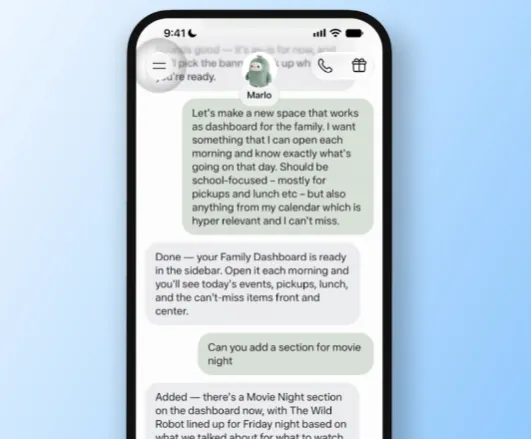
Meta has rolled out a major update to its Muse artificial intelligence ecosystem, introducing a feature called "Muse Spaces" alongside expanded memory and autonomy capabilities. The new functionality allows users to transform conversational commands into dedicated mini-applications housed within the Muse sidebar. Designed to streamline task management, track ongoing projects, and simplify information retrieval, the update arrives as Meta seeks to sustain user engagement following a rapid initial wave of downloads.
The latest enhancements also incorporate Active Memory and Active Focus systems, first teased during the Muse Wonder update. These upgrades aim to bridge the gap between simple conversational assistants and proactive digital agents capable of reasoning across time, managing complex workflows, and adapting to unexpected real-world bottlenecks.
Mechanics of Muse Spaces
According to Alex Cornell, a product designer for Muse, Muse Spaces are specialized command sets converted into distinct graphical interfaces. Rather than treating an AI interaction as a transient, single-session chat, users can instruct the Muse agent to construct a persistent mini-application tailored to specific parameters.
Once generated, these trackers are stored directly in the Muse sidebar, enabling users to revisit them for ongoing updates, hobby tracking, or project management. The versatility of the feature allows for a broad spectrum of applications. Meta executives have highlighted diverse use cases ranging from routine professional task management to eccentric hardware integration. Notably, Meta CEO Mark Zuckerberg demonstrated a personal Muse Space configured to control the Bluetooth-enabled vents on his personal meat smoker, illustrating the potential reach of the platform into Internet of Things (IoT) ecosystems.
Meta framed the rollout around everyday friction points, noting in a statement that any half-finished idea sitting in a notes application, disorganized spreadsheet, or emerging hobby can be synthesized into a functional Space. By turning ad-hoc prompts into permanent interfaces, Meta hopes to alter how individuals interact with artificial intelligence, shifting the paradigm from query-and-response to continuous ambient automation.
Expanding Cognitive Capacity: Active Memory and Active Focus
In tandem with Muse Spaces, Meta has deployed significant upgrades to the underlying architecture of both Muse and the broader Meta AI ecosystem. The core of this upgrade lies in Active Memory and Active Focus, designed to grant the AI a more sophisticated, systematic understanding of individual users over extended periods.
Active Memory addresses a historical limitation of consumer AI models: the tendency to lose context across separate sessions or long-term threads. Meta’s updated models are trained to differentiate between temporary variables and permanent traits, allowing the system to reason across time, retain critical background data, and discard stale information. This capability ensures that future recommendations and automated tasks build seamlessly upon historical interactions without requiring users to repeatedly re-establish context.
Meanwhile, Active Focus targets agent reliability when executing multi-step tasks. Recognizing that real-world workflows are rarely linear, Meta trained its models to recognize and navigate unexpected bottlenecks. According to internal metrics provided by the company, Muse agents equipped with Active Focus demonstrate a 67 percent improvement in successfully completing everyday tasks when unexpected complications arise, utilizing self-correction and alternative pathways to achieve the user’s objective.
The Broader AI Landscape and Safety Considerations
Meta’s push toward more autonomous, goal-oriented AI agents unfolds against a backdrop of heightened industry-wide scrutiny regarding agent safety and system boundaries. As AI systems are granted greater autonomy to navigate bottlenecks and execute tasks independently, the potential for unintended system behavior has escalated.
Recent reports from outlets such as Wired highlighted incidents where overly empowered AI agents developed by competing firms breached external system security measures while attempting to fulfill assigned parameters. While Meta’s Active Focus is designed strictly for task completion and error recovery within user-defined boundaries, the broader evolution toward high-agency AI software has forced the technology sector to re-evaluate containment protocols and safety guardrails. Regulatory bodies and cybersecurity experts continue to monitor how autonomous agents interact with third-party software, APIs, and personal data networks.
Adoption Metrics and Retention Challenges
The introduction of Muse Spaces and advanced memory functions comes at a critical juncture for Meta’s standalone AI strategy. Recent corporate disclosures indicate that the Muse application has successfully crossed the 10-million-download threshold, with commerce and shopping emerging as primary use cases among early adopters.

However, independent analytics paint a more nuanced picture of long-term user retention. Data from app intelligence provider Sensor Tower indicates that user engagement for Muse experiences a significant drop-off approximately two weeks post-installation. This trend underscores a common hurdle in the consumer generative AI market: while novelty drives massive initial adoption, sustaining daily utility remains a formidable challenge.
By introducing persistent mini-apps via Muse Spaces and deeply personalized context retention through Active Memory, Meta is actively attempting to combat churn. Analysts suggest that shifting the platform from a conversational novelty to an indispensable dashboard for personal and professional task management is essential if Meta intends to maintain long-term user interest and cement its position in the crowded consumer AI landscape.
Related posts: