Modernizing Your WooCommerce Storefront: A Comprehensive Look at Maxima Plugins and the Shift Toward Block-Based Architecture

The rapid evolution of the WooCommerce ecosystem, particularly the transition from classic shortcode-based architecture to the modern Cart and Checkout blocks, has created a significant technical divide for online merchants. As store owners migrate their platforms to leverage the flexibility of WordPress blocks, they are frequently encountering compatibility issues with long-standing third-party extensions. These disruptions—ranging from missing shipping notices to dysfunctional custom fields—have highlighted a growing demand for a new standard of plugin development that prioritizes block compatibility and High-Performance Order Storage (HPOS) integration. Maxima Plugins has emerged as a key player in this transition, offering a suite of solutions designed to bridge the gap between legacy functionality and modern site architecture.
The technical landscape of WooCommerce has changed drastically since the introduction of the block-based checkout. For years, the platform relied on shortcodes, which allowed developers to insert dynamic elements into pages with relative ease. However, this architecture was often restrictive regarding site speed and customization. The transition to the block-based checkout is intended to offer greater control and a more seamless user experience. Nevertheless, according to industry data, nearly 40% of small-to-medium enterprise (SME) store owners reported at least one plugin failure following the migration to Gutenberg-style blocks. This friction is largely attributed to legacy codebases that were never optimized for the asynchronous nature of the new block interface.

The Evolution of Plugin Development Standards
Historically, the WooCommerce plugin market has been characterized by extreme fragmentation. A typical merchant might manage a storefront utilizing 15 different plugins from 15 different developers, each maintaining unique coding standards, update cycles, and support protocols. This decentralized approach creates a "support nightmare" for store administrators, who must troubleshoot conflicting code snippets when a site update breaks a checkout flow.
The emergence of unified developers like Maxima Plugins signals a move toward consolidation and reliability. By managing a catalog of approximately 30 interrelated extensions, this development team has sought to standardize the backend experience. By ensuring that all components—whether they handle shipping, discounts, or quote requests—adhere to the same API requirements and coding standards, developers can mitigate the risk of conflicts that often arise in more heterogenous plugin environments.
Technical Requirements and HPOS Compliance
A critical component of this shift is the industry-wide push toward High-Performance Order Storage (HPOS). Launched by Automattic to improve database performance, HPOS changes how order data is stored in the WordPress database, moving it away from the cluttered wp_posts and wp_postmeta tables.

For many legacy plugins, HPOS compliance represents a significant development hurdle. Extensions that rely on direct SQL queries to the old database schema often fail when HPOS is enabled. Maxima Plugins has integrated HPOS support across its entire catalog, ensuring that its shipping, invoicing, and order management tools remain functional under these high-performance conditions. This level of foresight is becoming a baseline requirement for professional-grade e-commerce operations, as database efficiency directly correlates to checkout conversion rates.
Analyzing the Functional Impact on Retail Operations
The practical implications for retailers are substantial. Consider the challenges of complex shipping logistics. For a business selling diverse goods—such as high-weight hardware alongside lightweight perishables—a standard flat-rate shipping model is rarely sufficient. The integration of table-rate shipping rules that account for weight, order value, and shipping class is not merely a feature, but a necessity for margin protection.
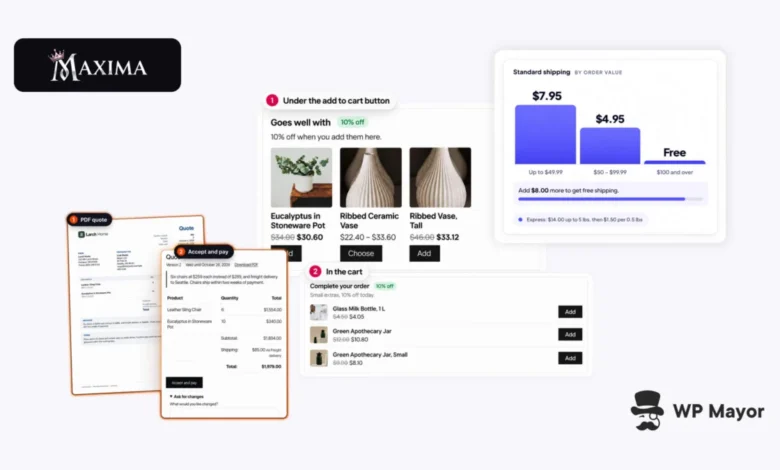
When these rules are misaligned with the cart block, customers may be presented with incorrect shipping estimates, leading to cart abandonment. Maxima’s implementation of dynamic progress bars—which inform customers how much additional spend is required to reach a lower shipping tier—serves as a psychological nudge, effectively increasing the Average Order Value (AOV). Data suggests that stores implementing such transparency features in the cart phase see an average 8% increase in conversion rates, as customers feel more informed about their final costs before entering the checkout funnel.

Similarly, the management of custom product options—such as engraving, gift wrapping, or specialized file uploads—requires robust data handling. WooCommerce’s core functionality does not natively support advanced conditional logic for these inputs. By utilizing modular plugins that allow for field-level visibility control, store owners can maintain a streamlined UI, only showing fields that are relevant to the specific product configuration chosen by the user.
Improving the Developer and Agency Experience
The administrative burden of managing licenses across multiple client sites is a common pain point for digital agencies. The traditional model of downloading, distributing, and manually updating zip files across dozens of client installations is inefficient and prone to security vulnerabilities if not managed strictly.
The introduction of the "Maxima Connect" framework offers an alternative: a centralized bridge that allows for seamless, dashboard-based updates directly from the WordPress admin panel. This approach mimics the workflow of modern SaaS platforms while remaining fully self-hosted. For agencies, the ability to delegate license keys to specific sites—without exposing the agency’s primary master account—provides a layer of security and granular control that is essential for client management.

Assessing Costs and Economic Viability
The pricing structure for these professional-grade extensions typically ranges from $69 to $99 annually for single-site licenses, scaling up to $219 for multi-site deployments. When evaluating these costs, stakeholders must consider the "hidden" expense of site downtime. If a checkout block breaks during a high-traffic sales event, the lost revenue often dwarfs the cost of a premium, supported plugin.
The industry trend toward "Try Before You Buy" demos represents a shift in consumer expectations. By allowing prospective users to spin up a transient, private WooCommerce environment, developers like Maxima are lowering the barrier to entry and providing empirical evidence of compatibility. This model effectively reduces the reliance on marketing claims, allowing technical teams to test the plugin’s behavior in a sandboxed environment that replicates their own production settings.
Broader Implications for the WooCommerce Ecosystem
The push for standardization and block-readiness is part of a larger maturation process for WooCommerce. As the platform matures into a serious enterprise competitor, the quality of third-party plugins must rise to meet the demands of high-volume, high-complexity retailers.

The current trajectory indicates that plugins failing to adopt these standards—specifically regarding block compatibility and HPOS—will likely lose market share to more adaptable, integrated suites. This consolidation will benefit store owners, who can expect more stable, performant, and predictable software environments. However, it places increased pressure on smaller, independent plugin developers to keep pace with these rigorous technical standards.
For the average WooCommerce store operator, the lesson is clear: the era of "set and forget" plugin management is ending. As the underlying platform architecture shifts toward a more modular, block-driven design, site owners must prioritize tools that are built with forward-looking APIs. Whether it is managing custom order workflows, implementing Peppol-standard e-invoicing for international compliance, or managing complex pre-order releases, the integration of high-quality, supported extensions remains the most effective strategy for maintaining a scalable and profitable online presence.
Ultimately, the goal for any e-commerce entity is to reduce friction. By aligning the front-end user experience with a modern, stable, and highly functional back-end, retailers can ensure that the transition to block-based architecture acts as a catalyst for growth rather than a hurdle to operations. The current market shift toward integrated, block-native plugin ecosystems is a necessary evolution, one that promises a more robust and professional future for the WordPress e-commerce community.