The Hidden Crisis of AI Agent Ownership and the Looming Maintenance Debt in the Enterprise

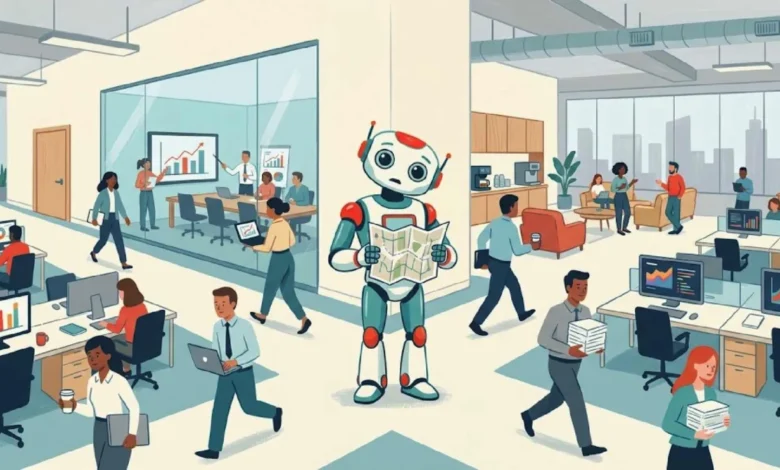
A colleague at a major utility company is preparing to launch 200 autonomous AI agents by the end of next quarter. The deployment is ambitious, with the majority of these agents developed within functional silos like marketing and customer operations rather than through centralized IT departments. While the scale of this initiative is undeniably impressive, it highlights a critical oversight in the modern corporate landscape: the absence of a defined framework for the long-term maintenance, governance, and ownership of AI agents once they have been deployed. When asked who would be responsible for the agents when the underlying models update, when corporate policies evolve, or when the original developers transition to new teams, the response was one of uncertainty. This "ship and forget" mentality is becoming an increasingly common—and dangerous—pattern across the enterprise.
The Shift from Building to Sustaining
For the past two years, the corporate conversation around artificial intelligence has been dominated by the "should we build" phase. As organizations rushed to leverage large language models and agentic workflows, the priority was speed-to-market. However, research suggests that the era of experimentation is rapidly giving way to a period of operational complexity. According to a study conducted by Kana in May 2026, which surveyed 225 senior leaders at large U.S. enterprises, 70% of companies are already running custom AI agents on live marketing workloads. Only 3% of respondents reported having no AI agents in operation.

This saturation indicates that the question of whether to build has been settled. The more pressing, and arguably more difficult, challenge now lies in what happens after deployment. The data reveals a significant disconnect in organizational design. Approximately 40% of surveyed leaders believe that a Chief AI Officer should hold ownership of agentic marketing systems. Among specialized AI leaders, this figure jumps to 52%. Conversely, marketing executives often argue for the retention of control within their own departments, citing the need for brand consistency and tactical agility. This divergence leads to a dangerous middle ground: two highly capable groups, each assuming the other has assumed responsibility for the lifecycle of the agent.
The Governance Gap and Security Risks
The implications of this ambiguity extend far beyond mere operational friction. A February and March 2026 survey of 1,500 IT professionals by Ivanti highlights a staggering gap in institutional awareness. While 85% of IT teams claim that every AI agent in their organization has a named owner, only 42% confirmed that ownership is truly clear. This 43-point gap suggests that while organizations may have a theoretical structure for accountability, the practical reality is often disconnected from formal policy.
This lack of clarity is exacerbated by the way agents are initially provisioned. It is common practice for organizations to spin up agents by cloning the access credentials of human employees. This "permission sprawl" means that a marketing agent might inherit the full CRM access of the person who configured it. If that employee leaves the company or changes roles, the agent continues to function with elevated, often unmonitored, access to sensitive customer data. Without a clear ownership protocol, there is no mechanism to audit or revoke these permissions, creating a significant security vulnerability that often remains hidden until a breach occurs.
Learning from the History of Software Engineering
To understand the gravity of the current situation, it is necessary to look back at the history of software development. Between the 1940s and the 1960s, software was treated as a one-time project—code was written, deployed, and rarely touched again. As corporations began to rely on continuous, interconnected systems, this approach collapsed under the weight of "technical debt." The 1968 NATO conference in Garmisch, Germany, served as the industry’s awakening, marking the birth of modern software engineering. It was here that the industry established the standard lifecycle: requirements, design, build, test, deploy, maintain, and retire.
The "maintain" and "retire" phases were not optional additions; they were hard-won lessons from a decade of system failures. By 1980, researchers Bennet Lientz and Burton Swanson studied 487 organizations and found that maintenance consumed nearly 50% of the total software budget. Crucially, the study found that the vast majority of this work was not fixing "defects," but rather "perfective" and "adaptive" work—updating software to match changing market requirements or environmental shifts.
The parallels to the current AI landscape are striking. An agent designed in March to handle a specific promotion may continue to operate in July using outdated offer logic or, worse, deprecated brand guidelines. Because the agent is technically "working"—in that it hasn’t crashed—it avoids detection, continuing to output stale or inaccurate information. This is not a bug; it is an inevitable outcome of a dynamic business environment interacting with static AI instructions.

Establishing Accountability: A Framework for Success
The transition from an experimental phase to a mature operational model requires a shift in how organizations define accountability. Based on industry best practices, the following framework can help organizations regain control:
- Centralize Infrastructure, Decentralize Logic: The most effective organizational design splits the responsibility. The central AI or IT team should own the "plumbing"—access management, data integrity, and the model layer. The business units, such as marketing or sales, should own the "instructional layer"—tone, campaign logic, and content accuracy.
- Define Agent Ownership: Every agent must have a named human owner responsible for its performance metrics, output quality, and security status. This is not a new headcount requirement, but rather a realignment of existing roles.
- Implement Periodic Audits: Governance cannot be a one-time event that ends at deployment. Organizations should implement a regular cadence of review, moving from pre-launch gates to ongoing, sampling-based monitoring of agent outputs to check for "drift" from original business requirements.
- Adopt an Agent Lifecycle Management (ALM) Model: Similar to the software development lifecycle, firms should treat agents as living products. This includes having a defined process for when an agent is retired, archived, or updated.
- Standardize Permission Controls: Move away from cloning human user profiles. Organizations should utilize "least privilege" access models, ensuring that agents are granted only the specific data permissions required for their narrow function.
The Cost of Inaction
As Salesforce and other enterprise software providers begin to introduce formal "agent development lifecycles" and roles such as "Agent Supervisor," the market is signaling that the era of unregulated AI experimentation is closing. Vendors are building the tools to manage these systems, but the organizational design—the "who does what"—remains the responsibility of the enterprise.
Building a culture of maintenance while the number of agents is still manageable is significantly easier than attempting to retrofit governance once an organization is managing hundreds or thousands of autonomous agents. The software industry needed a decade of crisis to learn that shipping is merely the start of a long-term commitment. Modern enterprises have the opportunity to avoid this decade of pain by integrating maintenance and accountability into their AI strategy today.

On Monday morning, leadership teams should ask two fundamental questions: "Who owns our oldest AI agent?" and "When was the last time a human actually audited its output?" The answers to these questions will reveal whether an organization is truly prepared for the next wave of automation or if it is merely accumulating a massive, hidden maintenance debt that will eventually come due. The tools for success are available; what remains to be seen is whether the management structures within the enterprise will evolve to meet the requirements of an autonomous, agent-driven future.