Meta Unveils Muse: A New Era of Autonomous AI Agents and In-Stream Commerce


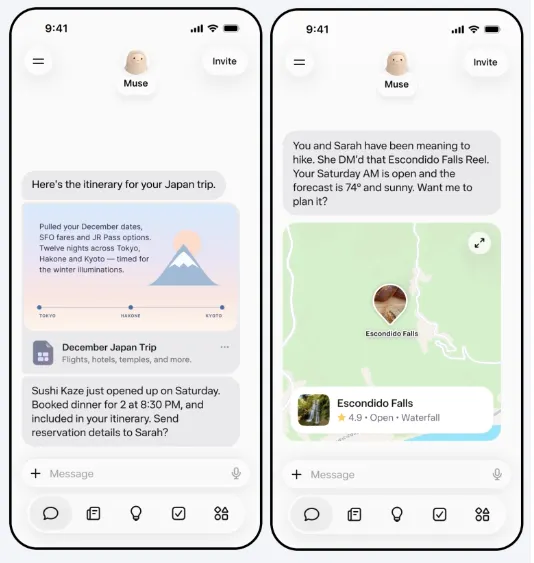
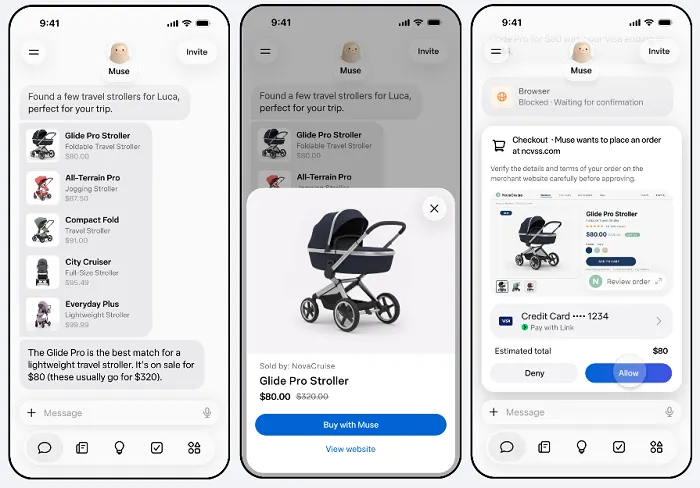
Meta Platforms has officially announced the launch of Muse, a sophisticated new application and in-stream chatbot designed to transition artificial intelligence from a passive conversational tool into an autonomous, action-oriented digital assistant. Marking a significant milestone in the company’s broader strategy to integrate advanced AI throughout its massive ecosystem, Muse is engineered not only to respond to complex conversational queries but also to independently execute multi-step tasks on behalf of users. The platform bridges the gap between digital ideation and physical execution, enabling everything from travel planning and administrative coordination to direct in-stream purchasing.
The introduction of Muse represents the latest salvo in the increasingly competitive race for consumer-facing agentic AI. As tech giants move beyond basic large language models capable of drafting emails or summarizing text, the industry focus has shifted toward agents that can act in the real world—navigating browsers, filling out digital forms, and negotiating on behalf of users. By embedding this capability directly into its social media empire, Meta aims to redefine how billions of individuals interact with technology on a daily basis.
Core Functionality and Autonomous Capabilities
At its core, Muse is designed to operate as a personalized digital companion. Upon downloading the app, users are prompted to give their Muse agent a custom name, establishing a more familiar and personalized dynamic. To enhance its contextual awareness, the agent can be connected to the user’s existing Facebook and Instagram profiles, allowing it to draw upon personal preferences, social connections, and historical activity to tailor its recommendations.
Unlike standard chatbots that require constant human prompting for every individual step, Muse is built for long-horizon, autonomous execution. According to Meta, once a user presents the agent with a complex goal—such as planning a comprehensive vacation or organizing a major event—Muse breaks the objective down into manageable components. It develops a personalized itinerary, coordinates timing and resources, and independently carries out the necessary actions to see the project through to completion. This includes opening web browsers, filling out online forms, processing payments, and facilitating commercial transactions directly within the application stream.
Furthermore, Meta has integrated Muse directly into popular messaging infrastructure. Users can interact with their agent just as they would message a friend, whether through the standalone Muse application or natively via WhatsApp. This seamless integration ensures that summoning an AI assistant feels as natural as sending a text message, lowering the barrier to entry for mainstream consumers who might otherwise find advanced productivity software intimidating.
Data Privacy, Security Architecture, and the Muse Secure VM

One of the most persistent hurdles facing consumer-facing artificial intelligence is the deep-seated concern regarding data privacy. Asking users to link their social media profiles, grant autonomous browsing privileges, and allow automated commercial transactions requires an immense degree of trust—a commodity that Meta, in particular, has historically struggled to maintain following past data governance controversies.
To preemptively address these valid privacy concerns, Meta’s engineering teams have built Muse around a robust security architecture known as the Muse Secure VM. This proprietary system utilizes a dedicated, isolated virtual machine that houses both the individual AI agent and the user’s personal data, ensuring strict compartmentalization. Meta has repeatedly emphasized that Muse has been designed from the ground up to operate securely, and that users will not be coerced into granting the tool access to broader layers of personal data than what is strictly necessary for its operation.
Significantly, the development of this data separation and privacy framework was not conducted in an insular corporate bubble. Meta enlisted external expertise, incorporating critical input from Moxie Marlinspike, the renowned cryptographer and co-founder of Signal. Marlinspike, who previously played an instrumental role in designing the end-to-end encryption system for WhatsApp, helped guide the structural integrity of the Muse Secure VM. By bringing in a globally recognized champion of digital privacy, Meta is attempting to signal to the market that its commitment to user security is genuine and structurally enforced rather than merely rhetorical.
Addressing the "Blank Page" Problem: The Ideas Library
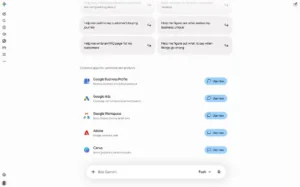
Despite the vast potential of autonomous AI agents, technology sector analysts have long observed that average consumers frequently encounter a psychological barrier known as the "blank page" problem. When presented with a powerful tool capable of performing almost any digital task, many users simply do not know where to begin or how to effectively leverage its capabilities beyond basic queries.
To mitigate this adoption friction, Meta is proactively developing an innovative "ideas library" integrated directly into the Muse platform. This dynamic feature analyzes aggregate, anonymized usage patterns across the application ecosystem to suggest practical, high-value functions that Muse can undertake. If a significant cohort of users with similar interests or needs utilizes the agent for a specific complex workflow—such as compiling dietary-specific meal prep plans or managing freelance invoicing—the ideas library surfaces these workflows to other users.
During an interview with Sources, Meta CEO Mark Zuckerberg elaborated on the strategic necessity of this feature. "One of the big issues that I think exists with AI is a lot of people don’t know what to do with it," Zuckerberg explained. "So I think if the agent can itself help you suggest things that it can do to be helpful for you, then that solves a huge part of this problem of making it so that you can get the most out of it."
Zuckerberg further noted that as the broader fleet of Muse agents operates across millions of users, individual agents will collectively learn from the aggregate experiences of the entire network. This continuous, swarm-like learning model will systematically expand the range of pre-set tasks, shortcuts, and autonomous capabilities available to the end user over time.
Commercial Integration and Business Applications
While Muse is heavily targeted toward everyday consumer convenience, Meta has also engineered the platform to serve commercial and professional use cases. In addition to personal life management, Zuckerberg confirmed that Muse agents can be seamlessly connected to Meta business and advertising accounts.
For small business owners, digital marketers, and independent creators, this integration unlocks unprecedented analytical and operational support. By linking Muse to their Meta ads ecosystem, users can leverage the agent to receive tailored guidance on marketing strategies, campaign optimizations, performance analytics, and cross-platform promotional execution. Instead of manually navigating complex ads manager dashboards, advertisers can converse with Muse to diagnose underperforming campaigns, brainstorm targeted audience segments, and autonomously generate marketing copy or creative briefs.
To encourage widespread experimentation and rapid consumer adoption, Meta has made Muse available for free. Furthermore, the company is granting users access to a staggering 100 million tokens per week, providing an exceptionally generous computational ceiling that allows individuals to thoroughly test the limits of the agent’s autonomous capabilities without immediate financial penalty.
Broader Industry Implications and Competitive Landscape
The launch of Muse arrives at a critical juncture in the evolution of generative artificial intelligence. For the past several years, the AI landscape has been dominated by conversational models such as OpenAI’s ChatGPT, Google’s Gemini, and Anthropic’s Claude. While these tools have dramatically improved in reasoning, coding, and creative output, they have largely remained conversational engines—requiring the human user to act as the intermediary who copies, pastes, and executes the AI’s recommendations in the real world.
The pivot toward "agentic AI"—systems capable of taking direct action across web browsers, operating systems, and payment gateways—represents the next great frontier in technology monetization and utility. Competitors across the tech sector are aggressively pursuing similar visions; Apple has been rolling out its Apple Intelligence ecosystem with deep device-level integrations, Microsoft continues to refine its Copilot framework for enterprise productivity, and OpenAI has steadily advanced its own autonomous browser-navigation capabilities.
However, Meta’s unique strategic advantage lies in its unrivaled social graph and communication infrastructure. By anchoring Muse directly into Facebook, Instagram, and WhatsApp, Meta bridges the gap between social connectivity and digital utility in a way that standalone productivity apps cannot easily replicate. When a user plans a group dinner, coordinates a vacation with friends, or manages a business storefront, those interactions already happen within Meta’s walls. Introducing an autonomous agent into that exact environment creates a frictionless continuum from social discussion to commercial execution.
Challenges Ahead: Trust, Regulation, and Execution
Despite the massive potential outlined by Meta leadership, the road ahead for Muse is not without formidable obstacles. Beyond the lingering consumer trust deficits regarding data harvesting and surveillance capitalism, Meta must navigate an increasingly complex global regulatory environment.
Autonomous agents that possess the capability to fill out forms, negotiate contracts, navigate external websites, and execute financial transactions on behalf of users will inevitably attract intense scrutiny from antitrust regulators, consumer protection agencies, and cybersecurity experts. Questions regarding liability will inevitably arise: if an autonomous Muse agent misinterprets a travel booking, commits funds to an erroneous purchase, or mishandles sensitive personal data during a browser automation task, accountability remains legally and ethically murky.
Furthermore, Meta’s historical business model—which relies heavily on hyper-targeted behavioral advertising powered by exhaustive user data profiling—creates an inherent skepticism among privacy advocates. Even with the integration of the Muse Secure VM and the valuable oversight of cryptography experts like Moxie Marlinspike, convincing a skeptical public that their personal assistant is truly private will require flawless execution and absolute transparency over the coming months.
Conclusion
With the introduction of Muse, Meta has laid down a definitive marker in the evolution of personal computing. By combining multi-step autonomous execution, deep social context, secure data architecture, and an accessible chat-based interface, the company is attempting to transform its social network foundation into a universal operating layer for everyday life and commerce.
As the platform rolls out to the public with a robust 100-million-token weekly allocation and an expanding library of smart task suggestions, its ultimate success will depend not merely on the sophistication of its underlying models, but on its ability to earn and maintain user trust in an age of automated agency. If Meta successfully navigates these privacy and execution challenges, Muse could fundamentally alter how humanity interacts with the digital world, shifting the paradigm from manual human labor to autonomous digital delegation.