Google Expands Gemini Business Capabilities With Advanced AI Tools Third Party App Integrations and Enhanced Visual Generation Features

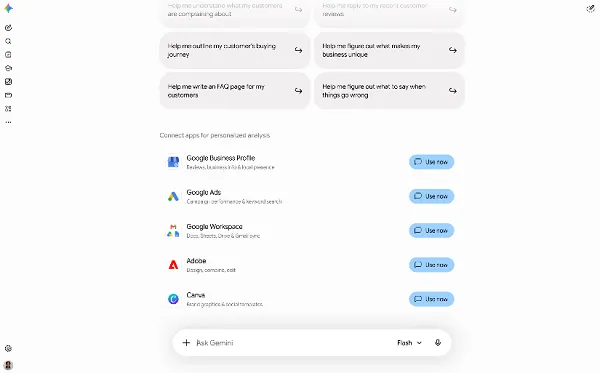
Google has significantly expanded the enterprise and commercial utility of its flagship artificial intelligence ecosystem by rolling out a suite of advanced business assistance tools within the Gemini platform. Designed to streamline operations for small and medium-sized enterprises (SMEs) as well as larger corporate entities, the newly introduced features focus heavily on brand asset creation, comprehensive financial reporting, and deep cross-platform integration. By bridging the gap between conversational AI and practical business administration, Google aims to position Gemini as a central operational hub rather than a standalone chatbot.
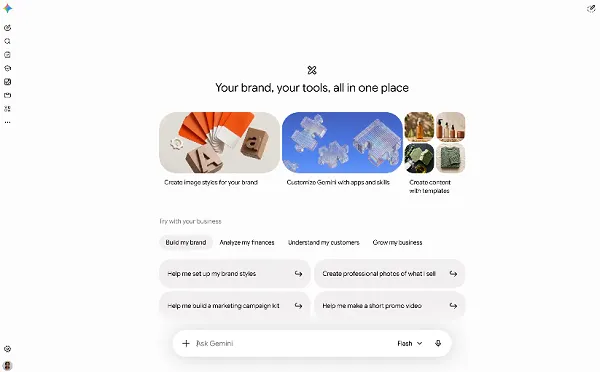
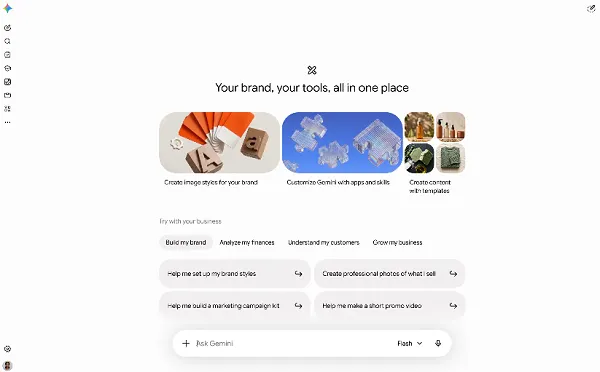
The official rollout introduces a completely redesigned landing page tailored specifically for business users, providing immediate, frictionless access to specialized modules. These include rapid brand content creation channels, granular financial performance analysis engines, and sophisticated audience insight generators. Furthermore, the updated architecture allows businesses to link their existing Google profiles directly to the Gemini ecosystem. This integration feeds the AI more accurate, contextual data, enabling it to deliver hyper-tailored recommendations regarding marketing strategies, inventory management, and consumer engagement trends.
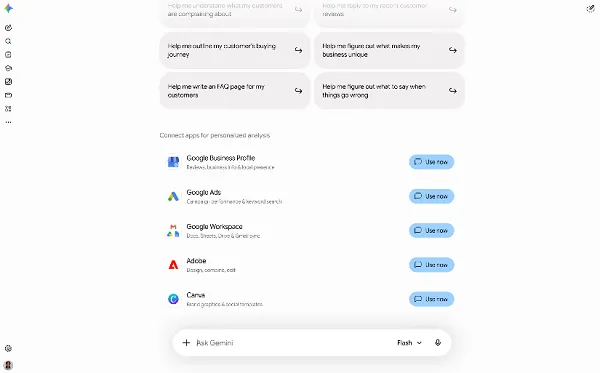
Beyond Google’s native ecosystem, the upgraded Gemini platform now boasts native support for a robust selection of third-party enterprise and creative applications. Software suites such as Adobe, Canva, Dropbox, and Shopify can now interface directly with the AI, vastly expanding its operational capacity. This interoperability allows users to pull design elements, access cloud-stored documentation, and manage e-commerce storefront metrics directly through conversational prompts.
However, this expanded access requires businesses to entrust sensitive operational data to Google’s AI infrastructure. While the potential for productivity gains is substantial, industry analysts note that integrating third-party applications with powerful language and multimodal models introduces complex security considerations that organizations must carefully evaluate.
Evolution of Google Gemini in the Enterprise Market
The introduction of these business-specific tools represents the latest milestone in Google’s aggressive strategy to monetize and expand its generative AI technologies across the commercial sector. Following the initial rebranding of Bard to Gemini and the subsequent rollout of enterprise-grade subscriptions, Google has steadily worked to differentiate its AI offerings from competitors such as OpenAI’s ChatGPT Enterprise and Microsoft Copilot.
Chronology of Key Developments Leading to the Business Suite Integration
The path toward a comprehensive AI business assistant has been marked by rapid technological iterations and strategic ecosystem expansions:
Early 2023: Google introduces conversational AI initiatives under the Bard moniker, focusing initially on general consumer tasks, basic coding assistance, and web-search integration.
Late 2023 to Early 2024: The platform undergoes a massive structural upgrade, rebranding to Gemini. Google introduces tiered subscription models aimed at professionals and enterprises, emphasizing data privacy and expanded context windows.
Mid 2024: Google integrates Gemini deeply into Workspace applications, including Google Docs, Sheets, Slides, and Gmail, allowing users to draft documents and analyze spreadsheets using natural language.
Late 2024: The deployment of advanced multimodal capabilities, including enhanced image and data processing models, sets the technical foundation for domain-specific applications.
Current Rollout: Google launches the dedicated business landing page, third-party app integration frameworks, and advanced visual style-retention models designed explicitly for marketing and financial administration.
Through this phased development, Google has systematically transitioned Gemini from a consumer-facing novelty into an integrated enterprise utility. The current update specifically targets the operational bottlenecks faced by smaller business owners who may lack dedicated departments for graphic design, financial modeling, or data analytics.
Revolutionizing Brand Asset Creation and Visual Consistency

One of the most notable upgrades within the new Gemini business suite is the overhaul of its image generation capabilities. Historically, generative AI tools often struggled to maintain visual consistency across multiple outputs, requiring users to repeatedly input exhaustive stylistic prompts, color codes, and design parameters. Google’s latest update directly addresses this limitation.
Under the new framework, businesses can upload proprietary brand assets directly into the platform. This includes official logos, specific typography files, designated color palettes, and direct website links. By providing Gemini with this foundational context, the AI can cross-reference user prompts with established brand guidelines, ensuring that all generated creative outputs align with the company’s visual identity.
Google highlighted the synergy between these new contextual inputs and its underlying visual technology in official documentation: "When paired with the power of Nano Banana 2.1 (our latest image generation model), Gemini can now deliver end-to-end visual results for new product launches or ongoing marketing campaigns. Gemini retains this visual style, allowing owners to easily generate cohesive, on-brand assets without having to repeatedly upload their style guidelines."
For marketing teams and small business owners, this capability drastically reduces the time required to produce promotional materials for social media, digital advertising, and product packaging. By streamlining the creative workflow, Gemini empowers non-designers to produce professional-grade visual assets while maintaining strict brand integrity.
Streamlining Financial Reporting and Data Analysis
In addition to creative enhancements, the updated Gemini platform introduces advanced data processing tools capable of transforming raw financial records into actionable business intelligence. Small business owners frequently struggle with the administrative burden of parsing complex spreadsheets, reviewing bank statements, and reconciling purchase orders.
The upgraded Gemini infrastructure can ingest diverse data formats—including unstructured spreadsheets, scanned receipts, and historical purchase records—and instantly convert them into dynamic financial graphics and interactive analytical models. This functionality allows users to query their financial data conversationally. For example, a business owner can ask Gemini to identify top-performing product categories over the previous quarter, project cash flow for the upcoming fiscal year, or highlight anomalous spending patterns in recent vendor invoices.
By automating these labor-intensive tasks, Google aims to democratize access to high-level financial analysis, enabling lean organizations to make data-driven decisions without requiring specialized data science personnel.
Market Context and Industry Adoption Rates
The market for enterprise artificial intelligence assistants has experienced exponential growth over the past twenty-four months. According to recent enterprise technology surveys, over 75% of businesses with more than fifty employees have integrated some form of generative AI into their daily operations. Among smaller businesses, adoption rates are rapidly accelerating as software providers embed AI functionalities directly into existing accounting, customer relationship management (crm), and marketing platforms.
Google’s strategy of leveraging its vast ecosystem—connecting Search, Workspace, Cloud infrastructure, and now third-party applications like Shopify and Adobe—provides a distinct competitive advantage. By positioning Gemini as an all-encompassing operational cockpit, Google reduces the friction associated with switching between disparate software subscriptions.
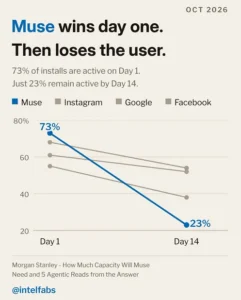
However, market analysts emphasize that user retention and long-term adoption will depend heavily on the reliability, speed, and security of the platform. As businesses increasingly rely on AI to manage financial ledgers and generate customer-facing marketing materials, the margin for error narrows significantly.
Security, Data Privacy, and Inherent Risks of Enterprise AI
While the functional benefits of Google’s new business tools are extensive, the integration of sensitive corporate data into artificial intelligence platforms continues to spark important debates regarding cybersecurity and privacy.
When businesses connect tools like Dropbox, Shopify, and financial record repositories to Gemini, they grant the AI platform access to proprietary operational data. This data exchange is essential for generating accurate insights and customized recommendations, but it also broadens the organization’s digital attack surface.
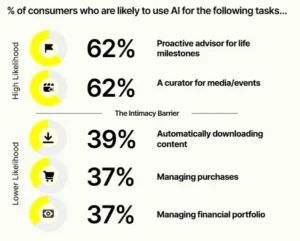
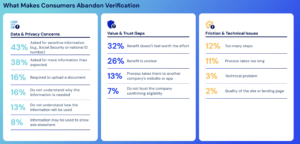
Security experts frequently warn about the risks associated with data handling in large-scale AI environments. Incidents across the broader technology sector—involving accidental data exposure, prompt-injection exploits, and vulnerabilities in third-party API integrations—have highlighted the potential dangers of entrusting sensitive business intelligence to machine learning models. Although Google’s enterprise-grade infrastructure includes robust encryption and privacy protocols designed to prevent customer data from being used to train public models without explicit authorization, the psychological barrier of data trust remains a significant hurdle for many risk-averse organizations.
Google has maintained a strong security posture regarding its enterprise offerings, emphasizing that user data remains private and protected under strict regulatory compliance frameworks. Nevertheless, industry watchdogs advise business owners to conduct thorough risk assessments before deploying AI-driven financial and operational tools across their entire organization.
Broader Implications for the Future of Work
The integration of advanced business assistance tools into platforms like Google Gemini signals a fundamental shift in how small and medium-sized enterprises operate. Tasks that traditionally required dedicated human capital—such as market research, graphic design, financial forecasting, and cross-platform data management—can now be orchestrated through natural language prompts.
This technological shift offers profound economic advantages, potentially lowering the barriers to entry for new entrepreneurs and enabling lean teams to compete with much larger corporations. By automating routine administrative and creative workflows, business owners can redirect their focus toward strategic growth, product innovation, and customer relationship management.
At the same time, the broader implementation of AI across the commercial sector necessitates continuous adaptation. Professionals must develop new digital literacy skills to effectively prompt, supervise, and audit AI-generated outputs. Ensuring that human oversight remains central to business decision-making will be critical in mitigating the risks of algorithmic error or unintended data exposure.
As Google continues to refine and expand the Gemini ecosystem, the platform’s evolution will likely serve as a barometer for the entire enterprise AI industry. The success of these new business tools will not only measure Google’s capacity to innovate within the commercial space but will also shape the operational standards for modern digital commerce in the years ahead.