Allegro unveils ambitious omnichannel strategy and platform verticalization at inaugural Allegro Open conference in Poznan

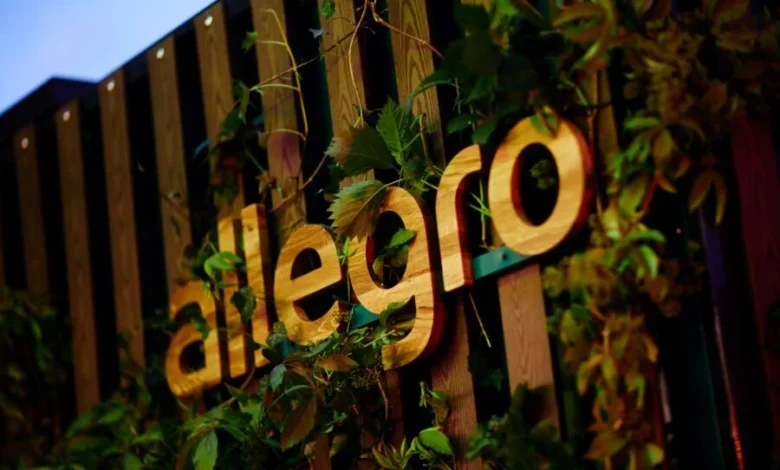
In a strategic pivot that signals a fundamental shift in the European e-commerce landscape, Polish marketplace giant Allegro has announced plans to export its internal operational infrastructure to third-party retailers. The initiative, unveiled during the inaugural Allegro Open conference in Poznan, marks a transition from a traditional closed-marketplace model toward an open, service-oriented ecosystem. By offering its proprietary logistics, financial, and advertising tools to external online stores, Allegro aims to cement its role as the backbone of the Polish digital economy, enabling partners to drive sales both on and off the platform.
The Poznan event, which drew thousands of stakeholders from across the Polish e-commerce sector, served as the launchpad for a vision CEO Marcin Kuśmierz described as the most partner-friendly model in Europe. The core of this strategy is the "democratization" of Allegro’s high-performance tools, which have historically been restricted to transactions occurring within the Allegro domain. By providing access to these resources, the company intends to help merchants stabilize their operations and scale their reach across diverse digital channels.
The Shift Toward Verticalization
Beyond its move to provide external services, Allegro is undertaking a massive technical and visual transformation known as platform verticalization. For years, the company operated as a horizontal marketplace, treating all product categories with a standardized interface. Recognizing that the purchasing journey for a consumer buying automotive parts differs significantly from one purchasing cosmetics or electronics, Allegro is now implementing tailored interfaces for key verticals.
This granular approach is designed to replicate the specialized shopping experience found in niche e-commerce boutiques. By optimizing the purchasing process for specific categories, the company expects to increase conversion rates and foster greater user loyalty. This transition represents a significant investment in user experience (UX) and data science, moving away from a "one-size-fits-all" layout to a dynamic, industry-specific framework.
Strengthening the Seller Ecosystem
Central to the conference announcements was the introduction of the Allegro App Store, an integrated hub designed to simplify the technical requirements of selling online. This platform will provide vendors with curated access to third-party applications, ranging from inventory management software to advanced analytics tools. By centralizing these resources, Allegro is effectively reducing the barrier to entry for small and medium-sized enterprises (SMEs) that may lack the technical capital to integrate disparate software solutions independently.
Furthermore, the company introduced a comprehensive seller protection program. This initiative is designed to standardize the support framework for partners, mitigating the risks associated with fraudulent buyers and logistical disputes. Industry analysts suggest that this move is a direct response to the increasing competitive pressure from international platforms and the rising demand for security in the B2B2C space. By professionalizing the seller-platform relationship, Allegro is positioning itself not merely as a marketplace, but as a strategic business partner.
Chronology of Growth and International Expansion
Allegro’s recent announcements follow a period of intense operational refinement and rapid international expansion. Founded in 1999, the platform has evolved from a local auction site into a regional powerhouse.
- 2020: Allegro completes its IPO on the Warsaw Stock Exchange, marking one of the largest listings in Polish history.
- 2021-2022: The company aggressively expands its footprint, acquiring Mall Group and CZC.cz, thereby solidifying its presence in Czechia, Slovakia, and Hungary.
- 2023: Allegro focuses on stabilizing its international operations, including the difficult decision to divest its interests in Slovenia and Croatia to optimize regional focus.
- 2024: The company integrates artificial intelligence via a strategic partnership with OpenAI to enhance search functionality, customer service chatbots, and logistics efficiency.
- 2025: The first half of the year sees a notable 13.7 percent increase in total Gross Merchandise Value (GMV), with international operations surging by 64.8 percent, signaling that the company’s regional diversification is yielding dividends.
Leveraging AI and Logistics
Operational efficiency remains the primary driver behind the company’s recent technological investments. The partnership with OpenAI is already being felt in the backend of the platform, where AI models are used to improve product categorization and personalize marketing efforts for individual users.
Logistics also remains a cornerstone of the company’s expansion. The upcoming launch of "Allegro XL"—a specialized service for large and heavy goods—represents the next phase of this strategy. Developed in collaboration with Rohlig SUUS Logistics, this service addresses a notorious "pain point" in e-commerce: the delivery and installation of bulky items. Members of the Allegro Smart subscription program will gain access to premium services, including unpacking, assembly, and the removal of legacy equipment. This service is expected to unlock a market segment estimated at 10 billion Polish zloty, effectively allowing thousands of local retailers to compete with specialized furniture and appliance retailers.
Implications for the Competitive Landscape
The decision to open up its infrastructure to external retailers is a calculated maneuver that mirrors the "platform-as-a-service" (PaaS) models seen in global giants like Amazon and Shopify. By integrating its logistics and financial services into the operations of independent stores, Allegro is creating a "sticky" ecosystem. When a retailer relies on Allegro’s logistics network and financial tools to run their own standalone website, they are significantly less likely to abandon the Allegro marketplace.
However, this strategy is not without risks. Managing the complexity of a service-oriented model requires significant capital expenditure and a high degree of technical agility. Furthermore, by becoming an infrastructure provider, Allegro will face increased scrutiny regarding data privacy and competitive fairness. If the company is seen to be favoring its own marketplace merchants over external retailers using its services, it could invite regulatory challenges, particularly under the European Union’s Digital Markets Act (DMA).
Industry Reactions and Future Outlook
Market observers have largely responded positively to the announcements. "Allegro is moving from being a destination to being a utility," noted one industry analyst. The ability to manage a brand’s presence across multiple channels while utilizing a single, integrated back-end infrastructure is a massive value proposition for Polish merchants who have previously struggled to reconcile multi-channel sales data.
As Allegro enters the second half of the decade, the focus remains on customer and partner centricity. CEO Marcin Kuśmierz emphasized that the goal is to reduce the friction of digital commerce. By removing technical barriers—whether through the Allegro App Store, the new seller protection schemes, or the specialized logistics of Allegro XL—the company is building a defensive moat that will be difficult for competitors to replicate.
The data supports this optimism. With international GMV growth of nearly 65 percent, the company has proven that its marketplace model is exportable. The current transition toward an open service provider signifies that Allegro is no longer content with being the largest marketplace in Poland; it intends to be the fundamental operating system for e-commerce in Central and Eastern Europe.
Strategic Conclusion
The inaugural Allegro Open conference has effectively redefined the company’s corporate narrative. By shifting its focus toward verticalization and the provision of external services, Allegro is signaling that it understands the future of retail is not just about the transaction, but about the ecosystem surrounding it.
The success of these initiatives will hinge on the company’s ability to execute its logistical promises and maintain the trust of its massive partner base. If Allegro can successfully transition from a marketplace that facilitates sales to a technological partner that powers the broader digital economy, it will likely secure its position as a dominant force in the European tech landscape for years to come. The integration of AI, the expansion into heavy-goods logistics, and the opening of its proprietary software tools represent a bold, mature, and highly integrated strategy designed to weather the volatility of the global retail market while fostering sustainable growth for thousands of Polish businesses.