Meta Platforms Fails to Press Rival TikTok Into Child Safety Settlement After Blocked Ad Campaign

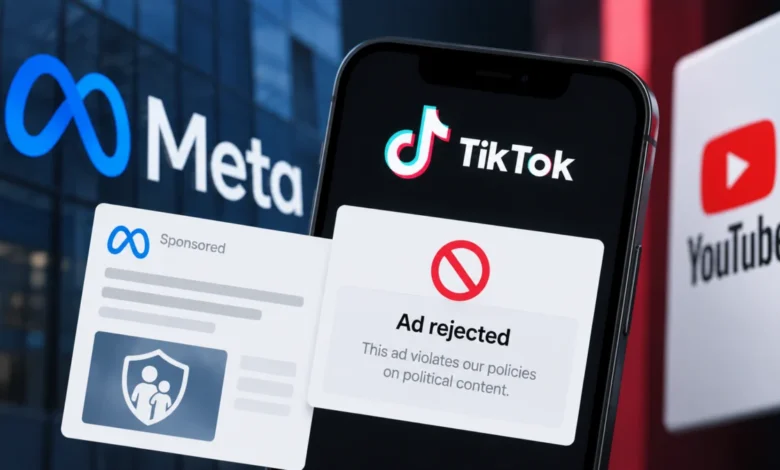
The ongoing battle over youth digital safety and social media regulation took a sharp turn when TikTok officially rejected an advertising campaign from Meta Platforms. The rejected ads urged both TikTok and Google’s YouTube to join Meta in its multibillion-dollar legal settlement with U.S. state attorneys general regarding child safety on social media. According to reports, TikTok blocked the promotional content by classifying it as political advertising, a category strictly prohibited under the platform’s advertising guidelines.
This refusal highlights a deepening public standoff among the world’s most prominent technology conglomerates. At the center of the dispute is a massive financial and structural agreement that Meta struck with U.S. states to resolve allegations that Facebook and Instagram were intentionally designed to be addictive and harmful to minor users. Meta’s strategy relies heavily on industry-wide adoption. Part of the settlement’s financial structure and its operational feasibility are directly contingent on whether competing platforms agree to implement matching restrictions. By blocking Meta’s outreach, TikTok has dealt a notable blow to Meta’s efforts to establish a universal regulatory standard across the social media landscape.
The Background and Financial Stakes of Meta’s Settlement
To fully understand the gravity of the current impasse, one must examine the origins of the legal pressure facing Meta. Over the past several years, a coalition of state attorneys general from across the United States launched coordinated investigations and lawsuits against major social media companies. The legal actions argued that platforms deployed features such as infinite scrolling, algorithmic feeds, and notification systems designed to maximize engagement among children and teenagers, often at the expense of their mental health and well-being.
Facing mounting legal liability, Meta reached a landmark settlement agreement with U.S. states valued at up to $16.7 billion. Under the terms of this agreement, Meta committed to transforming how young people experience Facebook and Instagram. The mandatory changes include strict daily usage limitations, mandatory overnight access restrictions to curb late-night scrolling, and the elimination or reduction of notification alerts during standard school hours. Furthermore, the platform introduced options for chronological feeds—bypassing engagement-driven algorithms—along with limitations on the public display of likes and other emotional reactions for underage accounts.
However, a critical component of the $16.7 billion settlement is contingent on market dynamics. Approximately $5 billion of the total financial agreement is tied directly to whether competing platforms, specifically TikTok and YouTube, agree to adopt equivalent operational restrictions and contribute roughly $5 billion each through similar settlements. Without this parity, Meta argues it faces an unfair competitive disadvantage. If Facebook and Instagram are mandated to operate under strict child safety rules while platforms like TikTok and YouTube maintain status quo operations, Meta risks losing a significant portion of its younger user base to competitors who remain unbound by identical limitations.
Chronology of the Escalating Standoff
The friction between Meta and its primary competitors has escalated through a carefully orchestrated sequence of public relations and regulatory maneuvers over recent weeks:
- Late August: Meta announces its monumental settlement with U.S. states, signaling a willingness to overhaul youth features on Facebook and Instagram while publicly calling on industry peers to follow suit.
- Early September: Meta initiates a broader public relations and advertising campaign. This campaign features public statements, digital outreach, and paid advertisements arguing that teen safety cannot be achieved in a silo, as restricted teenagers can simply migrate to competing applications.
- Mid-September: Meta attempts to place video advertisements directly onto TikTok. The creative assets feature text, imagery, and a voiceover explicitly calling on TikTok and YouTube to accept settlement terms that mirror Meta’s agreement with state regulators.
- Wednesday: TikTok formally rejects Meta’s paid advertising campaign, citing internal policies that ban political advertising.
- Subsequent Days: Reports emerge indicating that both TikTok and YouTube have largely maintained a stance of public disengagement, declining to comment directly on Meta’s pressure tactics or join the multi-platform regulatory framework. Concurrently, both platforms appear to withdraw from scheduled participation in external panels, such as a Health and Human Services discussion on children’s screen time and a congressional meeting involving the House China Select Committee.
Platform Policies and the "Political Advertising" Classification

TikTok’s decision to block Meta’s promotional campaign rests on its corporate policy regarding political advertising. Digital advertising ecosystems maintain distinct definitions for commercial, social issue, and political ads. Meta’s advertisements addressed public policy, industry regulation, and a legal settlement involving state governments—elements that TikTok evaluated as falling under the umbrella of political or advocacy content.
By enforcing this boundary, TikTok effectively shielded its platform from becoming a battleground for corporate lobbying and inter-platform dispute resolution. While major brands frequently utilize programmatic advertising and paid media to target consumers, using paid channels to directly pressure corporate competitors over public policy and legal settlements is an unusual tactic. TikTok’s strict adherence to its advertising guidelines prevented Meta from leveraging TikTok’s own audience to rally public and regulatory support against the platform.
Industry Reactions and Strategic Silence
As the public feud unfolds, the response from the targeted competitors has been notably restrained. Neither TikTok nor YouTube has issued substantive public statements regarding Meta’s demands. Industry analysts note that silence is a deliberate strategic choice. By refusing to engage in a public back-and-forth, TikTok and YouTube avoid validating Meta’s framing of the issue, which attempts to position Meta as an industry leader in child safety while casting rivals as laggards.
Furthermore, both platforms have distanced themselves from collaborative forums addressing these exact topics. Observers noted that representatives from TikTok and YouTube appeared to step back from a draft agenda for a Health and Human Services panel focusing on children’s screen time. Additionally, TikTok reportedly withdrew from a scheduled congressional meeting with the House China Select Committee following the announcement of Meta’s settlement. These moves suggest a coordinated preference to navigate regulatory scrutiny independently rather than participate in an initiative heavily shaped by Meta’s legal compromises.
Broader Implications for the Social Media Industry
The breakdown of Meta’s outreach campaign carries significant implications for the future of digital media, regulatory compliance, and paid advertising policy.
First, the dispute underscores the rigid enforcement of platform advertising policies. Even the world’s largest technology companies are subject to the content moderation rules of competing networks. Meta’s inability to purchase ad space on TikTok demonstrates that platform governance models can successfully restrict brands from using paid media to influence public policy debates or pressure market rivals.
Second, the future of teen safety regulation on social media remains fractured. Meta’s ambitious bet was that public pressure and financial conditionality could transform its settlement into a de facto industry standard. If major competitors refuse to adopt parallel restrictions, Meta faces a difficult strategic choice: maintain strict safety measures that potentially disadvantage its platforms in the youth demographic, or seek modifications to its legal agreements with state attorneys general.
Ultimately, what happens next will heavily influence the digital experiences of millions of young users. If regulatory pressure eventually forces TikTok, YouTube, and other platforms to implement similar usage caps, feed adjustments, and notification limits, the entire social media ecosystem could experience a paradigm shift in audience engagement, content consumption, and digital advertising opportunities. However, as TikTok’s recent ad rejection proves, forcing an entire industry to align under a single corporate settlement will require far more than public relations campaigns and digital advertisements.