LinkedIn Releases New B2B Marketing Strategy Guide to Address the Rise of AI and Dark Social in Buyer Journeys

The modern B2B marketing landscape is undergoing a profound structural transformation, driven by shifting consumer habits, privacy regulations, and the rapid proliferation of artificial intelligence. In response to these sweeping industry changes, professional networking giant LinkedIn has published a comprehensive new guide and strategic checklist designed to help business-to-business (B2B) marketers align their digital campaigns with contemporary discovery behaviors.
As traditional sales funnels continue to fracture, the platform’s latest resource emphasizes that modern decision-makers are conducting extensive independent research, peer comparisons, and initial vendor shortlisting long before they ever engage directly with a sales representative. Furthermore, the advent of Large Language Models (LLMs) and conversational AI tools has accelerated this opaque evaluation process, fundamentally challenging how organizations measure marketing return on investment (ROI). By detailing five core performance principles and offering actionable campaign frameworks, LinkedIn aims to provide B2B brands with the necessary tools to capture value across an increasingly invisible buyer’s journey.
The Shifting Paradigm of B2B Buyer Behavior
To fully understand the impetus behind LinkedIn’s latest release, industry observers must examine the broader evolution of corporate purchasing habits over the last decade. Historically, the B2B sales cycle relied heavily on a linear, outbound-driven model. Marketing teams generated top-of-funnel leads through gated content, whitepapers, and webinars, subsequently passing those contact details to sales development representatives (SDRs) who initiated direct outreach.
However, contemporary B2B buyers—comprising millennials and younger generations who now occupy key procurement and decision-making roles—demonstrate a strong preference for autonomous research. According to various enterprise sales studies, modern decision-makers spend less than twenty percent of their total purchasing journey interacting directly with potential suppliers. The vast majority of their time is spent independently reading reviews, consulting peer networks, consuming social proof, and utilizing digital search mechanisms.
This phenomenon, frequently categorized under the broader umbrella of "dark social" and dark funnel marketing, has been supercharged by generative artificial intelligence. Today’s corporate buyers increasingly turn to sophisticated LLMs and AI-powered research assistants to synthesize market options, draft initial vendor longlists, and weigh technical specifications. Because these interactions occur within private AI prompts or closed conversational ecosystems, they remain largely untrackable through traditional web analytics and standard CRM lead-capture forms.
Consequently, B2B marketers face mounting pressure from executive leadership to demonstrate measurable business impact while simultaneously losing visibility into the earliest—and often most critical—stages of the customer evaluation cycle. Measuring campaign performance solely at the point of final lead capture or conversion misses the vast majority of brand-building and consideration-shaping activities that transpired beforehand.
LinkedIn’s Five Core Principles of B2B Marketing Performance
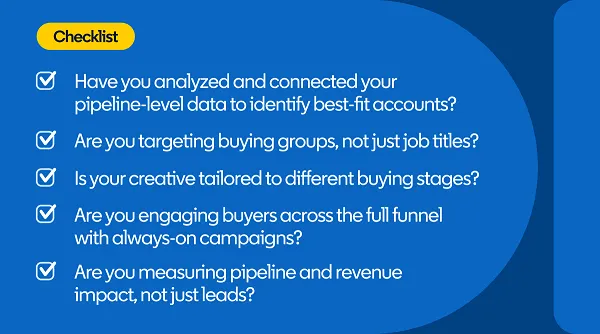
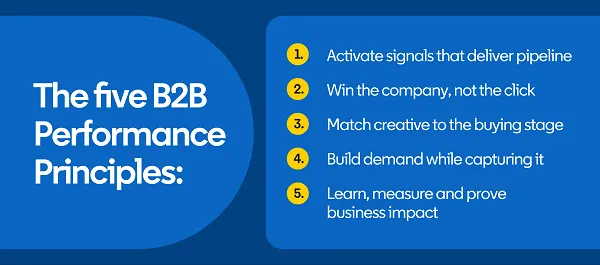
Recognizing these visibility challenges, LinkedIn’s newly shared guidance outlines five fundamental principles designed to help marketers adapt their strategies to the realities of modern AI-driven discovery and decentralized buyer journeys.
-
Comprehensive Market Research and Audience Expansion
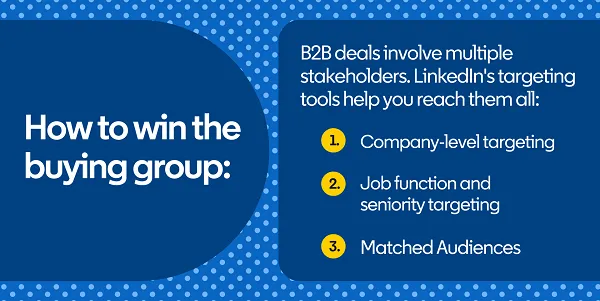
The platform advises brands to move beyond narrow demographic definitions and conduct rigorous market research to thoroughly understand their target audiences. LinkedIn emphasizes the necessity of expanding audience targeting to reach every individual within an organization who influences or shapes purchase decisions, rather than focusing exclusively on the ultimate budget-holder or C-suite executive. In many modern enterprises, purchasing committees consist of six to ten stakeholders across technical, financial, and operational departments, all of whom consume content and form opinions independently. -
Full-Funnel Content Alignment
Marketers must develop and distribute content tailored to the distinct stages of the modern purchase process. This involves creating educational, high-value assets that address awareness and consideration phases, rather than solely pushing bottom-of-funnel promotional material. By providing relevant information early, brands increase the likelihood of being incorporated into an AI-generated shortlist or an internal stakeholder debate.
-
Granular, Multi-Stage Performance Measurement
Rather than relying exclusively on last-touch attribution or final lead-capture metrics, brand managers are encouraged to measure campaign performance at every stage of the buyer’s journey. This multi-touch perspective allows marketing teams to evaluate brand lift, content engagement, and consideration metrics over time, offering a more holistic view of campaign effectiveness. -
Leveraging Advanced Platform Tracking Tools
To operationalize these measurement strategies, LinkedIn highlights its suite of native tracking tools, including LinkedIn Conversion Tracking. These capabilities enable organizations to measure the specific actions and micro-conversions that users take after viewing or interacting with an ad on the platform, bridging the gap between passive exposure and active engagement. -
Strategic Audience Segmentation
Marketers are encouraged to utilize sophisticated audience targeting options to deliver personalized messaging to distinct buyer personas and market segments. By categorizing audiences based on job title, industry, seniority, and company size, brands can ensure their messaging resonates with the specific pain points of different committee members.
Industry Context and Technical Implications
The release of LinkedIn’s B2B checklist arrives at a critical juncture for digital advertising budgets. As macroeconomic pressures prompt tighter scrutiny on marketing expenditures, CMOs are routinely asked to justify every dollar spent. At the same time, the impending deprecation of third-party cookies across major web browsers and tightening global privacy regulations have degraded the efficacy of traditional tracking methodologies.
In this environment, walled gardens like LinkedIn—which possess authenticated, first-party professional data derived from hundreds of millions of global career profiles—hold a distinct strategic advantage. By encouraging marketers to rely on native platform tools rather than fragmented external tracking mechanisms, LinkedIn is positioning its ecosystem as an indispensable environment for navigating the dark funnel.
Digital marketing analysts note that the integration of AI into buyer discovery represents both a challenge and an opportunity. While LLMs obscure traditional tracking, they also reward brands that maintain a robust, highly visible digital footprint across authoritative professional networks. When a buyer asks an AI assistant to recommend enterprise software providers, the AI’s output is heavily influenced by the volume and authority of digital content associated with those brands across major web properties and professional platforms. Consequently, maintaining an active, highly targeted presence on professional networks directly influences an organization’s likelihood of appearing in AI-driven recommendations.
Chronology of the Shift Toward Non-Linear B2B Journeys
The transition toward the modern B2B framework highlighted by LinkedIn did not happen overnight. A review of industry developments over the past five years reveals a steady progression:
- 2019–2020: The onset of remote work during the global pandemic accelerates digital transformation across corporate sectors, forcing B2B sales teams to abandon traditional in-person networking and field marketing in favor of digital-first outreach.
- 2021–2022: Industry studies increasingly highlight the expansion of the B2B buying committee, noting that purchasing decisions involve significantly more stakeholders who conduct independent online research.
- 2023: The mainstream emergence of generative artificial intelligence and commercial LLMs fundamentally alters search and discovery habits, as corporate buyers begin utilizing AI tools for vendor evaluation.
- 2024: Privacy shifts, cookie phase-outs, and the rising prominence of dark social prompt digital platforms to overhaul their measurement products, shifting away from simple lead-generation metrics toward comprehensive brand-building and multi-touch attribution models.
- 2025 and Beyond: Platforms like LinkedIn formalize these changes by releasing strategic guides, checklists, and advanced tracking suites specifically designed to help marketers navigate AI-influenced discovery behaviors.
Broader Business Implications and Strategic Takeaways
The implications of LinkedIn’s guidance extend far beyond campaign execution; they signal a fundamental cultural shift required within B2B corporate marketing departments. For years, the operational firewall between brand marketing (focused on awareness and perception) and demand generation (focused strictly on immediate lead acquisition) created inefficiencies.
LinkedIn’s latest framework underscores the necessity of unifying these disciplines. Because modern buyers form unshakeable opinions long before speaking to a salesperson, top-of-funnel brand awareness is no longer a luxury metric—it is a critical revenue driver. If a brand is absent from the conversation during the early, untrackable stages of AI research and peer consultation, it will struggle to win business at the final proposal stage, regardless of how aggressive its downstream lead-capture tactics may be.
Furthermore, marketing teams must re-evaluate their key performance indicators (KPIs). Transitioning away from single-source attribution models toward econometric modeling, brand lift studies, and multi-stage tracking requires executive buy-in and a willingness to accept more nuanced forms of measurement.
As artificial intelligence continues to reshape how enterprise software, professional services, and industrial products are researched and procured, the playbook for B2B marketing will continue to evolve. LinkedIn’s newly published checklist provides an immediate roadmap for organizations seeking to adapt their strategies, offering a structured approach to capturing attention in an increasingly complex and automated digital marketplace. By aligning campaign execution with the behavioral realities of today’s autonomous buyers, B2B brands can build more resilient, transparent, and effective marketing engines for the future.