Demystifying the Cloud: How MIT Professor Christina Delimitrou is Using AI to Combat Data Center Energy Crises

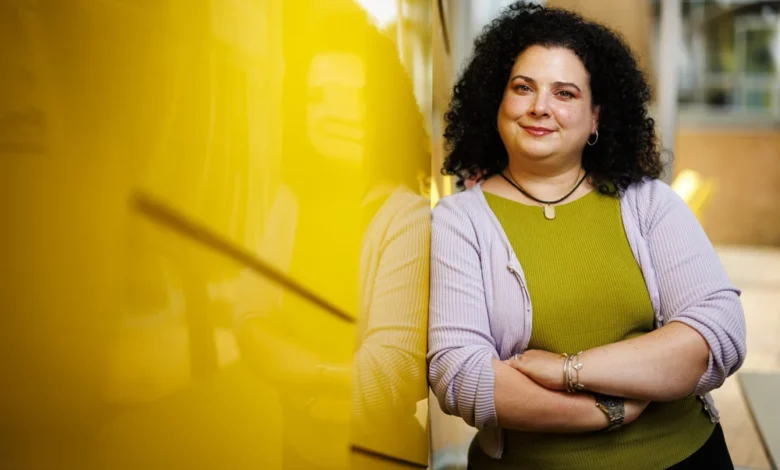
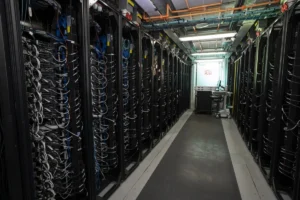
The global proliferation of power-hungry data centers has placed an unprecedented strain on electrical grids worldwide, accelerating a dangerous reliance on polluting fossil fuels to meet soaring digital demands. As generative artificial intelligence, cloud computing, and ubiquitous streaming services dominate modern daily life, the physical infrastructure powering these technologies is expanding at an alarming rate. Enter Christina Delimitrou, a newly tenured associate professor at the Massachusetts Institute of Technology (MIT), who is leading a critical charge against this environmental threat. Rather than focusing solely on alternative energy generation, Delimitrou is rethinking the fundamental operation of the computer servers and networking equipment housed within these massive facilities.
By applying advanced machine learning to optimize large-scale data centers, Delimitrou and her research group are working to make modern computing systems more efficient, secure, and reliable. Their initiatives involve redesigning outdated cloud computing architectures, developing sophisticated methods to manage shared hardware resources, and engineering streamlined server frameworks. These computational breakthroughs allow data center operators to extract significantly more processing power from existing hardware, offering a sustainable path forward for an industry grappling with explosive growth and constrained energy resources.
The Scale of the Crisis: Bloating and Underutilization
The modern digital ecosystem operates on an infrastructure that is astonishingly wasteful. According to industry analyses, modern data centers consume upwards of one to two percent of global electricity—a figure projected to surge significantly as artificial intelligence workloads expand. This energy consumption is compounded by systemic inefficiencies embedded deeply within software and hardware designs.
"If data centers are not utilized to the best of their capabilities, then they will burn much more power than they need to meet growing user demand," explains Delimitrou, who serves as the KDD Career Development Associate Professor in Communications and Technology within MIT’s Department of Electrical Engineering and Computer Science (EECS), alongside her affiliation with the Computer Science and Artificial Intelligence Laboratory (CSAIL). "There is a lot of bloating, especially on the software side of these systems. If we can remove that bloating in a way that doesn’t compromise performance, then we won’t need to build as many new data centers."
Beyond environmental concerns, Delimitrou’s research targets user-facing performance issues. By harnessing artificial intelligence to help software developers identify and resolve latent bugs in cloud-based applications—ranging from commercial music-streaming platforms to mission-critical video conferencing systems—her work eliminates application downtime that not only hampers user experience but also needlessly drains computational resources. "By managing resources more effectively in the cloud, the end user gets more predictable performance from the application running on their smartphone," she notes.
Mathematical Beginnings: From Northern Greece to Stanford
Delimitrou’s trajectory toward pioneering cloud optimization is rooted in a lifelong affinity for mathematics and analytical problem-solving. Growing up in a mid-sized town on the plains of northern Greece, her early intellectual curiosity was nurtured by the deep historical traditions of her homeland, where ancient scholars like Euclid and Pythagoras laid the foundations of geometry more than two millennia ago. "In Greece, there is a long tradition of geometry," she reflects.
This academic environment was mirrored in her immediate family. Her mother practiced as a chemical engineer, while her father worked as a pharmacist; both parents actively encouraged their daughter’s scientific inclinations. This early encouragement guided Delimitrou to enroll in the computer engineering program at the National Technical University of Athens. Although she entered the program with limited prior exposure to the discipline, she quickly gravitated toward applied engineering sciences.
A pivotal turning point occurred during her fifth and final year, when she completed a diploma thesis focusing on resource management in computer systems executing multiple concurrent applications. "A lot of the challenges I was looking at then would get much harder if, instead of a single system, you had 100,000 of these systems," she recalls. "That was a problem that piqued my interest."
Seeking to scale her research impact, Delimitrou moved to the United States to pursue graduate studies at Stanford University. Arriving during a period when cloud computing was transitioning from an experimental concept to the backbone of the global internet, she began tackling systemic inefficiencies in large-scale data centers under the mentorship of Christos Kozyrakis, the Leonard Bosack and Sandy K. Lerner Professor of Engineering.
Through rigorous empirical analysis, Delimitrou and Kozyrakis uncovered a startling paradox at the heart of the modern tech industry. "You would expect, with all the demand for these systems, that they should be running close to 100 percent capacity," Delimitrou says. "लेकिन we found that most were running at only about 15 percent capacity. This is not a resource-efficient or sustainable way of scaling these systems."
Deploying Machine Learning in Large-Scale Systems
To bridge the gap between 15 percent utilization and peak operational capacity, Delimitrou pioneered the use of machine learning to automate cumbersome resource management operations in the cloud. At the time, applying AI to govern foundational system-level operations was considered unconventional and high-risk.
"Applying machine learning to solve a large-scale system problem was a novel approach at the time. It was a bit risky because people had not yet shown that these techniques would work," she explains. "लेकिन empirical approaches require a lot of expertise, and the scale of the system is so large that it is difficult for users to manage. This is why machine learning is often the best solution."
Following the completion of her PhD, Delimitrou expanded this research agenda as an assistant professor at Cornell University. Among the notable innovations produced by her lab during this tenure was "Seer," a deep learning-powered tool designed to anticipate and proactively mitigate performance bottlenecks in web applications before they manifest into widespread service degradations.
As cloud-native applications evolved—with developers increasingly fragmenting monolithic software into microservices distributed across dozens of servers to accelerate deployment—Delimitrou adapted her methodologies. "The servers were not built for this new style of application design. So, I rethought some of my earlier work to build machine-learning systems for this new class of applications," she notes. These interdisciplinary challenges frequently required collaborations with hardware and software specialists, setting the stage for her eventual transition to the Massachusetts Institute of Technology in 2022.
Fostering Creativity and Practical Innovation at MIT
At MIT, Delimitrou balances rigorous academic research with undergraduate and graduate instruction. She frequently teaches course 6.191 (Computation Structure), a foundational subject enrolling roughly 350 engineering students each semester. Rather than relying on rigid, formulaic assignments, she emphasizes open-ended problem-solving designed to cultivate independent critical thinking. "I want the students to learn how to think and learn on their own," she states. "Part of that involves shifting away from formulaic assignments and making classes more open-ended. I’d rather give the students something to make them think more deeply."
This emphasis on creative problem-solving directly informs the output of her MIT research group. Expanding upon her earlier work in debugging cloud software, Delimitrou’s team has integrated security vulnerability detection into their AI frameworks, helping defend user data against sophisticated cyber threats. Furthermore, her lab is utilizing artificial intelligence to redesign legacy software stacks so they align more harmoniously with modern processor architectures.
However, integrating AI into the core infrastructure of cloud computing presents unique technical hurdles. "One of the challenges when it comes to applying AI to these systems is that the AI is not interpretable," Delimitrou observes. "A lot of the work we are doing now involves adding explainability into these AI tools so people can get useful feedback from the system." Providing transparency ensures that developers can verify automated system decisions while extracting insights to guide future hardware and software design.
Bridging the Academic-Industrial Divide
A persistent challenge for academic researchers studying modern cloud infrastructure is the proprietary nature of commercial data centers. Unlike the standardized commodity hardware that defined the early era of cloud computing, today’s hyper-scalers rely heavily on custom silicon and proprietary software architectures that remain shielded from academic inspection. Consequently, laboratory optimizations often risk failing when deployed in the real world.
To overcome this barrier, Delimitrou and her research group construct sophisticated clones of commercial systems and applications. One such tool developed in her lab, named "Ditto," accurately mimics the structural and performance profiles of proprietary applications, enabling comprehensive empirical research without breaching commercial confidentiality.
Looking ahead, Delimitrou anticipates that her research will continue to evolve alongside advances in machine learning models. Nevertheless, she sounds a note of professional caution regarding the uncritical adoption of artificial intelligence in systems engineering. "You still have to use AI carefully," she advises. "While it can greatly accelerate the application development side, we still need to audit it and be especially careful about how these models are applied so we don’t lose the ability to gain insights out of the solutions AI is giving."
Outside the demanding environment of her laboratory and lecture halls, Delimitrou finds grounding in domestic life and outdoor pursuits with her husband and young daughter. Whether tending a garden, constructing electrical toy train tracks, playing classical piano, or painting impressionistic nature scenes inspired by the waterfalls of upstate New York, she views these creative outlets as essential respites from the abstract nature of computer engineering—and a constant reminder of the environmental stakes underlying her quest for a sustainable digital future.