Graph-RAG for Enterprise Documents: Building a Knowledge Graph from PDFs, Wikis, and Databases

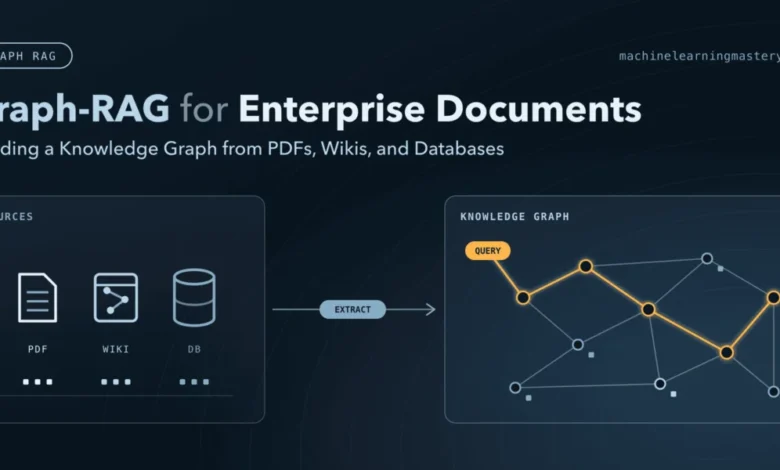
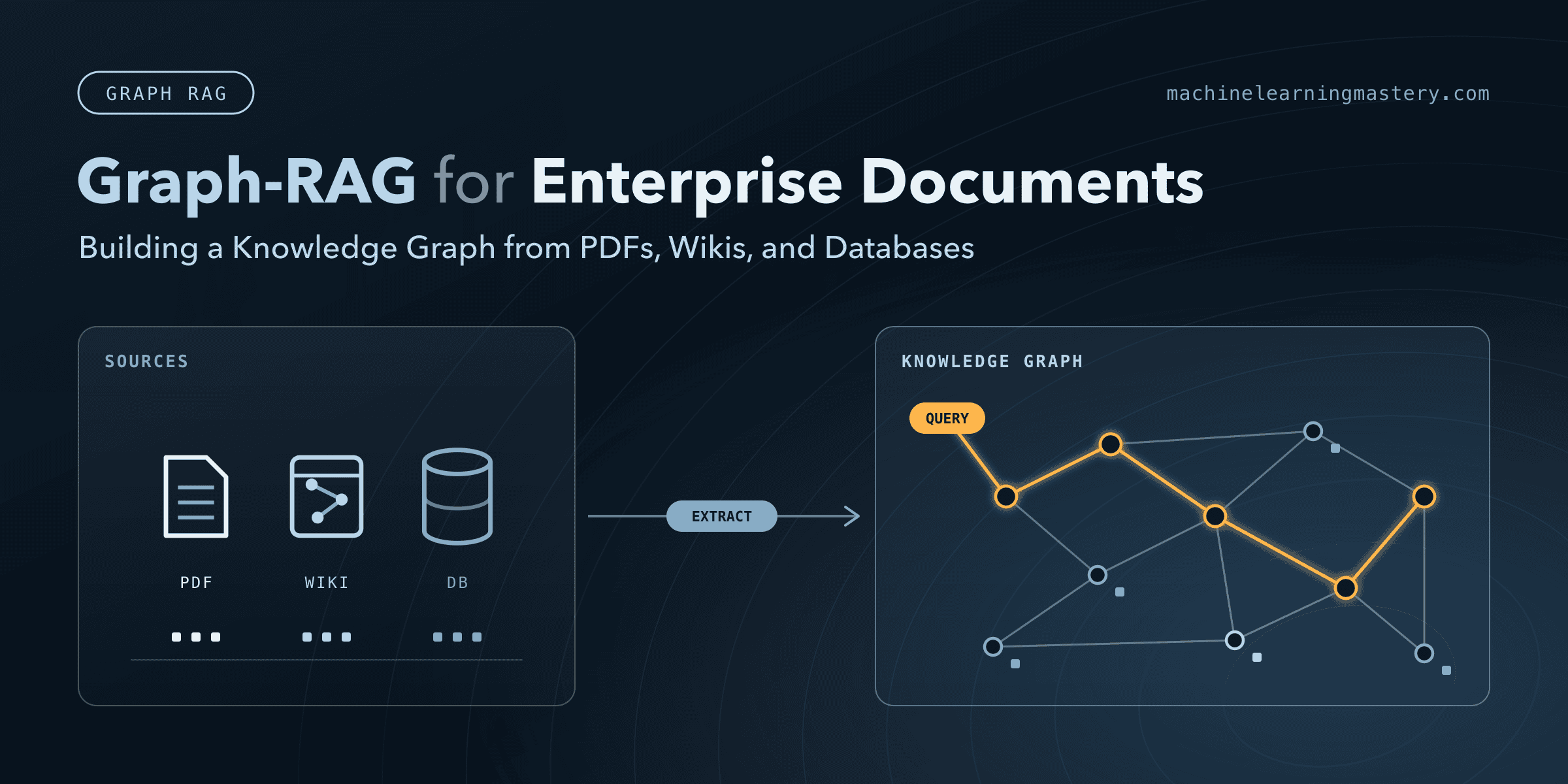
In the modern enterprise, the primary obstacle to effective AI deployment is not the scarcity of information, but the overwhelming abundance of conflicting data. An engineer attempting to identify the current on-call contact for a critical payments service at 11 p.m. faces a labyrinth of documentation: a four-month-old wiki, a library of static PDF runbooks, and a live, authoritative service registry. When a standard Retrieval-Augmented Generation (RAG) system processes these sources as a monolithic block of text, it often treats stale wiki entries with the same weight as real-time database rows. This ambiguity frequently results in hallucinations or, worse, the provision of outdated, actionable information. To resolve this, developers are increasingly turning to a deterministic, three-tiered Graph-RAG architecture that enforces strict data hierarchy and source prioritization.
The fundamental shift in this approach lies in moving away from vector-only search—which calculates similarity based on embedding proximity—toward a structured, multi-tiered retrieval system. By classifying data into distinct tiers—absolute-facts graphs (CMDB), background-stats graphs (Wikis), and vector-based narrative stores (PDFs)—organizations can force Large Language Models (LLMs) to adhere to explicit priority rules. This ensures that when contradictions arise, the system defaults to the most reliable, real-time source rather than the most semantically similar text.
The Problem of Semantic Ambiguity in RAG
Standard RAG systems rely on vector databases, which store information as mathematical embeddings. While efficient for broad semantic retrieval, these systems struggle with context-specific truth. For instance, if an AI is asked about a basketball player’s current team, a vector database might retrieve multiple entries for different teams the player has played for in the past. Because these team names sit in close proximity within the embedding space, the model may struggle to discern which is the current affiliation.
In an enterprise environment, this confusion is costly. An IDC study, sponsored by graph database provider Neo4j, underscores the severity of this issue: organizations that ground generative AI in graph-based context reported an average reduction in hallucination rates by 44 percent. In specific sectors, such as life sciences, organizations have observed a decline in error rates from 40 percent down to 2 to 5 percent by implementing structured grounding.
Establishing a Deterministic Hierarchy
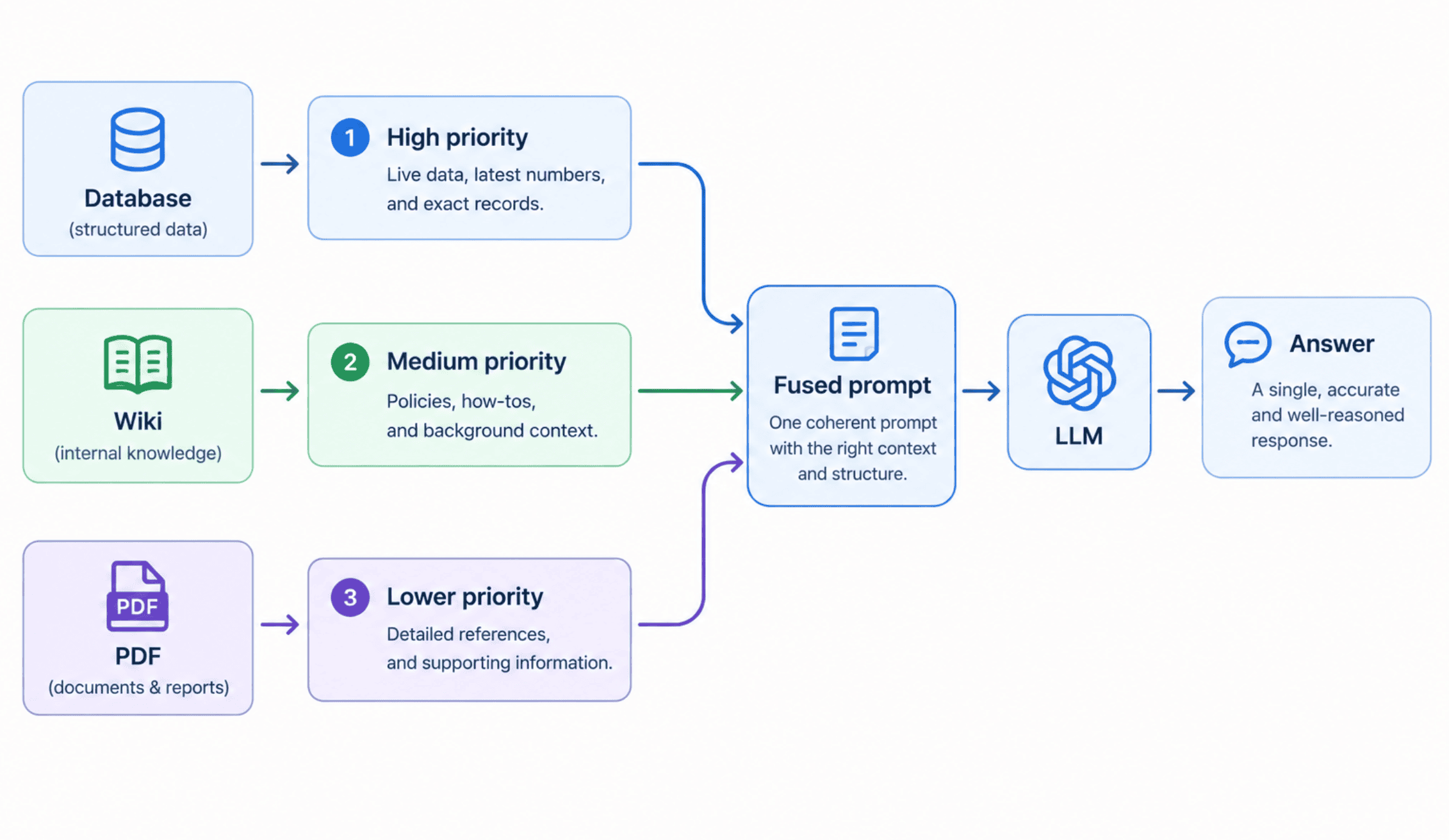
To build a reliable enterprise assistant, developers are adopting a three-tiered structure that prioritizes data based on its volatility and source of truth.
Tier 1: The Absolute-Facts Graph (CMDB)
The primary source of truth is the Configuration Management Database (CMDB). This tier contains structured, high-integrity data such as service status, on-call schedules, and versioning. By treating this data as a Subject-Predicate-Object-Context (SPOC) quad, the system can perform constant-time lookups. Because this data is queried live from a database like PostgreSQL or SQLite, it is never stale by construction. Any answer derived from this tier is prioritized above all others.
Tier 2: The Background-Stats Graph (Wiki)
Wiki spaces provide the breadth of operational knowledge, such as technical runbooks and troubleshooting guides. While thorough, this data is subject to "documentation drift." As teams rotate and services evolve, wiki pages often become outdated. Consequently, the architecture designates this as a secondary source. The system is programmed to treat Tier 2 data as valuable for context but secondary to Tier 1. If a direct conflict exists between the database and the wiki, the system is instructed to discard the wiki’s information entirely.
Tier 3: The Vector Fallback (PDFs)
Narrative documentation, such as incident postmortems, SLA agreements, and regulatory filings, is stored in a vector database (e.g., ChromaDB). This tier provides the qualitative depth required to answer "how" or "why" questions. However, because this data is unstructured and prone to being descriptive rather than prescriptive, it serves as the final, lowest-priority fallback. It provides narrative context that informs the user without ever overriding the structural mandates found in the CMDB or the technical instructions in the wiki.
Technical Implementation and Workflow
The construction of this system requires a pipeline that handles extraction and ingestion differently for each tier. The CMDB is ingested as structured rows, while wiki pages—typically semi-structured Markdown or HTML—are parsed using regex patterns to extract key-value pairs. Finally, PDFs are processed through an extraction engine, chunked into manageable segments of approximately 500 characters, and embedded for vector search.
The intelligence of the system lies in the "Federated Retrieval" layer. When a user submits a query, the system performs a three-way lookup. It extracts entities using a tool like spaCy, then queries all three stores simultaneously. The collected information is then compiled into a prompt that includes strict, system-level instructions:
- Priority 1 (CMDB): If this tier provides an answer, use it exclusively.
- Conflict Resolution: If Priority 2 or 3 conflicts with Priority 1, the latter is absolute.
- No Hedging: The system is forbidden from mentioning conflicting sources. It must provide a single, definitive answer to ensure clarity for the end-user.
Real-World Implications and Operational Impact
The necessity of this approach is best illustrated by the operational risks inherent in automated support. In an enterprise, an AI assistant is not merely a tool for information retrieval; it is an interface for operational decision-making. If an assistant directs an engineer to the wrong on-call person during a major incident, the latency introduced by that error can result in significant downtime and revenue loss.
By automating the reconciliation of conflicting data, firms can reduce the cognitive load on their engineers. Instead of manually verifying whether a runbook matches the current database, the engineer receives a verified, synthesized answer. This transition from "search" to "answer" represents a major leap in developer productivity.
Scalability and Future-Proofing
While this architecture is highly effective for a single team, scaling it to a global enterprise requires further considerations. First, the refresh cadence must be managed. While the CMDB is accessed in real-time, the wiki and PDF indexes should be refreshed periodically—ideally hourly or nightly—to ensure that the system remains relevant.
Second, security and access control are paramount. In a production environment, sensitive data (such as internal employee phone numbers or proprietary source code) must be filtered at the retrieval stage. The prompt must be shielded from "prompt injection" attacks, where a user might attempt to trick the model into overriding its priority rules. By ensuring that the data provided to the model is already vetted and filtered based on user permissions, organizations maintain a robust security posture.
Finally, as the complexity of the data grows, the reliance on simple quad-stores may shift toward dedicated graph databases. Technologies like Neo4j and ArangoDB provide more sophisticated querying capabilities for complex, multi-hop relationships, which will be necessary as enterprise knowledge graphs grow beyond simple service registries.
Conclusion
The shift toward deterministic Graph-RAG represents a maturation of the AI industry. As enterprises move past the excitement of initial generative AI experiments, the focus is shifting toward reliability, accuracy, and enterprise-grade compliance. By imposing a strict hierarchy on data and leveraging the structural precision of graphs alongside the narrative flexibility of vector search, organizations can build AI assistants that are not only helpful but also trustworthy. The cost of this architecture—token overhead and the requirement for careful system prompting—is a minor investment compared to the risk of providing incorrect, stale information in high-stakes environments. For the enterprise, the goal is not to have an AI that knows everything, but to have an AI that knows exactly what is true right now.
Related posts: