Navigating the Digital Renaissance: WordPress, AI, and the Lessons of the Dot-com Era

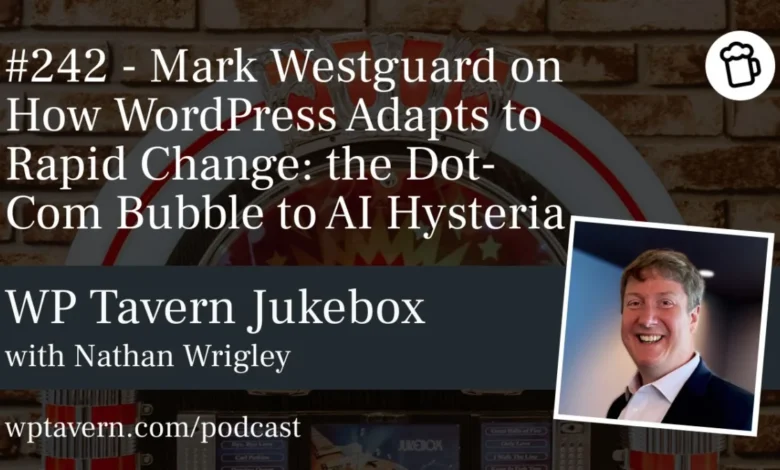
The intersection of artificial intelligence and web development has triggered a period of profound transformation within the WordPress ecosystem, mirroring the volatility and rapid expansion observed during the late 1990s dot-com bubble. As AI-driven tools lower the technical barriers to entry for software creation, long-term industry participants are increasingly grappling with the dual realities of unprecedented productivity and the looming risks of market saturation and security vulnerabilities. Mark Westguard, a veteran developer with over three decades of experience and the founder of the WordPress plugin WS Form, suggests that while AI represents a logical progression in computing, the current environment is defined by a speculative intensity that demands caution.
A Historical Context of Technological Inflexion Points
The history of the modern internet is defined by moments of extreme disruption. In the late 1990s, the emergence of the commercial web prompted a frenzy of capital investment, often disconnected from fundamental business models. For many agencies operating during that era, the period was characterized by rapid growth followed by a catastrophic correction. The dot-com crash of 2000 served as a sobering lesson in the dangers of prioritizing hype over sustainable return on investment (ROI). Agencies that once commanded significant budgets for high-profile web projects saw their portfolios evaporate almost overnight as venture capital dried up and the underlying economic reality of the internet matured.
This historical backdrop provides a necessary framework for understanding the current AI boom. Much like the early web, AI is attracting massive influxes of funding—estimates from industry analysts suggest that billions of dollars are being poured into large language model (LLM) infrastructure and application development. While the potential for efficiency is undeniable, the structural challenges remain similar: the translation of raw technical capability into a sustainable, market-viable product requires more than just algorithmic sophistication. It necessitates marketing, robust support systems, and a clear understanding of user needs, areas that are often overlooked in the initial rush of technological innovation.
The Democratization of Development and Its Challenges
Artificial intelligence has fundamentally altered the workflow of developers and end-users alike. By automating complex coding tasks, AI platforms have shifted the paradigm of web development from manual, syntax-heavy construction to intent-based prompting. For many, this has resulted in a significant increase in development velocity. Tasks that previously required hours of debugging or custom script writing can now be addressed in seconds.
However, this democratization carries inherent risks. The ease with which software, plugins, and web components can now be generated has led to an explosion in the number of products hitting the market. Within the WordPress ecosystem, this has manifested as an increase in the number of utility plugins submitted to public repositories. While this variety may seem beneficial, it creates a "noise" problem for the end-user. As the volume of available solutions grows, the difficulty of vetting software for security, reliability, and long-term support increases proportionally.
Industry experts note that while building a plugin has become trivial, sustaining a business model around that plugin remains a complex endeavor. The requirement for ongoing security patches, user support, and feature updates does not disappear simply because the initial code was generated by an AI. This creates a potential disconnect: developers who focus solely on the "build" phase without a strategy for the "sustain" phase may find their products obsolete or unmanageable within a short time frame.
Economic Sustainability and Market Saturation
A primary concern for the WordPress community is the potential for market saturation. If the number of plugin and theme vendors continues to rise at the current rate, the competition for a finite customer base will intensify. In an environment where every developer has access to AI-augmented coding, the competitive advantage previously afforded by specialized technical knowledge is being eroded.
Furthermore, there is a question of economic sustainability regarding the AI infrastructure itself. Current models of AI utilization often rely on subsidized pricing structures—similar to the early days of search engines—where the cost of processing far exceeds the subscription fees paid by individual users. As these platforms transition to full monetization, or as the true costs of massive data center energy consumption are factored into service pricing, the affordability of AI-driven development may shift.
Some industry analysts point to the possibility of a "correction" in the AI market, where businesses are forced to consolidate around products that provide verifiable, high-value utility. This would likely favor established platforms with deep, complex functionality over simple utility plugins, as the former possess the "moats" created by user reliance and historical performance.
Security and the Future of CMS Reliability
Perhaps the most significant implication of the AI era is the security landscape. While AI can assist in writing secure code, it can also be leveraged by malicious actors to identify vulnerabilities or generate sophisticated phishing and automated attack vectors at scale. The risk of AI-driven security failures is a primary concern for regulatory bodies and platform maintainers.
The reliance on AI to manage critical infrastructure—such as content management systems (CMS) that house sensitive corporate or personal data—requires a level of oversight that is currently still evolving. There is a growing sentiment among IT professionals that the "tried and tested" nature of traditional platforms like WordPress provides a level of security assurance that automated systems cannot yet fully replicate. This has led to speculation about a potential renaissance for established CMS platforms, as businesses may eventually prioritize the stability and accountability of human-verified software over the perceived speed of AI-generated solutions.
The Human Element: Craft and Competency
Despite the efficiency of AI, a significant portion of the development community retains a sense of nostalgia for the manual craft of coding. The intellectual challenge of solving a problem through direct interaction with the machine has historically been a driver of innovation and deep technical understanding. As AI continues to automate the "thinking" part of the coding process, there is a legitimate concern regarding the future competency of developers. If the next generation of engineers bypasses the foundational struggle of learning syntax and architecture, they may lack the ability to effectively audit or steer the AI, leading to a state of technical dependency.
The current consensus among seasoned developers is one of measured integration. The most successful businesses are those that use AI to handle repetitive or mundane tasks—such as correcting minor design inconsistencies or generating boilerplate code—while retaining human oversight for critical architectural decisions. This hybrid model allows for the benefits of AI-enhanced productivity without sacrificing the structural integrity and long-term maintainability of the final product.
Broader Implications and Strategic Outlook
As the industry moves toward 2027, the trajectory of AI in web development will likely be defined by three key factors:
- Regulatory Oversight: Increased scrutiny from governments regarding data privacy and the security of automated infrastructure may necessitate new standards for AI-generated code.
- Market Correction: The unsustainable nature of some current AI business models may lead to a shakeout, rewarding companies that have established sustainable, high-value ecosystems.
- User Preference: The continued demand for "trusted" software suggests that while users are willing to experiment with AI, they remain fundamentally risk-averse when it comes to the core components of their digital businesses.
For the WordPress community, the challenge lies in balancing the excitement of technological progress with the pragmatic realities of the market. The lesson of the 2000s remains relevant: innovation is only as valuable as the business infrastructure that supports it. While the AI tools of today provide immense capabilities, the long-term winners will be those who recognize that code is merely a tool, and that success is ultimately built on the reliability, support, and trust that define a product’s relationship with its users. As the digital landscape continues to evolve, the ability to discern between temporary hysteria and lasting technological shifts will be the defining trait of successful digital enterprises.