Palmer Luckey Warns AI-Powered Cyberattacks Are Outpacing Legacy Defense Systems at New York Times DealBook Summit

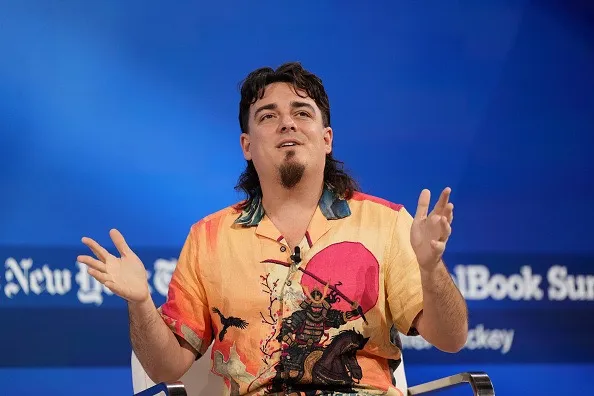
The rapid evolution of artificial intelligence has introduced a paradigm shift in global cybersecurity, one where automated threats are accelerating far beyond the capabilities of legacy technological infrastructure. Speaking at The New York Times DealBook Summit on Tuesday, tech entrepreneur and defense contractor Palmer Luckey issued a stark warning regarding the vulnerability of modern digital networks. The Oculus founder and Anduril Industries co-founder addressed a wave of recent high-profile technical outages, attributing them to a fundamental mismatch: while malicious actors rapidly weaponize advanced AI tools to discover and execute novel exploits, organizations worldwide remain tethered to outdated, sluggish defense mechanisms.
The remarks arrive amid mounting anxiety within both private enterprises and government sectors regarding infrastructural stability. According to Luckey, the current threat landscape is characterized by state-sponsored actors and financially motivated syndicates exploiting the friction between cutting-edge attack vectors and stagnant protective frameworks. As organizations scramble to patch vulnerabilities brought to light by automated auditing and offensive AI, the urgency to modernize foundational architectures has never been more apparent.
Background Context of the DealBook Summit and Recent Tech Outages
The annual New York Times DealBook Summit serves as a premier convergence point for leaders in finance, technology, government, and policy to debate the forces shaping the global economy. This year’s conference took place against a backdrop of escalating geopolitical cyber tensions and sudden digital disruptions that have affected critical networks globally.
In recent weeks, a series of cascading technical failures and unprecedented system outages forced numerous corporations and government agencies to urgently deploy emergency software patches. These outages—while often communicated publicly as routine maintenance or localized software glitches—highlighted a deeper systemic fragility. Government officials and cybersecurity researchers have privately and publicly noted that many of these emergency measures were rushed attempts to remediate vulnerabilities discovered by sophisticated AI-driven reconnaissance tools.
During the summit, moderator Andrew Ross Sorkin highlighted the tangible political fallout of these digital crises. Sorkin revealed that U.S. Vice President J.D. Vance was forced to cancel his scheduled appearance at the conference due to unfolding national security and infrastructure meetings concerning the recent technological outages. The last-minute cancellation underscored the gravity of the situation, shifting the conference’s discourse away from standard market projections and squarely toward national resilience and critical infrastructure defense.
The Mechanics of AI-Driven Cyber Exploits
To understand the urgency behind Luckey’s warnings, one must examine how generative and analytical AI has transformed offensive cyber operations. Historically, discovering zero-day vulnerabilities—previously unknown flaws in software or hardware—required extensive human labor, specialized expertise, and significant time. Hackers had to manually reverse-engineer code, test assumptions, and patiently map out attack surfaces.
Today, advanced machine learning models can automate large portions of this discovery process. AI agents can scan millions of lines of proprietary code in seconds, identifying logic errors, memory safety flaws, and configuration weaknesses far faster than traditional human security teams. Furthermore, these models can synthesize custom exploits designed to bypass signature-based intrusion detection systems.
Luckey emphasized this capability during his panel discussion, noting that the tech industry is witnessing the natural consequences of advanced AI lowering the barrier to entry for complex cyberattacks. "We’re seeing the natural effects of a lot of these advanced AI tools allowing for the creation of various exploits," Luckey stated.
The asymmetry of this dynamic creates a severe strategic disadvantage for defenders. While malicious groups can pivot instantly to leverage state-of-the-art computational tools, major enterprises, financial institutions, and government bodies often rely on legacy software frameworks built decades ago. These older architectures frequently lack modularity, making rapid integration of modern security protocols exceedingly difficult. Consequently, organizations find themselves trapped in a reactive cycle: patching individual holes discovered by AI while the underlying architectural weaknesses remain entirely unaddressed.
Geopolitical Dimensions and State-Sponsored Actors
The threat landscape described by Luckey is not merely a commercial challenge for IT departments; it is a critical theater of geopolitical competition. During the summit, Luckey pointed directly to adversarial nation-states that are actively capitalizing on the defense-innovation mismatch. He explicitly highlighted North Korea as a primary actor deeply involved in these sophisticated campaigns.
North Korea’s state-backed hacking apparatus—often operating under umbrellas such as the Lazarus Group—has long utilized cyber operations as a primary mechanism for state financing, sanctions evasion, and intellectual property theft. Historically, these operations relied on spear-phishing, social engineering, and known vulnerability exploitation. However, intelligence analysts and cybersecurity firms have increasingly observed Pyongyang’s operatives adopting automated reconnaissance tools and AI-assisted vulnerability discovery.
Beyond North Korea, other major geopolitical competitors, including China, Russia, and Iran, are aggressively investing in military and intelligence applications of artificial intelligence. These nations view cyber operations as a low-cost, high-yield asymmetric domain capable of disrupting adversary economies, gathering intelligence, and projecting power without crossing the threshold of traditional kinetic warfare.
The systemic integration of AI into foreign cyber arsenals means that defense strategies cannot rely on incremental updates. Adversaries are capable of executing multifaceted, automated campaigns around the clock, testing defensive perimeters thousands of times faster than human administrators can analyze logs or deploy patches.
Analysis of Implications: The Race for Defensive Superiority
Despite the alarming trajectory of offensive capabilities, Luckey expressed cautious optimism regarding the ultimate equilibrium of the cybersecurity landscape. His thesis posits that while attackers currently hold the initiative due to legacy inertia, artificial intelligence will ultimately favor the side that builds superior defensive ecosystems.
"In the long run, the advantages are going to accrue to the side that is most effectively using AI for defense," Luckey argued during the panel.
This perspective aligns with consensus views among leading computer scientists and cybersecurity experts. Just as AI can automate the discovery of vulnerabilities, it can similarly automate continuous code auditing, anomaly detection, predictive threat modeling, and self-healing network architectures. Autonomous security agents can monitor network traffic in real time, isolating compromised segments and deploying algorithmic patches within milliseconds of an anomaly detection—speeds fundamentally unattainable by human security operations centers (SOCs).
However, achieving this defensive parity requires a radical departure from traditional procurement and deployment cycles. Many private corporations and public agencies view cybersecurity as an administrative checkbox rather than an existential engineering challenge. Legacy systems are kept running due to high replacement costs, compatibility issues with older databases, and institutional inertia.
Luckey warned that this complacency is no longer tenable. When Sorkin asked how concerned the public and business leaders should be regarding the current state of affairs, Luckey delivered a sobering assessment: "It depends on how well prepared you are." He added an ominous admonition that resonated throughout the auditorium: "You guys are going to find out what’s going on soon enough."
Industry and Government Reactions
The revelations and warnings delivered at the DealBook Summit have triggered renewed urgency across technology and policy circles. Cybersecurity analysts have long warned about the "technical debt" accumulated by organizations maintaining decades-old software stacks, but executive-level buy-in has frequently lagged behind the scale of the threat.
In Washington, lawmakers and intelligence officials are re-evaluating federal cybersecurity standards, particularly concerning critical infrastructure sectors such as energy, finance, healthcare, and transportation. The sudden absence of Vice President J.D. Vance from the summit—necessitated by emergency high-level briefings on the recent tech outages—illustrates that executive branches are treating these digital instabilities not merely as corporate IT failures, but as matters of national security.
Meanwhile, venture capital and private equity firms are observing a significant shift in capital allocation. Investment in AI-driven cybersecurity startups, automated compliance tools, and zero-trust architecture frameworks has accelerated markedly. Enterprises that previously viewed cybersecurity spending as a cost center are beginning to reclassify it as a core operational necessity.
The Path Forward: Time to Accelerate
As the line between digital security and national sovereignty continues to blur, the mandate for organizations across all industries is clear. The era of passive, perimeter-based security and sluggish patch management has come to a definitive close.
Luckey’s closing remarks at the summit served as both a diagnosis and a call to action for the global tech community. Acknowledging the validity of cybersecurity pessimists who argue that current legacy networks are inherently vulnerable, he maintained that the fundamental problem is not that security is impossible, but that the pace of adoption is lethargic.
"With the people who say that everything can be hacked — they are right, for now," Luckey said. "That actually may be the case with certain new techniques that are coming along. But as of right now, there’s a mismatch between the attackers who are very fast-moving and using technology and old, outdated systems that are not able to adopt technology as quickly as it is developed."
Concluding his analysis, Luckey emphasized that organizational leaders can no longer afford hesitation. The window to modernize digital infrastructure is narrowing rapidly as adversarial AI capabilities compound.
"People are going to have to pick up the pace," Luckey concluded. "It’s time to start running."