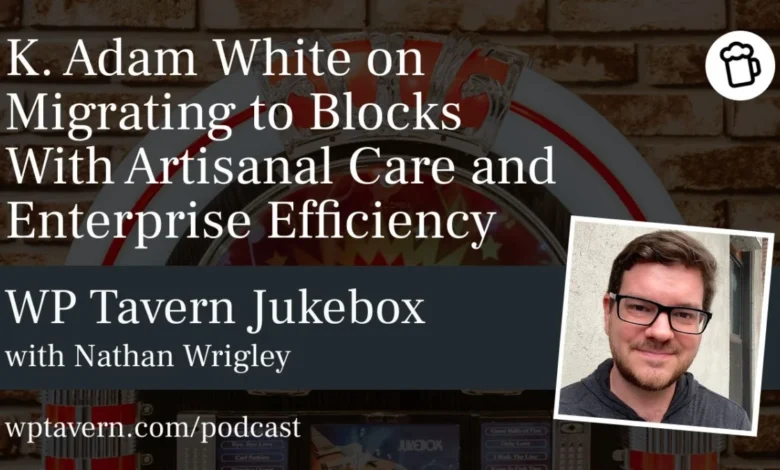
#234 – K. Adam White on Migrating to Blocks With Artisanal Care and Enterprise Efficiency

The recent proceedings at WordCamp US, held in the latter half of 2024, underscored a significant shift in the digital landscape: large-scale enterprise content management systems (CMS) are increasingly being migrated to WordPress. This transition is not merely a technical swap of one platform for another; it is a fundamental re-engineering of how global brands produce, manage, and scale their digital content. Central to this movement is the adoption of the Gutenberg block editor, which has evolved from a controversial plugin into the cornerstone of modern WordPress architecture.
The Evolution of Enterprise WordPress
For years, WordPress was often pigeonholed as a tool for personal blogging or small-to-medium business websites. However, the maturation of the block editor and the introduction of Full Site Editing (FSE) have effectively dismantled these perceptions. Human Made, a prominent enterprise WordPress consultancy, has been at the vanguard of this transition. K. Adam White, a principal engineer at the firm, highlighted during his presentation at WordCamp US that the agency has been fully committed to the block editor since its inception in the plugin repository years.
The technical complexity of moving massive, legacy databases—often containing hundreds of thousands of individual posts—from proprietary platforms like Sitecore to WordPress is immense. The primary challenge lies in maintaining visual fidelity and editorial integrity while transitioning from rigid, template-based structures to the fluid, block-based modularity of WordPress.
Bridging the Gap: Artisanal Care Meets Industrial Scale
The core thesis of recent migration strategies is the balance between "artisanal care" and "industrial scale." Manual migration of content is simply not feasible for enterprise clients with vast archives. Instead, engineers are utilizing automated scripts, AI-powered agents, and bespoke tools to map legacy data into modern block structures.
One such innovation shared by industry practitioners is the concept of "rehydrator" plugins. These tools automate the conversion of legacy database entries into structured WordPress block markup. By leveraging the existing theme patterns—pre-configured layouts that adhere to brand guidelines—developers can programmatically inject source data into the correct visual framework. This ensures that when an editorial team opens a migrated post, the structure is already validated, the styling is consistent, and the content remains intact without the need for manual cleanup.
The Role of Artificial Intelligence in Migration
The timeline for these migrations has been significantly compressed by the integration of Large Language Models (LLMs) and agentic workflows. Engineers are now utilizing AI tools to conduct cross-site audits, identifying edge cases that were previously difficult to detect. By feeding export files from legacy systems into LLMs, developers can generate Node.js scripts or SQLite databases locally, allowing for rapid querying of content nodes.
This capability has transformed the migration process from a high-risk, slow-moving operation into a streamlined, iterative workflow. Instead of migrating in small, cautious batches, teams can now run large-scale migrations, perform automated spot checks, and validate the integrity of thousands of posts in a fraction of the time previously required.
Structural Challenges: Permissions and Workflows
Despite the advancements in migration technology, the enterprise sector continues to face challenges regarding content governance. Traditional enterprise CMS platforms often provide granular, node-level permissions that allow administrators to restrict access to specific fields or buttons. WordPress, conversely, is built on a capability-based system that primarily operates at the post level.
While features like block locking and pattern-based editing offer some control, they do not yet match the granular, draconian permissions found in high-end legacy systems. For many enterprises, this necessitates a shift in organizational culture. Rather than relying on rigid, software-enforced locks, companies are increasingly adopting process-based workflows, such as editorial review queues and publication checklists, to ensure brand compliance and content quality.
Industry Implications and Future Outlook
The shift toward block-based migration has profound implications for the future of the web. As more enterprise-level organizations adopt WordPress, the platform’s roadmap is increasingly influenced by the requirements of these high-stakes users. The demand for better editorial workflow, robust internationalization, and sophisticated publishing permissions is pushing the WordPress core project toward a more opinionated and feature-rich future.
Industry analysts observe that this trend is not just about moving content; it is about future-proofing digital infrastructure. By adopting a block-first approach, organizations reduce their reliance on proprietary page builders and complex, vendor-locked systems. They gain the flexibility of an open-source ecosystem while retaining the stability required for global brand management.
The Path Toward Standardization
As the community continues to embrace "pattern-driven development," the reliance on custom-built blocks is likely to decrease. By leveraging Core blocks and standardizing layouts through patterns, developers can create highly complex, custom designs that remain maintainable and compatible with future WordPress updates. This standardization is critical for long-term scalability.
Furthermore, the emergence of PHP-only blocks and improved APIs for block attributes has empowered developers to create sophisticated interfaces that are both user-friendly and robust. These tools allow editorial teams to manage content without needing to understand the underlying technical complexity, effectively democratizing the power of the block editor.
Final Reflections on the Migration Landscape
The conversation surrounding enterprise migrations is shifting from "whether" to "how." With the technical barriers to entry lowering due to AI automation and refined migration toolkits, the focus is turning toward the refinement of editorial experiences. The goal is to provide a seamless, intuitive interface that supports the speed and scale required by global corporations while maintaining the creative freedom that has defined WordPress since its inception.
The success of these migrations serves as a testament to the versatility of WordPress. As the ecosystem continues to evolve, the integration of professional engineering standards—such as automated testing, rigorous data auditing, and structured pattern development—will likely remain the benchmark for success in the enterprise space. Whether it is a small personal blog or a multinational digital portal, the move to blocks represents a new chapter in content management, defined by modularity, efficiency, and a renewed commitment to the principles of the open web.
As demonstrated by the recent discussions at WordCamp US, the industry is entering a phase of maturity where the focus is on stability and long-term viability. For organizations considering a move to WordPress, the path is clearer than ever: embrace the block editor, prioritize pattern-driven design, and leverage the growing library of automated tools to ensure a smooth, efficient transition to the modern web.