Gradient Boosting, Random Forest, Neural Networks, and Tabular Foundation Models: A 2026 Performance Benchmark and Selection Guide

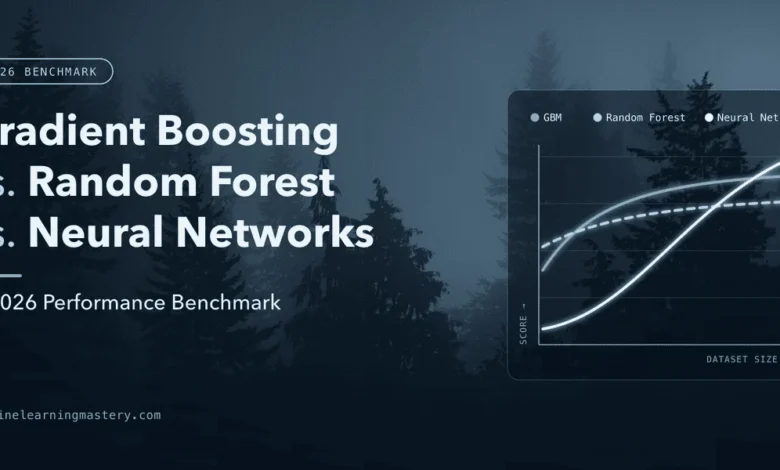
The landscape of machine learning for tabular data has undergone a profound transformation as of late 2026, shifting from a long-standing dominance of gradient-boosted decision trees toward a more complex, multi-model ecosystem. With the maturation of Tabular Foundation Models (TFMs) and the establishment of rigorous, standardized benchmarking platforms like TabArena, practitioners are no longer forced to rely on fragmented, anecdotal performance reports. Instead, they now operate within a data-driven framework that categorizes performance based on dataset scale, computational overhead, and specific problem domains.
The Evolution of Tabular Benchmarking
For years, the machine learning community struggled with inconsistent performance metrics. Historical comparisons were frequently marred by data leakage, differing hyperparameter tuning protocols, and the use of proprietary or non-representative datasets. This lack of a "ground truth" for model evaluation created significant friction for data science teams attempting to operationalize models.
The emergence of TabArena in 2025 changed this trajectory. Developed by the AutoGluon team, this platform provides a unified, living leaderboard that employs nested cross-validation across a vast repository of public and private datasets. By standardizing the testing environment—ensuring that models are evaluated under default, tuned, and ensembled configurations—TabArena has effectively codified the field’s performance standards. According to late 2026 reports from the benchmark, the industry has reached a consensus: there is no longer a single "best" algorithm, but rather a set of specialized tools tailored to distinct data regimes.
Defining the 2026 Algorithmic Hierarchy
To understand the current performance split, one must differentiate between the mechanical approaches of the primary contenders.
Gradient Boosting Machines (GBMs), including industry workhorses like XGBoost, LightGBM, and CatBoost, continue to operate on the principle of sequential error correction. By fitting new trees to the negative gradient of the loss function, these models minimize residuals with high efficiency. Despite the rise of deep learning, modern histogram-based optimizations have kept GBMs at the forefront of large-scale tabular tasks.
In contrast, the Random Forest remains the benchmark of structural stability. By training trees independently on random subsets of data and features, the algorithm achieves a level of noise tolerance that few other models can replicate. While it rarely secures the top spot on accuracy-focused leaderboards in 2026, its ability to produce reliable results with minimal tuning makes it an indispensable baseline for any production pipeline.
The most significant shift in the last 24 months has been the introduction of Tabular Foundation Models. Unlike traditional iterative training, models such as TabPFN, TabICL, and Google’s TabFM utilize in-context learning. By treating the training dataset as a prompt—similar to how Large Language Models process text—these systems bypass the traditional training loop entirely. This "zero-shot" capability, combined with native handling of missing values through sophisticated architectural mechanisms, has fundamentally altered the performance landscape for small-to-medium datasets.
The Performance Split: Small Data vs. Massive Scale
The 2026 benchmark data highlights a clear bifurcation in the machine learning market based on data volume.
For datasets under the 1-million-row threshold, Tabular Foundation Models have achieved a decisive lead in pure predictive accuracy. TabPFN-3.5, the current leader on the TabArena leaderboard, consistently outperforms both random forests and gradient-boosted trees on medium-sized, low-to-medium feature-count problems. The architectural innovation of TabPFN-3, released in mid-2026, was a pivotal moment; by introducing row-chunking and an optimized key-value cache, the developers expanded the model’s capacity to handle up to 1,000,000 rows and 20,000 features, effectively pushing the boundary of where TFMs remain viable.
However, once a dataset exceeds these computational thresholds, the "TFM advantage" hits a ceiling. For massive, high-dimensional datasets common in financial services, telecommunications, and retail, gradient boosting retains its crown. Evaluations conducted throughout 2026 indicate that for heavy regression tasks and high-cardinality classification, the scalability and memory efficiency of LightGBM and CatBoost remain superior to the Transformer-based architectures of TFMs.
Specialized Neural Networks and the Role of Ensembling
While "standard" fully connected neural networks have historically struggled to compete with tree-based models on tabular data, 2026 has seen the rise of specialized architectures designed specifically for tabular structures.
Models such as TabR—which utilizes a retrieval-based mechanism to cross-reference new inputs against known training examples—and TabM have demonstrated that neural networks can achieve parity with gradient boosting under specific conditions. However, the data suggests a caveat: these models are exceptionally sensitive to hyperparameter configurations.
A critical finding from the TabArena project is the transformative power of ensembling. When researchers applied rigorous, post-hoc ensembling to models like RealMLP and TabM, their performance converged with the top-tier gradient-boosted ensembles. This implies that for practitioners willing to invest in significant compute and optimization time, deep learning for tabular data is a viable, albeit complex, alternative to traditional methods.
Operational Constraints and Production Realities
In a production environment, accuracy is only one facet of the decision-making process. Infrastructure costs and latency requirements often dictate model selection as much as F1 scores or RMSE.
TFMs, despite their high accuracy, require substantial GPU memory to maintain the dataset within the context window during inference. For organizations operating with tight compute budgets or those deploying models to edge devices with limited memory, the high cost of maintaining a TFM architecture is often prohibitive. Conversely, gradient boosting and random forest models are optimized for CPU hardware, offering lightning-fast inference times and lower memory footprints.
For many enterprises, the "good enough" accuracy provided by a well-tuned XGBoost model—delivered at a fraction of the cost—remains the rational business choice. The industry trend in late 2026 suggests that while research is focused on closing the accuracy gap, production deployments are increasingly prioritizing the balance between model performance and operational expenditure.
Strategic Selection Framework
When choosing an algorithm in the current climate, practitioners are advised to follow a tiered decision-making process:
1. Assess Dataset Size and Complexity:
If the data is small-to-medium scale (under 100k rows), prioritize Tabular Foundation Models for rapid prototyping and high baseline accuracy. If the data exceeds 1 million rows, rely on gradient boosting to manage computational constraints.
2. Evaluate Feature Characteristics:
If the dataset contains high levels of noise or irrelevant features, the Random Forest remains the most reliable, "set-it-and-forget-it" option. It provides a robust baseline that protects against the overfitting risks associated with more complex models.
3. Define Operational Constraints:
If inference latency is the primary bottleneck or if the budget is limited to CPU-only environments, gradient-boosted trees (XGBoost/LightGBM) are the industry standard. TFMs should be reserved for scenarios where marginal accuracy gains justify higher cloud infrastructure investment.
4. Consider Unstructured Data Integration:
If the tabular data includes unstructured inputs such as text descriptions or image paths, utilize deep learning architectures or transformer-based models. In these hybrid environments, tree-based methods are insufficient without extensive, manual feature engineering.
Future Outlook and Implications
The 2026 machine learning landscape is undeniably more fragmented than in previous years, but it is also more precise. The maturation of Tabular Foundation Models has not rendered gradient boosting obsolete; rather, it has relegated tree-based methods to their most effective domain: large-scale, high-throughput tabular analysis.
As the industry moves toward 2027, the focus is expected to shift toward the integration of these models into automated machine learning (AutoML) pipelines. The work performed by the TabArena community suggests that the future of tabular modeling lies in "ensemble-first" strategies—where the strengths of transformers are combined with the efficiency of decision trees. For now, the takeaway for data scientists is clear: ignore the hype surrounding "one-size-fits-all" models and instead align the algorithm with the specific realities of the data at hand. By matching the tool to the task, organizations can achieve a sustainable balance between model performance, developer time, and operational cost.
Related posts: