Ninja POD vs Printify: A Comprehensive Analysis of Leading Print-on-Demand Solutions for Shopify Sellers

The landscape for print-on-demand (POD) services has shifted significantly as of late 2026, forcing Shopify merchants to navigate a more complex decision-making process when selecting a fulfillment partner. The competition between the industry stalwart Printify and the specialized, DTF-focused newcomer Ninja POD represents a broader trend in e-commerce: the tug-of-war between expansive, multi-provider networks and agile, specialized fulfillment centers. As merchants look to optimize margins and delivery times, the choice between these two platforms hinges on specific product catalog requirements, regional target markets, and the desired level of operational flexibility.
Historical Context and Market Evolution
Since the inception of widespread print-on-demand services, the model has been dominated by aggregators like Printify, which connects sellers to a global network of independent print providers. This model has long been praised for its scalability and variety. However, the emergence of Ninja POD—an offshoot of the established transfer specialist Ninja Transfers—signifies a pivot toward vertical integration. By controlling the entire fulfillment chain for Direct-to-Film (DTF) apparel, Ninja POD addresses a long-standing pain point in the industry: the inconsistency of print quality across decentralized networks.
Chronology of Competition
As of November 2026, the market dynamics have reached a point of parity, yet with distinct strategic advantages for both firms. Printify continues to leverage its 70-plus print provider network to offer 11 distinct sales channels, maintaining a dominant market share. Conversely, Ninja POD has spent the latter half of 2026 aggressively scaling its in-house fulfillment capabilities, particularly focusing on the US market. The divergence in their service models—one prioritizing breadth and the other depth of quality—has forced a recalibration among Shopify store owners who previously viewed these platforms as interchangeable.

Comparative Analysis of Fulfillment and Logistics
The logistical infrastructure supporting these two companies reveals the most significant operational differences. Printify’s decentralized model, utilizing over 140 facilities, is designed for redundancy. If one provider experiences a surge in volume or a local supply chain disruption, the platform can theoretically route orders to an alternative facility. This is particularly advantageous for global brands that require international shipping capabilities.
In contrast, Ninja POD operates with a centralized, in-house fulfillment strategy. By concentrating its operations in Philadelphia and San Diego, the company maintains a more predictable quality control standard. Data from November 2026 indicates that Ninja POD achieves a high level of consistency in its DTF applications, a process that has gained popularity for its durability and vibrancy on dark garments. However, the limitation of this model is apparent in its geographic reach; while Printify serves a truly global customer base, Ninja POD is largely optimized for the North American market, with Canadian shipping costs remaining a significant barrier to entry for international sellers.

Financial Implications for E-commerce Operations
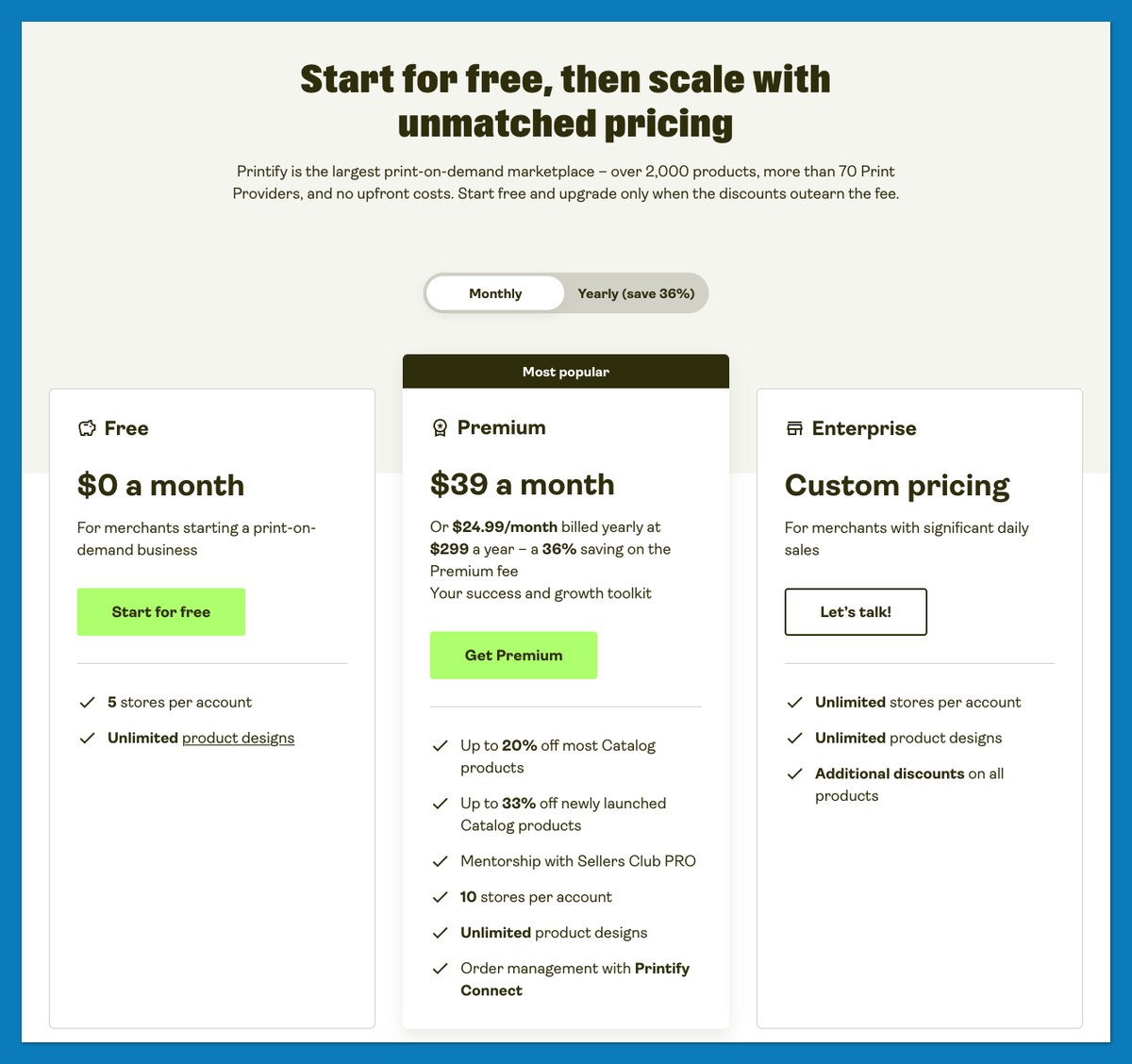
When analyzing the cost-to-profit ratio, the "best" option is rarely universal. Printify utilizes a tiered pricing structure, with a free plan for starters and a Premium subscription ($24.99/month billed annually) for high-volume sellers who benefit from up to 20% discounts on product costs. This model is built for growth, rewarding merchants who can scale their product mix.
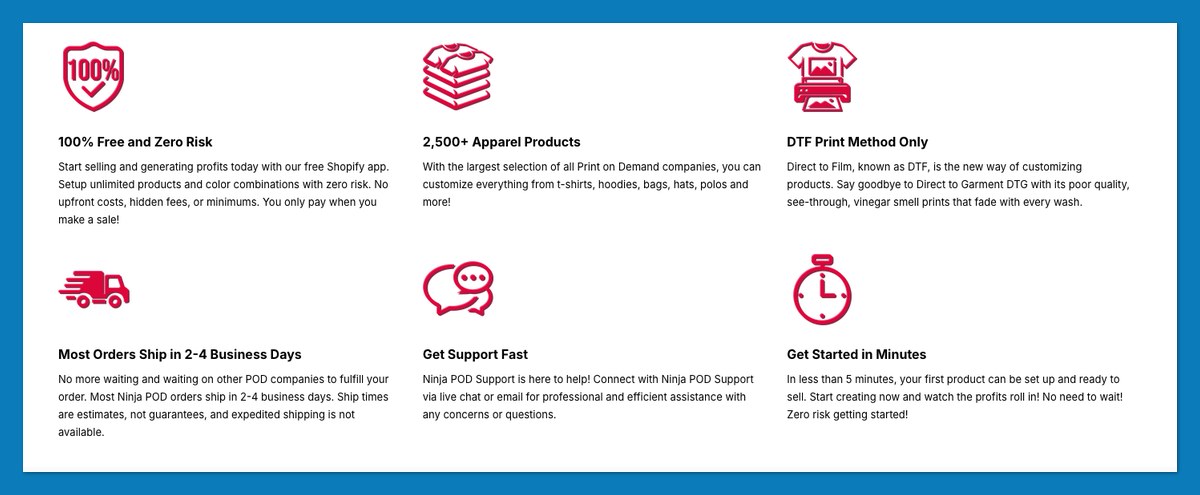
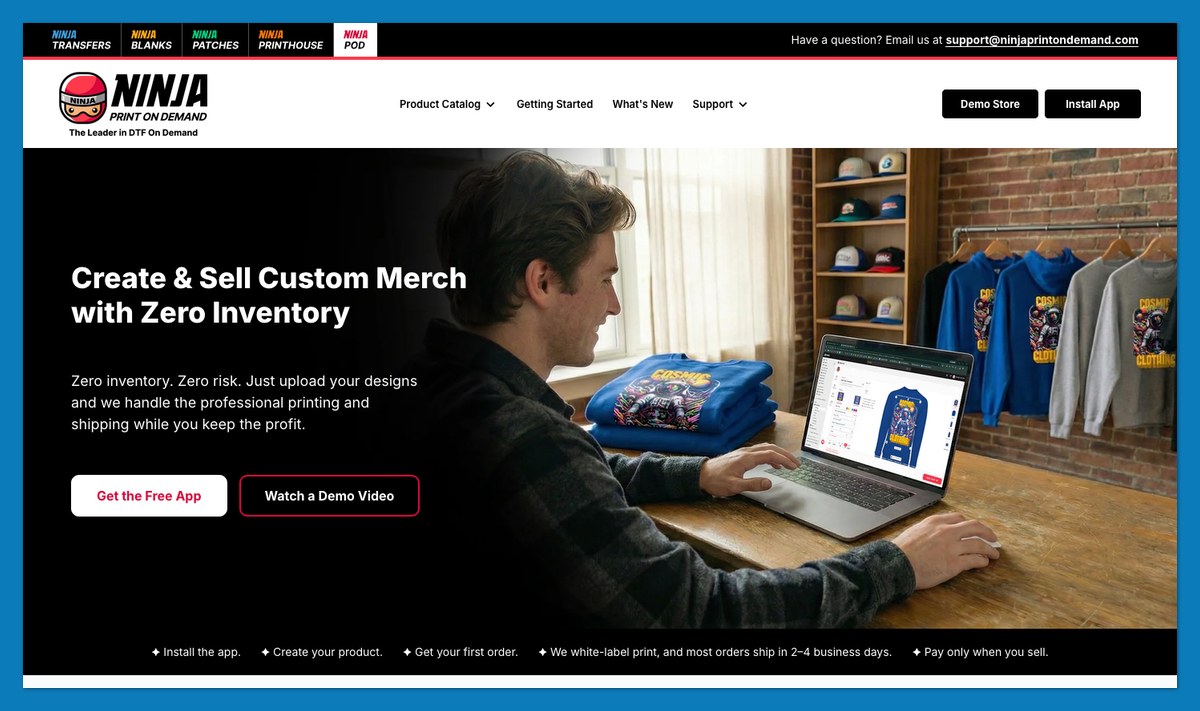
Ninja POD eschews the subscription model entirely, opting for a free-to-install, pay-per-order structure. For smaller businesses or those just testing a new clothing line, this reduces the initial capital expenditure. However, a granular look at product costs reveals that Printify’s economies of scale allow for significantly lower prices on industry staples like the Bella+Canvas 3001 tee, while Ninja POD captures better margins on heavyweights like the Gildan 18500 hoodie. Merchants are advised to conduct a "basket analysis," calculating the total cost of goods sold (COGS) including shipping for their specific product mix, as the "cheaper" option fluctuates based on the weight and category of the item.
The Role of Print Methods in Brand Identity
The debate between Direct-to-Garment (DTG) and Direct-to-Film (DTF) has been central to the professionalization of the POD sector. Printify provides access to both, alongside embroidery and all-over print options, allowing brands to curate a diverse product range. This flexibility is essential for designers who require different finishes for different artistic concepts.
Ninja POD has staked its reputation on the superiority of DTF. By limiting its catalog to this method, it ensures that every product, regardless of the garment, undergoes the same high-standard printing process. This is a strategic move to capture the streetwear demographic, which demands sharp, long-lasting graphics that resist cracking after repeated washing. Industry feedback suggests that while DTF is not a panacea for every design, it currently provides the most consistent output for complex, multi-colored graphics on diverse fabric compositions.
Support and Reliability Metrics
Customer support remains a critical differentiator. Printify’s 24/7 availability is a byproduct of its global operation, providing peace of mind to merchants in varying time zones. However, the reliance on third-party providers means that support agents often act as intermediaries between the merchant and the print shop.
Ninja POD’s approach is more hands-on. Because the company owns the printing facilities, their support team possesses direct insight into the production line. Their inclusion of a phone-based support line—a rarity in the modern app-based e-commerce ecosystem—suggests a commitment to enterprise-level service. Furthermore, their policy on reprints is notably broader, covering issues of customer dissatisfaction beyond mere technical misprints, a policy designed to foster long-term loyalty in a competitive market.
Broader Industry Implications
The success of both companies illustrates a maturing e-commerce sector where "one-size-fits-all" is no longer the default strategy. For the broader industry, this suggests a move toward specialized fulfillment. As Shopify merchants become more sophisticated, they are increasingly likely to use a hybrid approach—partnering with multiple providers to capitalize on the specific strengths of each.
For instance, a brand might use Ninja POD for its primary collection of hoodies and tees to ensure consistent quality for its core US audience, while utilizing Printify’s global network to fulfill orders for international customers or to access niche products like mugs, hats, or homeware that Ninja POD does not currently offer.
Conclusion and Strategic Outlook
The choice between Ninja POD and Printify in late 2026 is a reflection of a brand’s maturity and geographic focus. Printify remains the robust, versatile engine for businesses aiming for global scale and product diversity. Its integration with 11 sales channels and its proven track record with high-volume merchants make it the default choice for those building a multi-platform retail strategy.
Conversely, Ninja POD has effectively positioned itself as the premium choice for US-centric apparel brands that prioritize quality control, specialized DTF printing, and the reliability of in-house fulfillment. For the merchant, the path forward is clear: conduct a cost analysis based on current order volume, determine the geographic distribution of the customer base, and test samples from both providers. In the current competitive environment, the most successful brands will be those that treat their fulfillment partner as a strategic asset rather than a utility, selecting the platform that best aligns with their specific brand identity and long-term growth objectives.