The Open Source Sustainability Crisis: Bridging the Gap Between Digital Utility and Financial Reality

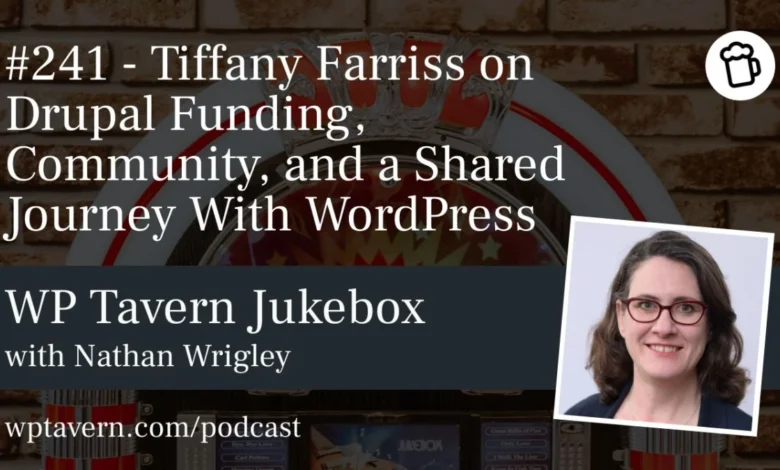
For over two decades, the open source software ecosystem has operated under a precarious paradox: it powers the backbone of the global digital economy while often struggling to secure the basic financial resources required to maintain that very infrastructure. As the internet has evolved from a collection of decentralized academic projects into a critical public utility, the informal models of community support that once sustained projects like Drupal, WordPress, and Joomla are showing signs of systemic fatigue. Tiffany Farriss, the interim CEO of the Drupal Association and a long-serving board member, has emerged as a central figure in a growing movement to redefine the economic relationship between open source software and the enterprises that derive value from it.
The challenge, often described as the "maker-taker" dilemma, centers on the sustainability of software projects that are licensed for free but impose significant operational costs on the organizations that maintain them. As these platforms have scaled, the burden of stewardship—which includes security coordination, release management, infrastructure maintenance, and packaging utilities—has largely fallen on a small, shrinking pool of dedicated organizations.
The Anatomy of an Open Source Utility
Historically, open source projects relied on a model of volunteerism and event-based funding. Conferences, such as DrupalCon, served as the primary financial engine for the Drupal Association. However, the COVID-19 pandemic exposed the fragility of this model, as global health restrictions abruptly curtailed in-person gatherings and the revenue they generated. This disruption forced a re-evaluation of how open source projects view their role in the modern tech stack.
The shift in perspective is moving from viewing open source as a charitable endeavor to viewing it as a critical piece of global infrastructure, akin to a public utility. Data suggests that the costs of maintaining this utility are compounding rather than diminishing. For the Drupal project, for instance, the Drupal Association estimates it provides approximately $10 worth of services to every active Drupal site annually. Currently, however, the organization only captures a fraction of that in revenue. This leaves a significant funding gap that is currently being plugged by a very small percentage of the ecosystem. According to recent analysis, while nearly 2,800 organizations contributed to Drupal in the last year, less than 5% of those entities accounted for roughly two-thirds of the total effort.
The Emergence of the Maker-Taker-Faker Problem
The core issue is a growing divide between those who contribute code and infrastructure (the "makers") and those who consume the software without contributing back (the "takers"). More recently, this has expanded to include what some in the community call the "fakers"—organizations that perform minimal, performative acts of support, such as sponsoring a single coffee break at a conference, while simultaneously reaping millions in value from the software without making meaningful investments in its long-term health.
The implications of this imbalance are profound. When a project becomes a vital utility, its failure or security vulnerability affects millions of users simultaneously. The recent focus on the PHP ecosystem, which powers a vast majority of the web, underscored how few resources are dedicated to the core languages that keep the internet functional. With many critical projects relying on a handful of maintainers, the risk of "burnout-induced" neglect is a constant threat to digital security.
Strategic Shifts in Procurement and Governance
To address these systemic risks, leaders like Farriss are advocating for a fundamental change in how governments and large enterprises procure open source services. The goal is to move toward a model of "responsible consumption." This involves three primary pillars:
- Mandatory upstream contribution: Establishing a requirement that any patches or improvements developed for non-confidential public sector projects are contributed back to the upstream codebase within a set timeframe, such as 30 days.
- Financial transparency: Encouraging the inclusion of a specific line item in public procurement tenders—often suggested at 2% to 5% of the total project budget—to fund the maintenance of the underlying open source software.
- Standardized certification: Moving away from "badge-wall" marketing and toward a verifiable, public trust register that tracks an organization’s actual contributions to the ecosystem.
This push is being bolstered by evolving international regulations. In the European Union, the Cyber Resilience Act (CRA) is set to impose new requirements on the digital supply chain. By requiring a Software Bill of Materials (SBOM) for digital products, the legislation will force companies to be more transparent about the open source components they use and, by extension, more liable for the risks inherent in those components. This shift effectively turns the open source debate into a risk management issue rather than a philanthropic one.
The Role of Digital Sovereignty
The impetus for this change is not merely financial; it is increasingly a matter of national and regional security. Digital sovereignty—the ability for a government or organization to control its own digital infrastructure without undue reliance on foreign proprietary platforms—has become a priority in regions like the EU. By fostering a sustainable open source ecosystem, governments can ensure that they are not beholden to a single vendor and that their critical digital services remain secure, auditable, and extensible.
However, the transition to this model faces significant hurdles. There is currently no unified, industry-wide standard for what constitutes a "fair contribution." Furthermore, many organizations, particularly those in the enterprise sector, have grown accustomed to a "free" model and may resist any attempt to normalize recurring costs for software that has historically been provided under a zero-cost license.
A New Framework for the Next 25 Years
The path forward, according to industry observers, is to provide clarity. Procurement officers, who are often non-technical, need a simple way to differentiate between vendors who bolster the ecosystem and those who merely extract from it. By creating a transparent ledger of contributions—tracking not just code, but also advocacy, security work, and infrastructure funding—the community can help decision-makers reward virtuous behavior.
The ongoing experiments within the Drupal community serve as a potential blueprint for other PHP-based projects and the broader open source world. By professionalizing the way the community recognizes and rewards contributions, the Drupal Association is attempting to build a sustainable model that does not rely on the goodwill of a few, but on the collective responsibility of the many.
As the industry looks toward the next 25 years of digital evolution, the consensus among open source leaders is that the current model is nearing its limit. Whether through legislative pressure, such as the EU’s Cyber Resilience Act, or through internal reforms to certification and contribution metrics, the expectation is that the era of "free, no-questions-asked" open source is drawing to a close. In its place, a more structured, utility-based economy is emerging—one where the true cost of digital infrastructure is acknowledged, and the responsibility for maintaining it is shared by those who profit from it most.
For the developers, agencies, and enterprises that inhabit this space, the challenge will be to adapt to these new expectations of stewardship. While the transition may be disruptive, it is viewed by many as the only way to ensure the long-term viability of the open source software that has become, for better or worse, the bedrock of modern civilization.