Google Search Console Now Supports Direct Tracking of Social Media Profiles

As organic search traffic remains a volatile variable for digital marketers, the industry is undergoing a significant shift toward diversified visibility. For years, businesses have relied on social media as a secondary channel for brand awareness and lead generation, yet they have historically struggled to bridge the data gap between their social presence and their performance in organic search results. Google has addressed this persistent industry challenge by officially rolling out a feature within Google Search Console (GSC) that allows account holders to verify and track the organic search performance of social media profiles as "platform properties."
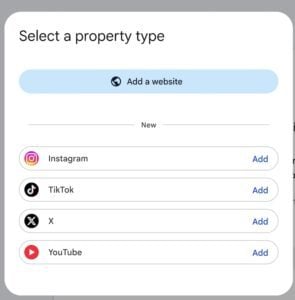
This update represents a structural change in how Google views social entities. By treating professional profiles on YouTube, TikTok, X (formerly Twitter), and Instagram as distinct properties—mirroring the way it treats websites—Google is providing marketers with a unified lens through which to view their brand’s footprint in the search ecosystem.
The Evolution of Search Visibility and Data Silos
Historically, social media analytics have been confined to "walled gardens." Platforms like Meta, ByteDance, and X offer robust native metrics regarding follower growth, likes, and shares. However, these tools provide zero insight into how that content performs once it migrates into the Google search environment. Digital marketers have long been forced to manually stitch together data from Google Analytics, GSC, and third-party social listening tools to understand how a video or a post impacts a brand’s presence in Search or Discover.
The move toward integrated tracking follows a period of increasing pressure on Google to provide clearer attribution for content creators and businesses. With the rise of AI Overviews and multimodal search capabilities, the boundary between a website, a video, and a social post has blurred. Google’s decision to allow these profiles into Search Console acknowledges that for many brands, the primary point of contact with a consumer is no longer a landing page, but a social media video or profile.
Chronology of the Integration
The rollout of this functionality did not happen overnight. After a protracted testing phase that saw limited access for select power users and enterprise accounts, the feature was gradually pushed to the wider public throughout the latter half of 2024 and into 2025.
The implementation process is designed to be streamlined. Users can now navigate to the top-left property drop-down menu in their Search Console dashboard, select "Add property," and follow the authentication protocols for their respective social platforms. Once the connection is verified, Google begins indexing and reporting data within approximately 36 hours. This timeframe represents a significant improvement over previous third-party workarounds, which often required complex API integrations or third-party scraping tools that were frequently prone to breaking.
Analytical Capabilities and Dashboard Features
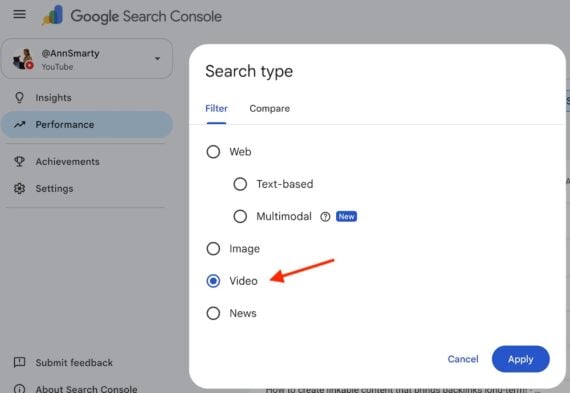
Once a social profile is linked, the Search Console interface presents a stripped-down, focused dashboard. Unlike full website properties, which include extensive site map and security indexing tools, the social "platform property" interface prioritizes the "Insights" tab and the "Performance" section.
The Performance section is the core of this update. It offers granular filtering options that allow users to toggle between:
- Web Search: Traditional text-based queries.
- Multimodal Search: The intersection of image and text analysis, which is increasingly critical for platforms like Instagram.
- Image Search: Essential for brands relying on visual commerce.
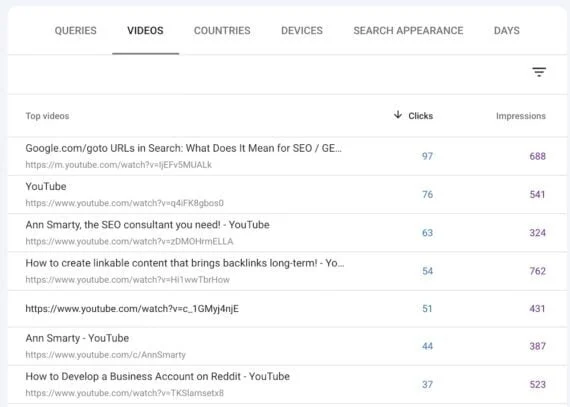
- Video Search: A game-changer for YouTube creators.
- News: Relevant for creators and outlets utilizing social platforms for real-time reporting.
Furthermore, the integration tracks "Discover visibility." This is particularly significant for e-commerce brands, as it allows them to measure how often their social content—particularly YouTube videos—appears in the Google Discover feed, a primary traffic driver for mobile users.
The Strategic Value of Video SEO Tracking
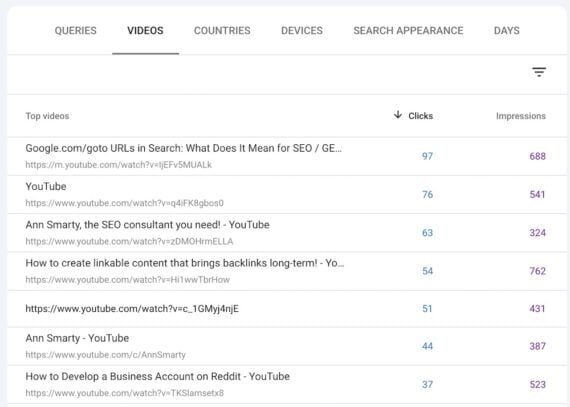
Perhaps the most significant beneficiary of this update is the YouTube creator community and businesses that rely on video marketing. Previously, tracking the organic search performance of individual videos was an arduous task, often requiring the use of complex URL parameters or external SEO software.
By surfacing specific video metrics, Google allows businesses to identify exactly which queries lead users to their content. This is especially important in the era of AI-generated search results. As Google’s Gemini and AI Overviews begin to surface content based on semantic relevance rather than just keyword density, understanding how a video ranks for specific, high-intent queries is vital.
Marketers can now observe a video’s "average position," "clicks," and "impressions" directly within the GSC interface. This allows for data-driven iteration: if a video is receiving high impressions but low click-through rates (CTR) for a specific query, the brand can pivot by adjusting the video title, description, or thumbnail to better align with user intent.
Implications for Multi-Channel E-commerce
For e-commerce entities, the ability to track "Multimodal" search performance is a transformative development. If an Instagram profile is linked, marketers can observe whether their product photos are being surfaced in Google’s visual search results. This allows for a more holistic view of the customer journey.
A hypothetical but common scenario involves a merchant publishing an educational article on their blog, producing a deep-dive video on YouTube, and sharing high-quality product imagery on Instagram. With this update, the merchant can annotate their GSC dashboard to track the organic reach of these three distinct assets. They can correlate the publication date of each asset with spikes in organic search traffic, providing a clearer picture of which channels are driving top-of-funnel discovery versus bottom-of-funnel conversions.
Technical Limitations and Future Outlook
While this update is a leap forward, it is not without its limitations. Most notably, the current iteration lacks the "Branded Search" filter that is standard for full website properties. This means that while marketers can see the search queries driving traffic to their social profiles, they must manually filter these results to distinguish between branded queries (e.g., "Brand Name Tutorial") and non-branded, high-intent discovery queries (e.g., "how to fix a leaking pipe").
Furthermore, this integration does not provide conversion-level data. It remains a tool for measuring visibility and traffic potential, not a direct replacement for robust attribution software.
Broader Industry Impact
The inclusion of social media profiles in Google Search Console suggests a broader strategic pivot for Google. By providing these tools, Google is effectively incentivizing content creators and businesses to keep their content optimized for the open web, even when it lives on a closed social platform.
This is a defensive and offensive move for the search giant. Defensively, it helps Google maintain its relevance in an ecosystem where users are increasingly turning to TikTok or Instagram as their primary search engines. By offering better tools for tracking content on those platforms, Google encourages creators to make their content "searchable" within the Google index. Offensively, it reinforces Google’s role as the central hub for digital analytics, further cementing its utility for marketers who are looking to optimize their performance across the entire digital landscape.
As the industry moves forward, the "platform property" designation is expected to expand. Analysts anticipate that Google may eventually allow for more granular schema markup on social profiles, enabling richer snippet displays directly from social content in the SERPs (Search Engine Results Pages). For now, the ability to track organic search performance across social channels provides a necessary level of transparency for marketers struggling to navigate an increasingly fragmented digital environment. The era of blind-spot social marketing is effectively ending; in its place, a more precise, data-backed approach to multi-channel visibility is emerging.