Bridging the Tactile Gap: How E-commerce Brands Use Advanced Visual Strategy to Replicate Physical Shopping Experiences

The fundamental challenge of e-commerce has remained stagnant since the inception of the digital storefront: the inability of a consumer to physically touch, feel, or test a product before finalizing a transaction. While traditional brick-and-mortar retail relies on sensory confirmation—the weight of a fabric, the grain of wood, or the consistency of a cosmetic—online merchants have historically been forced to rely on static imagery and written specifications. However, a growing number of innovative retailers are successfully overcoming this barrier by utilizing advanced photographic techniques that simulate physical interaction, effectively reducing return rates and increasing conversion confidence among skeptical online shoppers.
The Evolution of Digital Merchandising
In the early 2000s, digital retail was defined by "white-background" photography. This clinical approach was designed to minimize distractions and present the product in its most neutral state. While effective for inventory management, it stripped away the context required for a high-end sensory experience. By 2015, data from the Baymard Institute began to highlight a persistent trend: "lack of product information" and "inability to see the product clearly" remained among the top five reasons for cart abandonment.

As high-speed internet and mobile photography capabilities improved, the industry shifted toward "lifestyle" imagery. Today, that trend has matured into a tactical, high-fidelity visual strategy. Merchants are no longer just showing what a product looks like; they are capturing how it behaves in its natural environment.
Leveraging Light to Define Materiality
One of the most effective strategies for replicating tactile experience is the use of directional, high-contrast lighting to emphasize surface texture. Color is a superficial attribute, but texture—the pitting on a wall, the crackle of a ceramic tile, or the weave of a textile—is an emotional one.
Backdrop, a direct-to-consumer paint brand, serves as a primary case study in this methodology. Rather than utilizing standard, flat digital color swatches, the company builds its product pages around high-resolution, full-bleed photography. These images are captured on actual walls under various lighting conditions, revealing the subtle imperfections—the roller marks, the depth of the pigment, and the sheen—that a customer would naturally inspect in a hardware store. By showing the paint in a "half-painted, half-bare" state, the brand provides a visual anchor for the material’s viscosity and coverage, effectively bridging the gap between a digital hex code and a physical reality.

This approach is echoed by Fireclay Tile. Their product photography team utilizes macro-level shots that focus on the interplay of light across ceramic glazes. By highlighting areas where the glaze is glossy versus where it pools into a matte finish, they provide a visual proxy for the tactile experience of running a finger over a tile. This level of detail is not merely aesthetic; it is a functional tool that allows professional designers and homeowners to make informed purchasing decisions without the need for physical samples.
Dynamic Imagery: Capturing the Product in Motion
While static textures can be communicated through lighting, products that undergo transformation—such as bath bombs, skincare scrubs, or foaming cleansers—require a different approach: the "action shot."
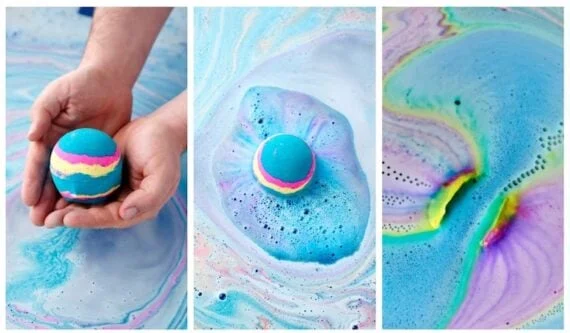
Lush Cosmetics has mastered the art of "kinetic merchandising." For their bath bomb collections, the product page experience is not centered on the dry, solid sphere sitting in a box, but rather on the violent, colorful, and sensory process of the item dissolving in water. By utilizing image carousels that document the transition from solid to liquid—the fizzing, the swirling, and the marbling of the water—Lush provides a sensory preview of the experience.

This strategy extends to their category navigation. Instead of displaying jars of body scrub, the brand uses thumbnail imagery that depicts the product’s texture when scooped. By showing a smear of the product on a surface, the shopper can immediately discern the consistency: is it coarse and exfoliating, or smooth and emollient? This visual transparency significantly reduces the cognitive load on the consumer, who no longer has to guess at the texture based on a generic product description.
Market Implications and Consumer Behavior
The shift toward "sensory-first" photography has measurable impacts on key performance indicators (KPIs). According to industry benchmarks from 2023, brands that implement high-fidelity, texture-focused imagery report an average of 15% lower return rates for home and beauty categories. When customers have a clear expectation of the product’s physical properties, the discrepancy between the "digital promise" and the "physical delivery" is minimized.
Furthermore, the rise of "social proof" in marketing has necessitated this change. As platforms like TikTok and Instagram become primary discovery engines, consumers are conditioned to expect video-like, real-world demonstrations. Static, uninspired product images are increasingly viewed by younger demographics as a sign of low product quality or a lack of brand transparency.

Strategic Recommendations for Retailers
For merchants looking to transition from traditional catalog-style photography to a sensory-focused strategy, industry experts suggest a three-tiered approach:
- Prioritize Texture in the Gallery: Ensure that the first three images in any product gallery include high-contrast, macro-level shots that highlight surface texture. If a product has a unique finish, this should be the focal point of the primary hero image.
- Document Transformation: For products that change state—melting, dissolving, foaming, or drying—create a series of three to five images that show the product "in action." This sequence acts as a visual manual for the product’s utility.
- Contextualize with Materiality: Move away from pure white-background studio photography for the entirety of the product page. Incorporate "in-situ" shots that show how the product looks in a real-world setting, as this provides the scale and depth perception that the human brain requires to categorize physical objects.
The Future of Digital Sensory Retail
As augmented reality (AR) and virtual reality (VR) continue to mature, the next frontier will likely involve haptic feedback and 3D modeling that allows for virtual manipulation. However, until such technology reaches mass-market affordability and ubiquity, high-fidelity, light-driven, and action-oriented photography will remain the most powerful tool in the e-commerce arsenal.
The objective for modern retailers is clear: they must stop selling the product as a static image and start selling the product as a sensory experience. By providing the visual cues that allow the brain to "fill in" the missing physical sensations, brands can foster a level of trust that was previously reserved for the physical shopping aisle. As the digital marketplace becomes increasingly crowded, the ability to effectively communicate texture and behavior through a screen will be the primary differentiator between brands that thrive and those that are left behind.