Turn data into decisions with unified measurement by integrating advanced modeling and predictive intelligence into enterprise marketing workflows

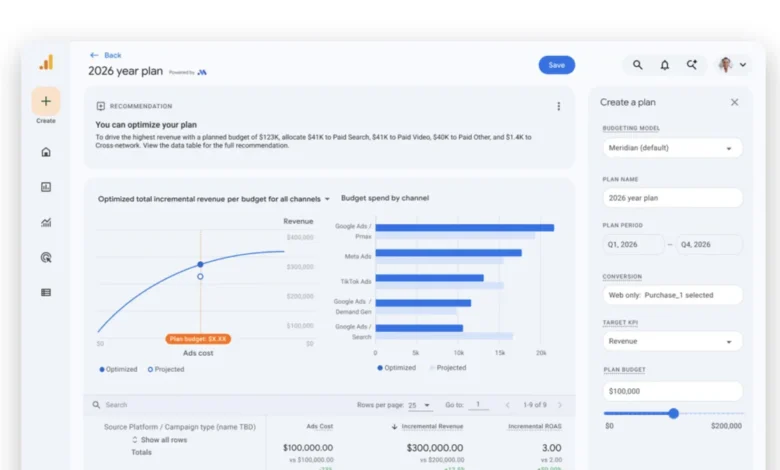
In the modern digital economy, the proliferation of data has shifted from being a competitive advantage to a management challenge. As artificial intelligence fundamentally reshapes the advertising landscape, businesses are tasked with not only collecting vast quantities of consumer information but also synthesizing that data into actionable growth strategies. To address the persistent fragmentation in marketing measurement, Google has announced a significant expansion of its analytics ecosystem, most notably through the integration of its open-source Marketing Mix Model (MMM), Meridian, into Google Analytics 360.
This strategic move, paired with the introduction of AI-powered predictive tools, represents a concerted effort by Google to bridge the gap between upper-funnel brand awareness and bottom-line revenue. For enterprise-level marketers, the objective is clear: move beyond siloed performance metrics toward a unified, cross-channel view that accounts for both direct conversions and long-term brand equity.
The Evolution of Marketing Measurement: From Cookies to Modeling
The digital advertising industry has been in a state of flux since the deprecation of third-party cookies and the rise of heightened privacy regulations. Historically, marketers relied on deterministic tracking—following individual users across the web to attribute sales to specific ad clicks. However, as user privacy takes precedence, the industry is pivoting toward probabilistic modeling.
Marketing Mix Models (MMM) have re-emerged as the gold standard for measuring advertising effectiveness. Unlike click-based tracking, MMMs utilize historical data and statistical analysis to estimate the impact of various marketing channels on sales, accounting for external variables such as seasonality, pricing shifts, and economic conditions. Google’s Meridian, an open-source framework designed to provide more granular, transparent, and accurate modeling, serves as a response to the need for privacy-centric measurement that does not compromise on insight.
By integrating Meridian into Google Analytics 360, the platform is effectively providing enterprise users with a sophisticated statistical engine that operates directly within their primary analytics environment. This removes the friction of exporting data to third-party modeling software, allowing teams to iterate on their strategies in real-time.
Bridging the Funnel with Qualified Future Conversions
While the integration of Meridian provides a retrospective view of performance, Google is simultaneously addressing the need for forward-looking signals. The introduction of Qualified Future Conversions (QFCs), powered by Gemini, marks a shift toward predictive marketing.
QFCs function by analyzing upper-funnel activity—such as brand searches and engagement with display campaigns—and correlating those behaviors with a high probability of future sales. By leveraging machine learning to identify the "signals" that precede a conversion, marketers can assign value to brand-building efforts that were previously difficult to quantify.
Industry analysts note that this is a critical development for companies struggling to justify brand-spend. In a high-inflation, high-interest-rate environment, CFOs are increasingly demanding proof of ROI for every dollar spent on top-of-funnel awareness. QFCs provide a data-backed narrative that connects early-stage brand curiosity to ultimate revenue growth, potentially unlocking budget that was previously stalled by narrow, last-click attribution models.
Chronology of Google’s Measurement Pivot
The journey toward this unified measurement architecture did not happen in isolation. The following timeline outlines the strategic progression of Google’s measurement initiatives:
- 2021-2022: As privacy changes such as Apple’s App Tracking Transparency (ATT) began to impact ad performance, Google accelerated its push for first-party data solutions, leading to the refinement of Google Analytics 4 (GA4).
- 2023: Google introduced the Meridian framework as an open-source project, aimed at providing transparency and standardization in the fragmented MMM landscape.
- Early 2024: The integration of Gemini AI models into Google Ads began, facilitating the automation of asset creation and targeting.
- Late 2024: The announcement of the Meridian-GA360 integration, signaling the move toward a fully unified, AI-driven measurement suite.
Data-Driven Decision Making in the AI Era
The implications of these tools are profound for large-scale advertisers. According to recent industry reports, organizations that utilize unified measurement—combining MMM with granular, event-level data—see a 10% to 20% improvement in marketing efficiency. This is primarily because unified measurement eliminates the "double counting" of conversions and reveals the hidden synergy between channels.
For example, a television campaign might not result in an immediate digital click, but it may cause a significant spike in organic brand searches. In a siloed model, that television spend might appear ineffective. With the Meridian-GA360 integration, the model can statistically link the offline spend to the surge in digital searches, correctly attributing the conversion to the television campaign. When this data is further refined by QFCs, the marketer gains a predictive roadmap that suggests where to reallocate budget for the following quarter.
Expert Perspectives and Market Implications
Market analysts have expressed optimism regarding these updates, though they caution that the success of these tools depends on the quality of the input data. "The power of an AI-driven MMM is only as strong as the integrity of the data fed into it," says a senior consultant at a leading digital marketing agency. "Moving Meridian into GA360 is a massive win for workflow, but brands must still invest in robust first-party data pipelines to ensure the model has a clear view of their business reality."
From a competitive standpoint, this move positions Google as an essential partner for CMOs tasked with navigating a complex digital ecosystem. By embedding predictive AI directly into the measurement stack, Google is lowering the barrier to entry for advanced statistical analysis. Previously, access to this level of modeling required expensive data science teams or proprietary consultancy software. By democratizing access to these insights, Google is incentivizing larger and more consistent advertising commitments from its enterprise clients.
Future-Proofing Marketing Investment
The shift toward predictive modeling and unified measurement is not merely a feature upgrade; it is a fundamental transition in how advertising effectiveness is defined. As the digital advertising industry moves toward a "cookieless" future, the reliance on advanced, AI-enhanced modeling will only increase.
For companies seeking to maximize their marketing ROI, the strategy moving forward involves three distinct pillars:
- Consolidation: Utilizing platforms like GA360 to centralize fragmented data points into a single "source of truth."
- Modeling: Applying frameworks like Meridian to understand the non-linear relationship between various marketing touchpoints and long-term customer value.
- Prediction: Utilizing AI signals like QFCs to anticipate market shifts and adjust spending before conversion windows close.
By aligning these pillars, organizations can move from reactive reporting to proactive strategy. The ability to invest confidently in "what’s next" rather than simply reporting on "what happened" is the defining characteristic of high-performing marketing organizations in the 2020s.
Conclusion: A New Standard for Enterprise Analytics
The convergence of Meridian, Google Analytics 360, and Gemini-powered predictive signals provides a comprehensive solution for the modern measurement dilemma. While the technological shift is significant, the ultimate goal remains the same: to turn vast amounts of data into informed business decisions.
As these integrations roll out, the market is expected to witness a gradual decline in the reliance on legacy attribution models. In their place, a more nuanced, privacy-conscious, and statistically sound approach to marketing will take root. For the enterprise advertiser, the message is clear: the tools to navigate the complexity of the modern consumer journey are no longer out of reach. By leveraging unified measurement, businesses can ensure their growth strategies are rooted in clarity, accuracy, and confidence.
Related posts: