Four ways Google Analytics delivers actionable insights for your business


Measurement remains the cornerstone of modern digital marketing, serving as the essential compass for organizations navigating an increasingly fragmented online ecosystem. As the industry shifts away from legacy tracking methods, Google Analytics 4 (GA4) has emerged as the definitive solution for businesses seeking to harmonize performance data with evolving privacy requirements. With the sunsetting of Universal Analytics (UA) finalized for July 1, 2024, the transition to this new measurement architecture is no longer a strategic option but a business imperative. By leveraging artificial intelligence, cross-channel integration, and privacy-centric modeling, GA4 is fundamentally changing how enterprises interpret consumer intent and optimize marketing expenditure.
The Chronology of a Digital Transformation
The transition to GA4 represents the most significant shift in Google’s measurement philosophy since the introduction of Universal Analytics over a decade ago. The timeline began in 2019 with the launch of "App + Web" properties, which provided the early foundation for event-based tracking. By October 2020, Google officially introduced Google Analytics 4 as the new standard.
The rationale behind this migration is rooted in the "death of the third-party cookie." As browsers like Safari and Firefox implemented stricter tracking protections and regulations such as the General Data Protection Regulation (GDPR) and the California Consumer Privacy Act (CCPA) gained traction, Universal Analytics—a platform built on session-based tracking and third-party cookies—became increasingly obsolete. Following the July 2023 sunset of Universal Analytics processing, Google set a final deadline of July 1, 2024, for the total cessation of data access. Organizations that fail to export their historical data before this date will lose access to all previous performance archives, marking a total closure of the legacy era.
AI-Driven Insights: Decoding the Unknown
One of the primary challenges facing digital marketers today is the "data gap" created by privacy regulations and fragmented user journeys. When users opt out of tracking, performance reports often show incomplete data. GA4 addresses this through advanced Google AI, which utilizes behavioral and conversion modeling to fill in the blanks.
In the coming months, Google is expanding these capabilities by introducing natural language "generated insights." This feature will act as an automated analyst, scanning millions of data points to provide context-aware summaries. For instance, if an e-commerce platform observes a sudden surge in purchase events, the AI engine will cross-reference internal dimensions—such as geography, traffic source, and device type—to provide a plain-language explanation of the anomaly. This move effectively lowers the barrier to entry for stakeholders who may lack deep technical proficiency in data science but require immediate, actionable intelligence to pivot their strategy during high-traffic periods.
Full-Funnel Visibility and Cross-Channel Integration
The modern consumer journey rarely follows a linear path. A customer might discover a product via a social media ad, research it on a tablet, and eventually complete the purchase on a desktop computer. Standard tracking tools often struggle to reconcile these touchpoints.
GA4 is evolving to bridge these silos. A critical development is the upcoming integration of aggregated impressions from Campaign Manager 360 into the advertising workspace. By incorporating top-of-funnel impression data alongside lower-funnel conversion metrics, businesses can achieve a more granular understanding of how various touchpoints contribute to a final sale.
Furthermore, Google is simplifying the ingestion of non-Google advertising data. Through improved cost data import features, marketers can now map campaigns from platforms such as Reddit, Pinterest, and Snapchat directly into GA4. This consolidation allows for a unified "cross-channel performance report," where disparate platform metrics are normalized against internal traffic sources. By standardizing metrics like "ads cost," "ads clicks," and "ads impressions," businesses can finally conduct an apples-to-apples comparison of their return on ad spend (ROAS) across their entire media mix.
Strategic Budgeting and Financial Planning
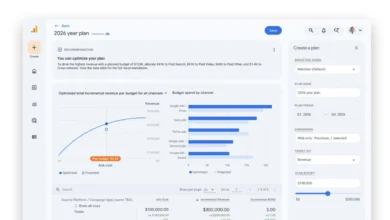
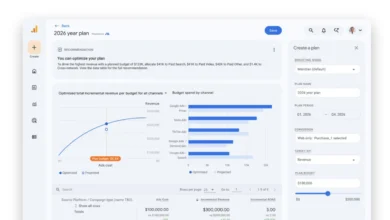
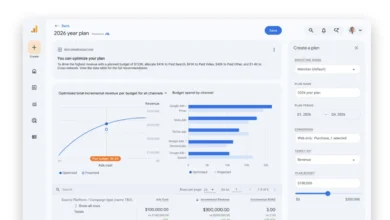
For marketing executives, the ability to predict performance is as important as measuring past results. Later this year, GA4 will introduce a cross-channel budgeting beta designed to assist with in-flight media optimization. This tool includes a projection report that tracks media pacing against predefined revenue objectives.
If a campaign is underperforming relative to its budget, the system will provide the data necessary to reallocate funds in real-time. This is a significant departure from traditional retrospective analysis; instead of reviewing monthly performance reports after the fact, teams can adjust their bidding strategies while the campaign is still live. This level of agility is critical in competitive industries where the cost-per-acquisition (CPA) can fluctuate based on real-time market demand.
Navigating the Privacy-First Future
The shift toward a "durable" measurement strategy is the most pressing concern for global businesses. With Chrome’s implementation of Privacy Sandbox APIs, Google is positioning GA4 as a tool that functions effectively without relying on third-party cookies.

"Enhanced conversions" represent a critical pillar of this durability. By leveraging hashed, consented first-party data—such as email addresses or phone numbers provided during a checkout process—businesses can create a more accurate attribution model. This data is matched with Google’s internal signals in a privacy-safe, encrypted environment, allowing for a more complete picture of cross-channel performance without violating user trust.
Consent Mode is another essential component of this ecosystem. By integrating user consent signals directly into GA4, the platform can automatically adjust its data collection behavior. If a user denies tracking, GA4 uses AI-powered modeling to estimate their impact on overall metrics. This ensures that even in a strictly regulated environment, businesses do not suffer from the "dark data" problem, where legitimate traffic remains invisible due to user privacy preferences.
The Business Implications of the Shift
Industry analysts suggest that the migration to GA4 is not merely a technical upgrade but a paradigm shift in data culture. Companies that treat GA4 as a simple replacement for Universal Analytics risk underutilizing the platform’s potential. Instead, organizations that lean into event-based modeling and AI-driven insights are expected to gain a competitive advantage in customer acquisition costs and retention.
The reliance on Google AI, however, necessitates a higher degree of data hygiene. Because the AI models are only as effective as the data provided to them, companies are now incentivized to prioritize the collection of high-quality first-party data. This has led to a surge in demand for customer data platforms (CDPs) and more sophisticated tag management strategies.
As we move toward the second half of 2024, the consensus among digital strategists is clear: the businesses that thrive will be those that view measurement as a dynamic, AI-augmented process rather than a static reporting requirement. By embracing these four pillars—AI insights, cross-channel integration, predictive budgeting, and privacy-first durability—Google Analytics 4 provides a robust framework for long-term growth. The era of legacy measurement has concluded; the era of intelligent, privacy-conscious data interpretation has begun. Organizations that have not yet finalized their transition should treat the upcoming July 1 deadline as a critical milestone in their broader digital transformation journey.
Related posts: