Google Integrates Meridian Open-Source Marketing Mix Model into Analytics 360 to Drive Data-Driven Decision Making in the AI Era

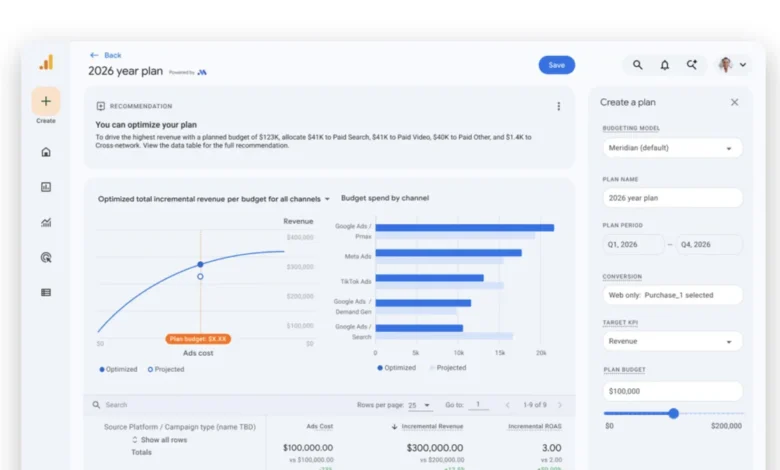
In a significant move to bolster the measurement capabilities of modern enterprises, Google has announced the integration of its open-source Marketing Mix Model (MMM), Meridian, into the Google Analytics 360 platform. This strategic development marks a pivot toward more sophisticated, privacy-centric measurement tools as the digital advertising industry grapples with the sunsetting of third-party cookies and the increasing complexity of cross-channel consumer journeys. By bringing Meridian into the Analytics 360 ecosystem, Google aims to provide marketers with a unified framework that translates vast datasets into actionable business decisions, leveraging the power of artificial intelligence and Bayesian statistics to quantify the impact of marketing investments across both digital and traditional media.
The integration is complemented by the introduction of Qualified Future Conversions (QFCs), a new metric powered by Google’s Gemini AI. QFCs are designed to bridge the historical gap between upper-funnel brand awareness efforts and lower-funnel sales results. By analyzing signals such as brand searches and engagement patterns, QFCs provide a predictive window into how current marketing spend will manifest as future revenue. Together, these updates represent a comprehensive overhaul of how global brands assess performance, signaling a shift from reactive reporting to proactive, predictive modeling.
The Evolution of Marketing Measurement in a Privacy-First World
For decades, the gold standard of digital measurement was the click-through rate and last-click attribution. However, the erosion of tracking capabilities due to privacy regulations such as GDPR and CCPA, along with technical changes like Apple’s App Tracking Transparency (ATT), has rendered traditional attribution models increasingly fragmented. In response, the industry has seen a resurgence of Marketing Mix Modeling (MMM), a statistical technique developed in the 1960s to estimate the impact of various marketing tactics on sales.
Google’s Meridian, first introduced as a standalone open-source project earlier this year, was built to modernize this traditional approach. Unlike "black-box" proprietary models offered by third-party consultants, Meridian is transparent and extensible. It utilizes Bayesian methods to allow marketers to incorporate prior knowledge and business intuition into their models, resulting in more accurate and nuanced insights. By integrating this capability directly into Google Analytics 360—the enterprise-grade version of Google Analytics 4 (GA4)—Google is democratizing high-level statistical analysis for companies that may not have the resources to build custom MMM frameworks from scratch.
The shift to GA4 was a foundational step in this journey. While the transition from Universal Analytics was met with some resistance due to its different data structure, GA4 was designed specifically to handle the "data gaps" of the modern era using machine learning. The addition of Meridian to the 360 tier is the logical next step, providing a "single source of truth" where first-party data from Analytics can be combined with external spend data to create a holistic view of ROI.
Bridging the Gap with Qualified Future Conversions
One of the most persistent challenges for Chief Marketing Officers (CMOs) is justifying "brand spend"—the investments made in video ads, social media awareness, and display banners that do not result in an immediate purchase. Historically, these efforts have been viewed as separate from "performance marketing," which focuses on immediate conversions via search or retargeting.
Qualified Future Conversions (QFCs) aim to dissolve this binary. Powered by Gemini, Google’s most capable AI model, QFCs analyze the correlation between early-stage signals and eventual sales. For instance, if a consumer views a high-impact YouTube ad and subsequently performs a brand-specific search, Gemini identifies this as a "qualified" signal of future intent.
According to internal Google data and pilot studies, brand searches are one of the strongest indicators of long-term sales growth. By quantifying these signals, QFCs allow marketers to see the "missed revenue" that would have been ignored by traditional attribution models. These predictive signals are not intended to stay isolated; Google has confirmed that QFC data will eventually integrate directly into the Meridian MMM framework. This integration will refine the accuracy of the models, allowing them to account for the long-tail effects of brand building alongside the immediate impact of promotional offers.
Technical Architecture and Data Unification
The technical appeal of Meridian lies in its ability to handle high-dimensional data. Traditional MMMs often struggled with "granularity," or the ability to see how specific regions or creative variations performed. Meridian addresses this through its open-source code, which allows data scientists to tweak parameters based on their specific industry needs.
Within Google Analytics 360, the unified measurement framework will allow for the seamless ingestion of data from multiple sources. This includes:
- First-Party Data: Direct signals from the company’s website and app, processed via GA4.
- Off-Platform Spend: Data from non-Google channels, such as television, radio, and rival digital platforms, which can be uploaded to provide a complete media mix.
- External Variables: Factors such as seasonality, economic indicators, and even weather patterns, which Meridian can use to isolate the true impact of marketing spend from external noise.
The integration into Analytics 360 simplifies the data pipeline. Previously, a company would have to export data from Google, clean it, and then import it into a separate statistical tool. Now, the goal is a streamlined workflow where the data resides and is analyzed within the same environment, reducing the latency between data collection and strategic pivot.
Industry Reactions and Strategic Implications
The reaction from the marketing community has been one of cautious optimism. Measurement experts note that while MMM is highly durable and privacy-safe, it requires a high level of data hygiene. "The move to integrate Meridian into GA360 is a clear signal that Google is doubling down on the enterprise market," says one independent data consultant. "It acknowledges that the future of measurement isn’t about tracking individuals, but about understanding aggregate patterns."
However, some industry observers point out the inherent tension in a media seller (Google) providing the measurement tools used to evaluate its own effectiveness. To mitigate these concerns, Google has emphasized the open-source nature of Meridian. Because the code is public, third-party auditors and internal data science teams can verify the logic behind the models, ensuring that the results are not biased toward Google’s own advertising products.
From a strategic standpoint, this update places Google in direct competition with specialized measurement firms like Nielsen and Kantar. By offering a "free" (included with GA360) and transparent alternative to traditional MMM providers, Google is putting pressure on the measurement industry to innovate and provide more real-time insights.
Timeline and Global Rollout
Google has indicated that the integration of Meridian into Google Analytics 360 will begin rolling out in the coming months, with a full global release expected by the end of the year. The Qualified Future Conversions feature is currently in a phased rollout within Google Ads, with the integration into the Meridian model following shortly thereafter.
Marketers are encouraged to begin preparing by ensuring their GA4 properties are correctly configured and that they have a robust strategy for collecting first-party data. As the AI era progresses, the quality of a company’s "data fuel" will determine its ability to leverage these new tools.
Conclusion: Investing with Confidence in the Next Frontier
The integration of Meridian and the launch of QFCs represent more than just a software update; they represent a philosophy of "unified measurement." In an era where the path to purchase is non-linear and often invisible, marketers can no longer rely on simple metrics to guide billion-dollar budgets.
By combining the transparency of open-source modeling with the predictive power of Gemini AI, Google is providing a roadmap for the future of business intelligence. The objective is to move away from the "spray and pray" tactics of the past and toward a model of "continuous optimization." As these tools become standard, the competitive advantage will shift to those who can not only collect data but also interpret it through the lens of sophisticated statistical models.
Ultimately, these updates are designed to help businesses understand what is working in the present while giving them the confidence to invest in the future. In the volatile landscape of global commerce, the ability to turn data into a clear decision-making framework is perhaps the most valuable asset a brand can possess. With Meridian and Analytics 360, Google is betting that the future of growth lies in the marriage of human intuition and machine-learned precision.