The Invisible Threat Under the Hood: How an Aftermarket Car Alarm Left Millions of Vehicles Vulnerable to Hijacking

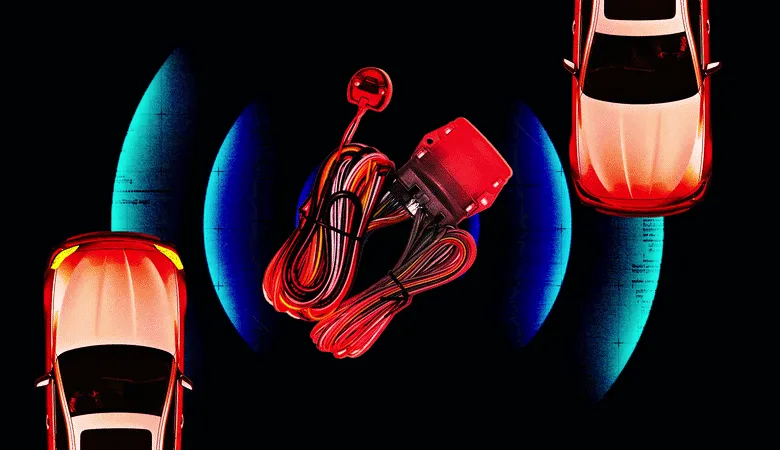
As modern automobiles transition into sophisticated, multi-ton computers on wheels, the cybersecurity landscape of the automotive industry has shifted from theoretical to critical. Drivers are increasingly accustomed to the necessity of software updates for their infotainment systems or engine control units, much like they manage updates for smartphones and laptops. However, a startling discovery by security researchers at the University of California San Diego (UCSD) has revealed a deeper, more insidious threat: a vulnerability residing in a third-party component that millions of owners never requested, may not have paid for, and likely do not even know exists.
The component in question is the KARR Security System, an aftermarket car alarm manufactured and distributed by the Acrisure Protection Group, specifically through its subsidiary, SouthWest Dealer Services (SWDS). According to the UCSD research team, this device is installed in an estimated two million vehicles across the United States. The vulnerability allows any individual within Bluetooth range to bypass security protocols, silently unlocking doors, disabling ignitions, and potentially tracking the vehicle’s movements. This revelation highlights a systemic failure in the automotive supply chain, where secondary security measures intended to protect dealer inventory become permanent, unmonitored liabilities for the end consumer.
The Nature of the Vulnerability
The security flaw discovered by the UCSD team, led by computer science professor Aaron Schulman, is rooted in a fundamental failure of cryptographic best practices. The researchers found that the KARR Security System utilizes a single, universal authentication key shared across every Bluetooth-enabled unit in the fleet. By reverse-engineering the KARR smartphone application—which legitimate customers use to manage the alarm—the team was able to extract this key and develop a proof-of-concept application on a standard Android device.

With this homemade app, the researchers demonstrated the ability to spoof radio commands that any nearby KARR-equipped vehicle would accept as legitimate. During controlled demonstrations, the team showcased a "mayhem" feature, which could simultaneously trigger the horns and lights of multiple vehicles in a parking lot. More disturbingly, the exploit allows for the silent unlocking of doors while a vehicle is idling at a stoplight, facilitating carjackings, or the total immobilization of a parked vehicle by disabling its ignition system.
While the KARR system cannot be used to start the engine remotely, it significantly lowers the barrier for professional car thieves. By gaining silent entry into the cabin, a thief can then use widely available locksmith tools—which plug into the vehicle’s On-Board Diagnostics (OBD-II) port—to program a new key in minutes. Under normal circumstances, such an intrusion would trigger a factory alarm; however, the KARR vulnerability allows a bad actor to deactivate the alarm system entirely before the theft begins.
The Shadow Supply Chain: Why These Devices Are Ubiquitous
One of the most troubling aspects of the KARR vulnerability is the method of its distribution. These devices are typically not installed by the vehicle manufacturer (OEM) or the car owner. Instead, they are installed by car dealerships as a means of protecting their inventory from theft while vehicles sit on the lot. When a consumer purchases the vehicle, the dealer often offers the KARR system as a "value-added" security feature for an additional fee.
If the buyer declines the upgrade, the dealer rarely removes the hardware. Instead, they simply "deactivate" the software. The UCSD researchers discovered that even in this deactivated state, the KARR hardware remains powered and continues to beacon Bluetooth signals. It remains active while the car is running and for up to ten minutes after the engine is turned off. Because the hardware remains physically wired into the vehicle’s critical electronic systems, it remains susceptible to the universal key exploit. Consequently, hundreds of thousands of drivers are operating vehicles with a "dormant" but hackable gateway into their car’s security system.

Tracking and the WiGLE Database
The implications of the KARR vulnerability extend beyond physical theft to the realm of digital stalking and privacy. UCSD researcher Yibo Wei utilized WiGLE (Wireless Geographic Logging Engine), an open-source database that crowdsources radio signal data from around the globe. By filtering for the specific Bluetooth prefixes associated with KARR devices—identified through Federal Communications Commission (FCC) filings—the team was able to map the density of vulnerable vehicles.
The data revealed that while the devices are most prevalent in Southern California, where SouthWest Dealer Services has a strong foothold, they are scattered across the entire United States and have even been detected in international markets. For a malicious actor, the WiGLE database acts as a scouting tool, allowing them to identify the historical locations of specific vulnerable vehicles, find patterns of where they are frequently parked, and target them for theft or sabotage with high precision.
Chronology of Disclosure and Official Response
The timeline of the discovery and subsequent patching process has drawn criticism regarding the speed of corporate response to critical infrastructure vulnerabilities.
- 2018: UCSD researcher Nishant Bhaskar first identifies mysterious Bluetooth signals while investigating gas station "skimmers." He traces these signals to the KARR alarm system via FCC databases.
- Early 2023: Graduate researcher Jerry Yu begins a deep dive into the KARR system’s security, quickly discovering the universal authentication key.
- January 2023: The UCSD team formally notifies Acrisure Protection Group of the vulnerability.
- 2023–2024: An 18-month period passes during which the researchers and the company engage in disclosure discussions. The company maintains that the risk is "low."
- July 2024: Weeks before the UCSD team is scheduled to present their findings at the Defcon and Usenix security conferences, Acrisure Protection Group releases a firmware update.
In a statement to the media, a spokesperson for Acrisure Protection Group characterized the vulnerability as "highly complex" and presenting a "low risk to customers under real-world conditions." However, the company acknowledged the findings by developing a patch and initiating communications through its dealer networks and its official website.

The Challenge of Remediation
Fixing a vulnerability in a device that the owner might not know exists presents a unique logistical hurdle. Unlike a Tesla or a modern Ford, which can receive over-the-air (OTA) updates directly from the manufacturer, the KARR system is an aftermarket add-on that operates outside the vehicle’s standard update ecosystem.
To secure their vehicles, owners must first determine if the device is present. Indicators include a KARR or SWDS sticker on the driver’s side window and a small plastic button with a blinking LED light mounted under the dashboard. To apply the patch, owners must:
- Download the KARR Security smartphone app (available on iOS and Android).
- Pair the app with the vehicle’s Bluetooth signal.
- Navigate to the "Customer Service" section and initiate a "Firmware Update."
This manual process is a significant barrier to security. Stefan Savage, a UCSD computer science professor and a pioneer in automotive hacking research, noted that this is arguably one of the most significant car-hacking threats discovered due to the disconnect between the consumer and the supply chain. "The manufacturer of your car can’t fix it," Savage remarked, highlighting that because the device is not an OEM part, standard recall mechanisms do not apply.
Broader Implications for Automotive Cybersecurity
The KARR Security System saga serves as a cautionary tale for the burgeoning "Internet of Things" (IoT) integration in the automotive sector. It underscores the risks of "security through obscurity," where companies rely on the assumption that their proprietary code will not be scrutinized. When universal keys are used to simplify dealer operations, they create a single point of failure that compromises the entire fleet.
.jpg)
Furthermore, it raises questions about the ethics of dealership-installed hardware. The practice of leaving "dormant" hardware in consumer vehicles without explicit consent creates a permanent shadow attack surface. As cars become more integrated with personal data and autonomous features, the presence of unmanaged third-party code represents a growing threat to public safety.
The research presented by the UCSD team at upcoming security conferences is expected to spark a broader conversation among regulators and consumer advocacy groups. There is a growing call for "Software Bills of Materials" (SBOMs) in the automotive industry, which would require sellers to disclose every piece of software and hardware integrated into a vehicle. Until such transparency becomes mandatory, the burden of security remains unfairly placed on the consumer, who must now play the role of a systems administrator for a car they thought they simply bought to drive.