For years, search engine optimization (SEO) professionals meticulously crafted meta descriptions, viewing them as a critical tool to entice organic searchers and drive click-through rates. These concise summaries, embedded within a webpage’s HTML, were once the primary driver of the snippet displayed in search engine results pages (SERPs). However, the digital landscape is constantly shifting, and Google’s approach to generating these coveted snippets has evolved significantly. While meta descriptions were once the exclusive source for organic search snippets, Google now frequently bypasses them, opting instead to dynamically extract relevant content directly from a webpage based on a user’s specific query. This paradigm shift has led to a period of re-evaluation regarding the necessity and efficacy of meta descriptions in modern SEO strategies.
The Shifting Sands of Snippet Generation
Historically, the meta description tag served as a direct advertisement for a webpage within the SERPs. Optimizing this brief text—typically around 150-160 characters—was a core tenet of on-page SEO. The goal was straightforward: to accurately and compellingly summarize the page’s content in a way that would resonate with potential visitors and encourage them to click through to the site. This practice was widely adopted, and SEO guides and tools consistently emphasized its importance. The underlying assumption was that search engines, particularly Google, would faithfully reproduce the meta description as the snippet accompanying a search result.
However, in recent years, Google’s algorithms have become far more sophisticated in their ability to understand and interpret webpage content in relation to user queries. This has led to a noticeable trend where Google often prioritizes content directly from the page itself when constructing search snippets. This dynamic extraction allows Google to provide more contextually relevant and precise summaries, tailored to the exact wording and intent of a user’s search. For instance, if a user searches for a specific technical detail, Google might pull that detail directly from a paragraph on the page, rather than relying on a potentially more general meta description. This has raised questions among SEO practitioners about whether the effort invested in crafting meta descriptions still yields proportionate returns.
Official Stance and Expert Recommendations
Despite the observed shift in practice, Google itself maintains that meta descriptions still play a role in snippet generation. According to Google’s Search Central blog, while the primary method involves automatically determining the most relevant snippet from the page’s content, descriptive information within the meta description element is still considered. The official guidance states: "Google primarily uses the content on the page to automatically determine the appropriate snippet. We may also use descriptive information in the meta description element when it describes the page better than other parts of the content." This suggests that a well-written meta description can still be a valuable asset, particularly when it offers a superior summary of the page’s essence compared to other on-page elements.
Furthermore, Google’s guidance explicitly recommends their use for critical pages: "at the very least, create a description for the critical URLs like your home page and popular pages." This advice underscores the enduring value of meta descriptions for foundational pages that represent the core of a website’s identity and offerings.
Adding further weight to this nuanced perspective, John Mueller, a prominent Search Advocate at Google, offered his insights on a Reddit thread last month. In response to a query about the necessity of meta descriptions, Mueller stated, "sometimes it [a meta description] helps you to figure out a clear focus for a page. Overall, I think it’s still worthwhile to do so for individual pages that you care about, but it’s definitely not a requirement." This statement provides a practical, albeit informal, endorsement. Mueller highlights two key benefits: meta descriptions can serve as a mental exercise for page creators, helping them to crystallize the page’s primary focus, and they remain valuable for pages of strategic importance to the website owner. However, he also clarifies that they are not a mandatory element for ranking or snippet generation.
The Case for Continued Use: A Risk-Free Strategy
From a practical standpoint, there appears to be no significant downside to including meta descriptions on webpages. For SEO professionals and website owners, the effort involved in crafting a thoughtful meta description is often minimal compared to the potential benefits. The prevailing sentiment among many practitioners is that if a meta description is well-written, it can contribute positively to user experience and potentially influence click-through rates, even if Google doesn’t always use it.

Many SEO experts, including those who have observed the trend of Google’s dynamic snippet generation, continue to implement meta descriptions, particularly for pages that are critical to a website’s success. This includes home pages, category pages, and product pages. These types of pages often house rich, detailed information—such as in-depth service or product descriptions, technical specifications, customer reviews, and testimonials—that can be challenging for algorithms to condense into a concise and accurate snippet. A well-crafted meta description can provide a crucial anchor for these complex pages, ensuring that users receive a relevant preview of the content.
Illustrative Examples in Practice
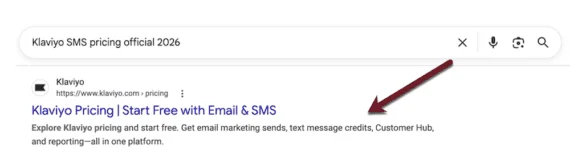
The effectiveness of meta descriptions can be observed in real-world scenarios. Consider Klaviyo, a marketing automation platform. Their SMS pricing page, for example, features a meta description that reads: "Explore Klaviyo pricing and start free. Get email marketing sends, text message credits, Customer Hub, and reporting—all in one platform." When a user searched for "Klaviyo SMS pricing official 2026," both Google and other AI-powered platforms, such as ChatGPT, utilized this specific meta description to generate their respective search snippets and answers. This demonstrates that even in today’s algorithmically driven environment, a clear, benefit-oriented meta description can still be instrumental in how a page is represented in search results, particularly for AI models that are trained on vast datasets of web content. The accompanying visual evidence from such a search clearly indicates Google’s utilization of the meta description, reinforcing its potential impact.
Crafting Effective Meta Descriptions in the Modern Era
The era when SEO professionals focused heavily on stuffing keywords into meta descriptions is largely behind us. While keyword relevance remains important, the emphasis has shifted towards creating descriptions that are user-centric and informative. For high-intent pages, such as those detailing specific products or services, a meta description should aim to:
- Accurately Summarize Content: The description must truthfully reflect what a user will find on the page. Misleading descriptions can lead to high bounce rates and negatively impact user experience.
- Highlight Key Benefits or Features: What makes this page valuable to the user? The description should briefly touch upon the most compelling aspects.
- Include a Call to Action (Implicit or Explicit): While not always necessary, a subtle nudge, like "Learn more" or "Explore options," can be effective.
- Be Compelling and Engaging: The language should be persuasive enough to encourage a click without resorting to sensationalism.
- Consider the Target Audience: The tone and vocabulary should resonate with the intended users.
For websites with extensive product catalogs or dynamically generated content, such as e-commerce sites with thousands of products, manually writing meta descriptions for every single page is an impractical undertaking. In such scenarios, Google recommends programmatic generation. This can be achieved through:
- Automated Scripts: Developing internal scripts to generate meta descriptions based on product attributes, category information, and other relevant data points.
- AI-Powered Tools: Leveraging Generative AI platforms like ChatGPT, Claude, or specialized AI writing assistants. These tools can be prompted to create meta descriptions that are both informative and engaging, often by analyzing existing product descriptions and specifications. However, careful prompting is crucial to ensure the AI-generated descriptions are accurate and aligned with brand voice.
The Role of AI and Human Oversight
The advent of Generative AI has introduced new possibilities and considerations for meta description creation. Platforms like ChatGPT and Claude can significantly streamline the process for large-scale websites. They can analyze product details, customer reviews, and other on-page content to generate unique and relevant meta descriptions. This is particularly beneficial for e-commerce businesses with vast inventories.
However, the importance of human oversight cannot be overstated. While AI can generate descriptions efficiently, manual review by humans is essential, especially for pages that are critical to a website’s performance. This includes pages with high traffic, popular products, or those that drive significant conversions. Human reviewers can ensure that the AI-generated descriptions are not only accurate but also align with the brand’s messaging, tone, and overall marketing strategy. They can also catch any nuances or subtleties that an AI might miss, thereby preventing potential misunderstandings or misrepresentations. The process of "careful prompting" mentioned in the original content is a testament to this need for human guidance and refinement when working with AI.
Broader Implications and the Future of Snippets
In essence, Google and emerging AI platforms are striving to provide users with snippets and answers that are maximally helpful. This user-centric approach dictates their content selection, and meta descriptions are a part of that ecosystem. When a meta description effectively serves this purpose—by accurately and compellingly summarizing a page’s content in relation to a user’s query—it is likely to be utilized.
The broader implication is that the value of a meta description is now more directly tied to its utility for the end-user and its ability to complement the on-page content. It’s no longer a mere checklist item for SEO but a strategic element of content creation that, when done well, can enhance visibility and user engagement. The dynamic nature of search means that while meta descriptions may not be a guaranteed inclusion in every snippet, they remain a powerful tool for guiding search engines and AI models, as well as for clarifying a page’s purpose for website owners themselves. The ongoing evolution of search algorithms and AI will likely continue to refine how these snippets are generated, but a well-crafted meta description, focused on user value, is likely to remain a beneficial component of a comprehensive SEO strategy. The trend suggests a move towards a more holistic understanding of content, where meta descriptions act as a valuable, albeit not always definitive, signal in the complex process of delivering the most relevant information to searchers.