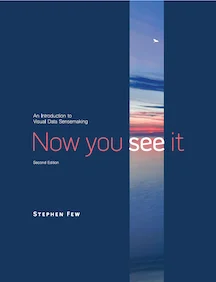
By merging the original text with the methodologies presented in Few’s 2015 book, Signal: Understanding What Matters in a World of Noise, this new edition provides a singular, streamlined resource for professionals tasked with interpreting quantitative information. The primary objective of the update is to facilitate a more fluid and comprehensive learning experience, bridging the gap between basic visual perception and sophisticated statistical interpretation.
The Evolution of Visual Data Sensemaking
The field of data visualization has undergone a radical transformation since the first edition of Now You See It was published in 2009. At that time, the primary challenge for many organizations was the transition from static, tabular reporting to basic graphical representation. However, as the volume of global data grew—reaching an estimated 64.2 zettabytes by 2020 according to International Data Corporation (IDC) figures—the challenge shifted from simply seeing data to making sense of it.
Stephen Few, a leading educator and consultant in the field through his firm Perceptual Edge, has long argued that the human eye is the most powerful tool for data analysis when properly trained. The second edition of his book addresses the modern "data glut" by focusing on sensemaking—the cognitive process of finding meaning in patterns. Unlike many contemporary texts that focus on the software-specific "how-to" of tools like Tableau or Power BI, Few’s work focuses on the "why" and "how" of human perception.
The consolidation of Now You See It and Signal into a single volume addresses a critical need in the industry. While the first edition focused on the fundamental practices of visual analysis, Signal introduced more rigorous methods, such as Statistical Process Control (SPC), to help analysts distinguish between "signal" (meaningful patterns) and "noise" (random variation). By combining these works, the second edition offers a curriculum that scales from introductory concepts to advanced analytical rigor without the physical bulk of two separate volumes.
Strategic Integration: Merging Signal and Sensemaking
The decision to combine these two influential works stems from the realization that basic visual analysis and advanced statistical interpretation are not separate disciplines but two ends of a single spectrum. In the professional environment, an analyst rarely needs one without the other.
A key highlight of the second edition is the inclusion of Statistical Process Control (SPC) techniques. Originally developed for manufacturing quality control by Walter Shewhart and popularized by W. Edwards Deming, SPC uses visual charts to determine if a process is in a state of statistical control. In the context of visual data sensemaking, these techniques allow analysts to avoid the common pitfall of overreacting to minor fluctuations in data—a phenomenon Few describes as "reacting to noise."
Despite the inclusion of this additional technical depth, the author has refined the prose and structure to ensure the book remains accessible. The resulting publication maintains a physical profile similar to the original 2009 version, achieved through meticulous editing and the removal of redundant introductory material across the two source texts. This efficiency mirrors the very principles of data visualization that Few advocates: the removal of non-data-ink to highlight the core message.
Chronology of Development and Publication
The path to the second edition of Now You See It follows a decade-long trajectory of research and pedagogical refinement.
- 2004: Few publishes Show Me the Numbers: Designing Tables and Graphs to Enlighten, establishing the groundwork for effective data presentation.
- 2006: Information Dashboard Design is released, focusing on the visual monitoring of critical information.
- 2009: The first edition of Now You See It is published. It is the first major work to focus specifically on the use of graphs for exploration and analysis rather than just communication.
- 2015: Few publishes Signal: Understanding What Matters in a World of Noise. This book was designed as a companion to Now You See It, introducing more advanced techniques for identifying significant changes in data over time.
- February 22, 2021: The formal announcement of the second edition of Now You See It is made, detailing the integration of Signal.
- April 15, 2021: The official release date for the second edition, subtitled An Introduction to Visual Data Sensemaking.
This timeline illustrates a shift in the industry from "data presentation" to "data sensemaking," reflecting a broader corporate trend toward data-driven decision-making.
The Cognitive Science of Visual Perception
Central to the methodology of the book is the reliance on human vision. Few posits that while sophisticated algorithms and artificial intelligence can process vast quantities of data, they often lack the contextual nuance that a trained human analyst provides. The human visual system is evolved to detect patterns, outliers, and trends with remarkable speed through "pre-attentive attributes"—visual properties like length, color, and position that the brain processes before conscious thought.
The book teaches analysts how to leverage these attributes. For example, by using line graphs to track variables over time, the human brain can instantly recognize a "slope" as a rate of change. By using scatter plots, the eye can detect clusters or correlations that might be obscured in a multi-column spreadsheet.
However, Few emphasizes that these skills are not entirely intuitive. While we are born with the hardware (the eyes and brain), we must learn the software (the analytical techniques). Without this training, the most expensive business intelligence tools often result in "chartjunk"—visualizations that are aesthetically pleasing but cognitively empty.
Supporting Data: The Growing Gap in Data Literacy
The release of this updated edition comes at a time when the "Data Literacy Gap" is becoming a significant concern for global enterprises. According to a 2020 report by the Data Literacy Project, only 24% of business decision-makers surveyed felt confident in their ability to read, work with, analyze, and argue with data. Furthermore, while 92% of business leaders believe it is important for their employees to be data literate, only 17% report that their organizations significantly encourage employees to become more comfortable with data.
Few’s work addresses this gap directly. By providing a comprehensive guide that avoids overly academic jargon, Now You See It serves as a bridge for the "broad audience" mentioned in the announcement. The goal is to democratize data analysis, moving it out of the exclusive realm of data scientists and into the hands of managers, marketers, and researchers.
Broader Impact and Industry Implications
The implications of this publication extend beyond the individual reader to the broader corporate and educational landscape. As organizations continue to invest billions in data infrastructure, the return on investment (ROI) is increasingly dependent on the human element. A 2019 Gartner study suggested that by 2023, data literacy would become an explicit and necessary driver of business value.
The consolidation of Signal and Now You See It suggests a trend toward "full-stack" analytical training. No longer is it sufficient for an analyst to know how to create a bar chart; they must now understand the statistical significance of the data they are visualizing. By integrating Statistical Process Control into a foundational text, Few is effectively raising the "floor" of what is considered basic data literacy.
Furthermore, the emphasis on "sensemaking" rather than "visualization" signals a change in the professional hierarchy. Sensemaking implies an active, iterative process of questioning data, whereas visualization often implies a passive act of rendering data. This shift encourages a more skeptical and rigorous approach to corporate reporting, potentially reducing the frequency of misleading interpretations that lead to poor strategic decisions.
Conclusion
The second edition of Now You See It An Introduction to Visual Data Sensemaking arrives as a timely intervention in an era defined by information overload. By refining the best of his previous works and focusing on the intersection of visual perception and statistical rigor, Stephen Few provides a roadmap for turning noise into signal. The publication serves as a reminder that in the age of automation, the most sophisticated analytical tool remains the human mind, provided it is taught how to see. As the release date of April 15, 2021, approaches, the data science and business intelligence communities anticipate a resource that will likely remain a standard text for the next decade of visual analysis.
Related posts: