The Musician’s E-Commerce Toolkit: Navigating the Digital Marketplace in 2026

The landscape of music sales has fundamentally shifted, moving far beyond the traditional model of simply uploading tracks to streaming services and hoping for organic discovery. For musicians of all levels – from independent artists and touring bands to established ensembles – e-commerce has become an indispensable cornerstone for cultivating fan engagement and establishing sustainable revenue streams. By 2026, this digital marketplace extends well beyond the sale of merchandise like t-shirts and vinyl records. Artists are now operating comprehensive digital businesses, offering everything from exclusive fan memberships and premium content to event tickets, sample packs for producers, and direct digital downloads. The platform chosen to manage these diverse offerings can significantly impact both the artist’s operational efficiency and the fan’s purchasing experience.
This comprehensive guide delves into the leading e-commerce platforms available to musicians in the current market. Each platform has been evaluated for its unique strengths, covering areas such as digital product delivery, merchandise management, community building capabilities, and support for touring operations. The analysis aims to align specific artist goals with the most suitable digital solutions, whether the objective is a small, curated merchandise drop or the ambitious construction of a full-scale artist brand.
Key Takeaways
- E-commerce is essential for musician revenue: Beyond streaming royalties, direct sales of merchandise, digital content, and memberships are critical for financial sustainability.
- Platform choice impacts user experience: The right platform enhances sales, simplifies operations, and strengthens fan connections.
- Diverse product offerings: Musicians are selling an expanding range of items, including digital downloads, exclusive content, sample packs, tickets, and recurring memberships.
- Tailored solutions: Different platforms excel in specific areas, making it crucial to match your offerings and business goals with the appropriate tool.
Quick Comparison: Best E-commerce Platforms for Musicians
| Platform | Best For | Starting Price | Free Plan? | Key Benefit |
|---|---|---|---|---|
| Shopify | Serious merch businesses | $29/month | No | Full control and scalable e-commerce features |
| Bandcamp | Selling digital music directly | Free | Yes | Direct-to-fan music sales |
| Bandzoogle | All-in-one musician website | $11/month | No | EPK, ticketing, music player, store |
| Big Cartel | Indie artists with small product lines | Free | Yes | Simple setup, no platform fees |
| Patreon | Monthly memberships + community | 10% of revenue | No | Recurring fan support |
| Gumroad | Sample packs and digital content | 10% + $0.50 | Yes | Simple checkout for digital goods |
| Ko-fi | Tips, small digital sales, light memberships | Free | Yes | Tip jar, minimal effort |
| Squarespace | Beautiful, polished websites | $16/month | No | Visual branding with e-commerce capabilities |
| Wix | Customizable artist sites | $17/month | Yes | All-in-one builder with marketing tools |
| WooCommerce | Custom workflows and SEO | Free (plus hosting) | No | Full control for advanced users |
1. Shopify: The E-commerce Powerhouse for Serious Music Businesses
Starting Price: $29 per month (billed annually)
AI Tools Included: Yes (Shopify Sidekick)
Shopify stands out as the premier e-commerce platform for musicians aiming to build robust and scalable online businesses. Its comprehensive suite of sales tools, extensive integration capabilities, and inherent scalability make it an ideal choice for artists ranging from those launching their inaugural merchandise drop to those managing complex global shipping operations. While it presents a slightly steeper learning curve for absolute beginners compared to more specialized platforms, Shopify’s depth of features positions it as a strong long-term investment for artists committed to professionalizing their online presence.
The platform excels in managing a wide array of products, from intricate merchandise bundles and print-on-demand fulfillment to seamless digital download delivery and meticulous inventory management. Shopify’s backend interface, though requiring an initial adjustment period, grants users unparalleled control over every facet of their online store. This level of detail is crucial for artists who view their e-commerce operation as a core component of their brand.
Recent advancements, such as the AI-powered Shopify Sidekick, significantly streamline the onboarding and store management process. When prompted with basic information about planned sales (e.g., vinyl records and tour merchandise), Sidekick can generate a complete store setup, including suggested product categories and tags, drastically reducing the time from initial setup to a sellable storefront. This integration reflects a broader industry trend towards AI-assisted business operations, making it more accessible for artists to maintain a professional online presence without requiring a dedicated e-commerce team.
Pros:
- Exceptional scalability for growing businesses.
- Vast app store for extended functionality.
- Robust tools for inventory and order management.
- Integrated payment processing and fraud analysis.
- AI-powered assistance for store setup and management.
Cons:
- Higher monthly cost compared to some alternatives.
- Can be overwhelming for very simple needs.
- Design flexibility, while good, is not as freeform as some drag-and-drop builders.
Why Use Shopify in 2026?
Shopify’s core strength lies in its dedicated focus on e-commerce. It provides musicians with a complete infrastructure for selling a wide spectrum of products, from digital singles to elaborate merchandise packages and ticket bundles. The platform’s scalability ensures that artists can expand their operations without the need to migrate to a different system. Furthermore, seamless integrations with fulfillment services, marketing automation tools, and even point-of-sale systems for touring artists enhance its utility. With AI tools automating key tasks, maintaining a professional online store is more efficient than ever.
Shopify is suitable for:

- Established artists and bands with significant merchandise lines.
- Musicians planning to scale their online sales globally.
- Artists requiring advanced inventory and fulfillment management.
- Those who prioritize a professional, feature-rich e-commerce experience.
Shopify isn’t suitable for:
- Artists with very limited product offerings and basic sales needs.
- Musicians on a very tight budget prioritizing free or low-cost solutions.
- Those seeking a simple, all-in-one website builder with integrated e-commerce as a secondary feature.
2. Bandcamp: The Artist-Centric Hub for Direct Music Sales
Starting Price: Free to use
AI Tools: No
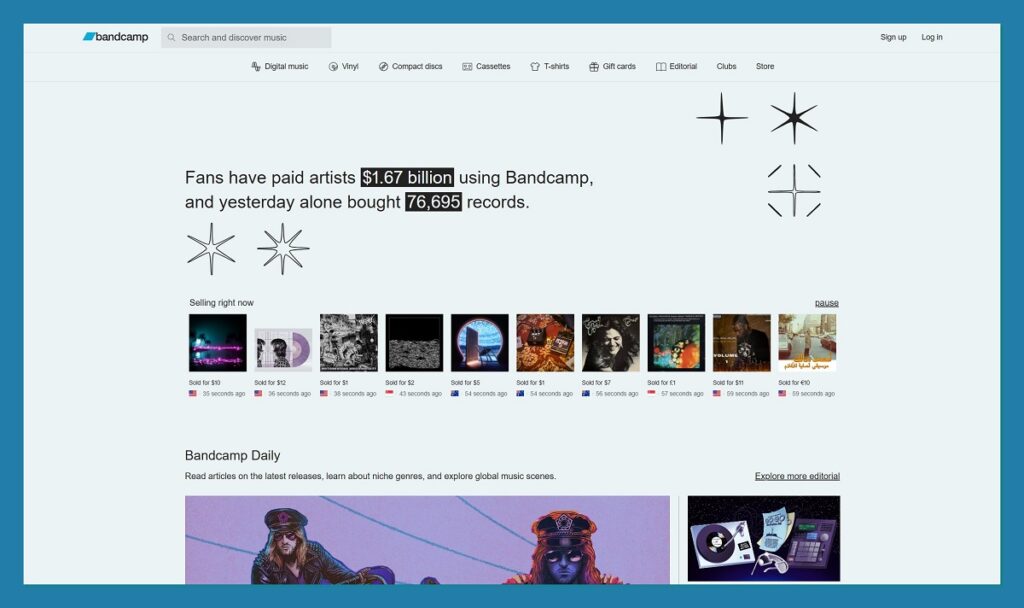
Bandcamp has solidified its position as the preeminent platform for musicians seeking to sell their music directly to their fanbase, particularly for digital downloads. Its artist-first philosophy permeates every aspect of the platform, from its intuitive interface to its favorable fee structure. Artists are not burdened by monthly subscription costs; instead, Bandcamp operates on a commission-based model, taking a percentage of sales.
The platform supports the sale of albums, singles, physical merchandise, and offers flexible options like discount codes and curated bundles. The integrated fan-follow system is a powerful tool for audience engagement, enabling artists to notify followers of new releases, updates, and direct messages. This functionality transforms Bandcamp from a mere storefront into a synergistic sales and community-building tool.
During testing, uploading a short EP and configuring sales options was remarkably swift. Bandcamp efficiently manages digital delivery, pricing, and even allows for "pay what you want" pricing on select tracks. This adaptability, coupled with the absence of monthly fees, makes Bandcamp an exceptionally attractive option for emerging artists focused on simplifying their digital sales strategy.
Pros:
- No monthly fees, commission-based pricing.
- Excellent for digital music sales and delivery.
- Strong community features and fan engagement tools.
- Supports physical merchandise sales.
- "Pay what you want" pricing option.
Cons:
- Merchandise fulfillment is less robust than dedicated platforms.
- Limited customization options for store design.
- No integrated marketing or advanced analytics tools.
Why Use Bandcamp in 2026?
For artists whose primary focus is selling albums, singles, or digital content without the need for a complex e-commerce infrastructure, Bandcamp remains the industry standard. It is purpose-built for musicians, fostering both discovery and direct sales, and eliminates the need for separate website hosting or maintenance. Its commitment to fair artist payouts and its established fan base make it a reliable and trusted platform.
Bandcamp is suitable for:
- Independent artists and bands selling their music directly.
- Musicians prioritizing digital sales and fan connection.
- Artists seeking a simple, low-overhead platform.
- Labels looking for an easy way to distribute music to fans.
Bandcamp isn’t suitable for:
- Artists whose primary sales channel is physical merchandise.
- Those requiring extensive website customization and branding control.
- Businesses needing advanced inventory and fulfillment management.
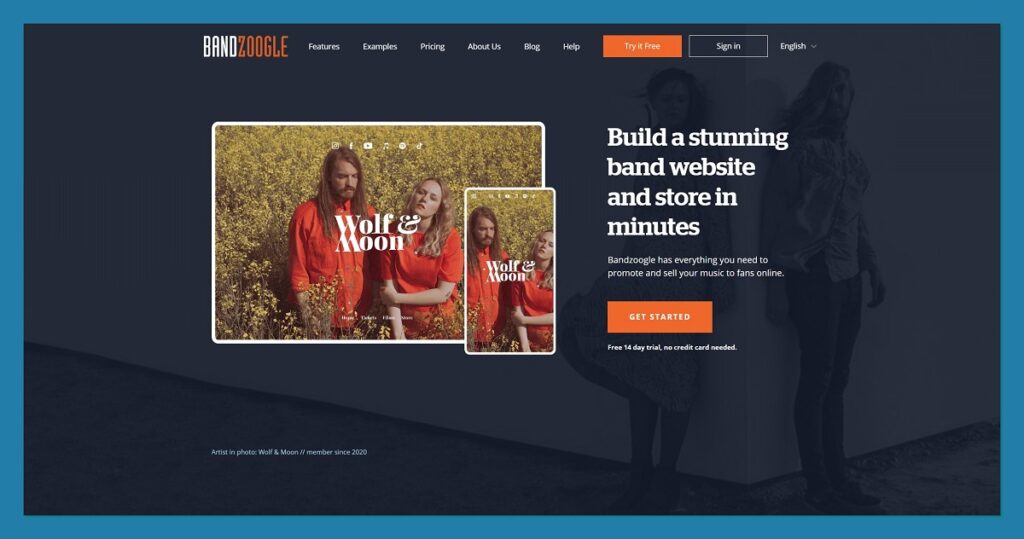
3. Bandzoogle: The All-in-One Website Solution for Musicians
Starting Price: $11 per month (billed annually)
AI Tools: No

Bandzoogle distinguishes itself as the singular platform meticulously designed for musicians to construct their official websites. It consolidates all essential artist tools into a single, cohesive package: an electronic press kit (EPK), integrated music players, ticketing capabilities, mailing list management, and a fully functional e-commerce store. A significant advantage is the absence of sales commissions, a rarity for an all-in-one solution.
The platform’s streamlined approach is particularly beneficial for artists, allowing for seamless integration of all digital presence elements. From updating tour dates and uploading new tracks to managing orders, all functionalities reside within a unified dashboard, eliminating the need for complex plugin installations or third-party app integrations.
During the testing phase, setting up a Bandzoogle store proved remarkably straightforward. After selecting a theme and adding product listings, the store was operational without requiring additional tools or extensions. This out-of-the-box functionality allows artists to concentrate on content creation rather than technical configuration.
Pros:
- All-in-one platform tailored for musicians.
- No platform fees on sales.
- Includes EPK, music player, ticketing, and mailing list tools.
- Easy to use and set up without technical expertise.
- Excellent customer support.
Cons:
- E-commerce features are not as extensive as dedicated platforms like Shopify.
- Design customization, while good, has limitations compared to open-ended builders.
- Fewer third-party integrations compared to larger e-commerce platforms.
Why Use Bandzoogle in 2026?
Bandzoogle is the ideal choice for musicians who wish to centralize their entire digital presence. It functions as a comprehensive artist hub, integrating tour schedules, email marketing, and an EPK, all without the necessity of hiring a web developer. Its focus on musician-specific needs makes it an efficient and effective solution for managing an artist’s online identity and sales operations.
Bandzoogle is suitable for:
- Musicians seeking a unified platform for their website, music, and store.
- Artists who value ease of use and integrated promotional tools.
- Those who want to manage their EPK and tour dates alongside sales.
- Independent artists and emerging bands building their initial online presence.
Bandzoogle isn’t suitable for:
- Artists requiring highly complex e-commerce functionality or advanced integrations.
- Musicians who need complete design freedom beyond template-based customization.
- Businesses with a very large and rapidly growing product catalog.
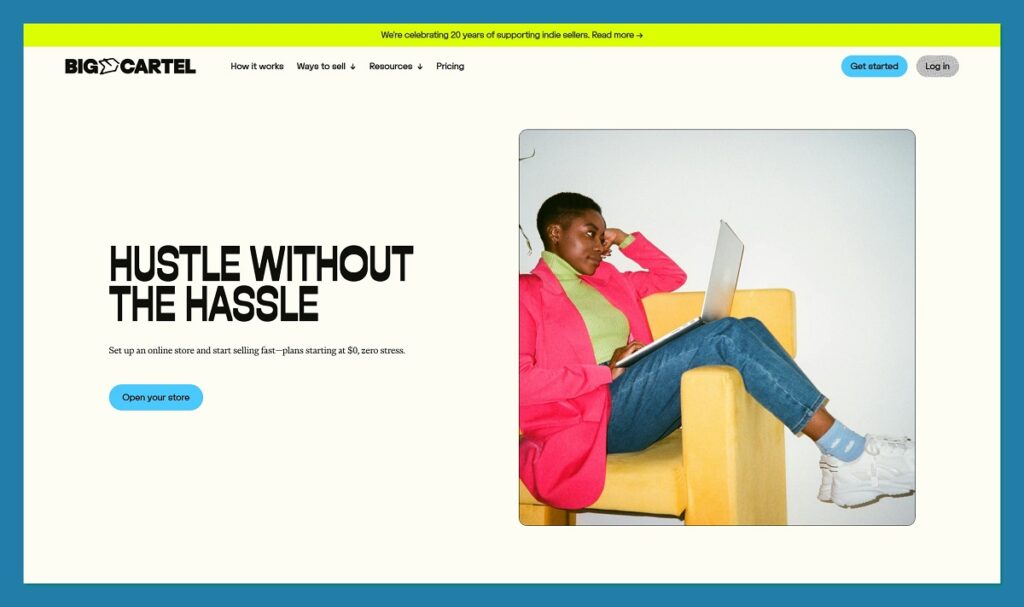
4. Big Cartel: The Go-To for Independent Merch Drops
Starting Price: Free for up to 5 products
AI Tools: No
Big Cartel is specifically engineered for artists and creators who desire a simple and efficient method for selling a limited range of products. It intentionally avoids the complexity of a full-fledged e-commerce engine, instead focusing on enabling musicians to launch and manage small-scale shops with minimal technical hurdles.
This platform is particularly effective for single-item product launches or short-term promotional campaigns. Its interface is clean and user-friendly, and the product editing process is straightforward. Big Cartel integrates seamlessly with Stripe and PayPal, ensuring easy and secure payment processing.
During testing, setting up a limited-edition vinyl record drop on Big Cartel was accomplished within an hour, demonstrating its efficiency for artists who manage their inventory in smaller batches or for specific events. This makes it a strong contender for artists who prefer a focused approach to their merchandise sales.
Pros:
- Free plan available for up to 5 products.
- Extremely easy to set up and use.
- No platform fees on sales.
- Ideal for small product lines and limited edition drops.
- Clean and simple design options.
Cons:
- Limited scalability for larger businesses.
- Fewer advanced e-commerce features and integrations.
- Inventory management is basic.
- Customization options are relatively limited.
Why Use Big Cartel in 2026?
For artists launching quick merchandise drops or those who only sell products periodically, Big Cartel offers a cost-effective solution without platform fees or long-term contracts. Its simplicity, focused functionality, and emphasis on creative control make it an excellent choice for artists prioritizing straightforward merchandise sales.
Big Cartel is suitable for:
- Independent artists and small bands with limited product SKUs.
- Musicians focusing on occasional merch drops or limited edition releases.
- Artists who want a free or low-cost entry into e-commerce.
- Creatives prioritizing ease of use over advanced features.
Big Cartel isn’t suitable for:
- Artists with extensive product catalogs and high sales volume.
- Businesses requiring complex inventory management or international shipping features.
- Those needing advanced marketing or analytics tools integrated into their store.
5. Patreon: The Premier Platform for Recurring Fan Memberships
Starting Price: Free to start, 10 percent of earnings
AI Tools: No
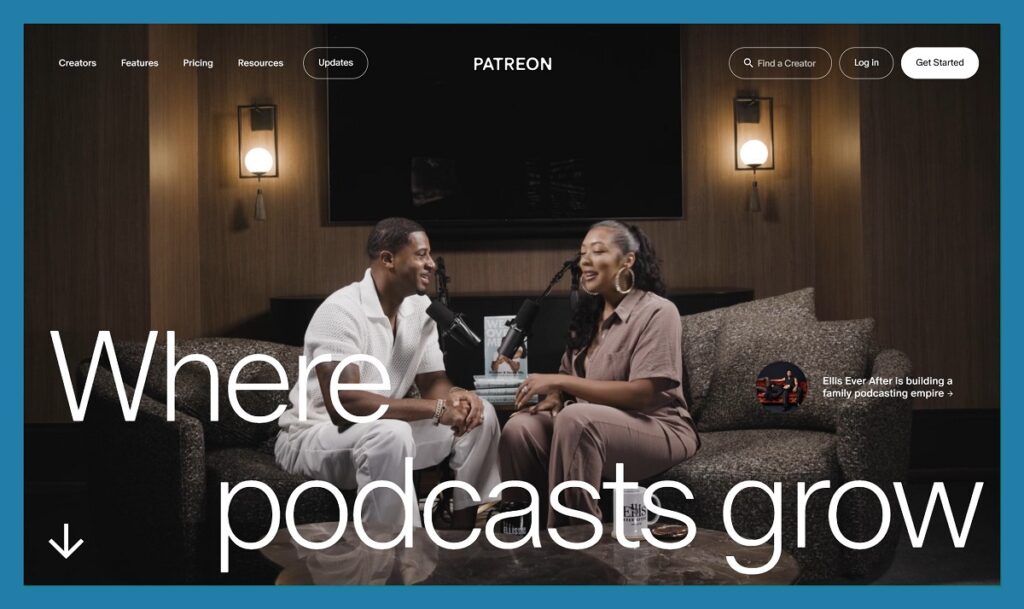
Patreon has emerged as the dominant platform for creators offering exclusive content, fan clubs, and subscription-based communities. For musicians, it provides an unparalleled opportunity to deliver behind-the-scenes content, unreleased music, early access to performances, and a host of other benefits through recurring monthly memberships.
The platform empowers artists to establish tiered membership levels, gate content access, and engage directly with their supporters through messaging and chat features. Its utility in building a stable, recurring income stream that underpins long-term creative projects is particularly noteworthy.
During setup, creating three distinct membership tiers and populating them with exclusive audio content for top-tier fans was a user-friendly process. Patreon also offers guidance on improving messaging and outreach to enhance fan engagement.
Pros:
- Excellent for building recurring revenue streams.
- Facilitates direct fan community building.
- Tiered membership options and gated content.
- Direct communication tools for creators and fans.
- No upfront cost, revenue share model.
Cons:
- Not designed for selling physical merchandise or complex digital products.
- Fees can be significant at higher revenue levels.
- Requires ongoing content creation to retain members.
- Limited customization of the creator profile page.
Why Use Patreon in 2026?
For artists committed to fostering a genuine fan community and securing consistent monthly support, Patreon remains the most established and effective platform. While not designed for traditional e-commerce or merchandise sales, it excels in providing exclusive access and delivering ongoing value, making it indispensable for artists focused on building a loyal subscriber base.
Patreon is suitable for:
- Artists seeking to build a strong, engaged fan community.
- Musicians who can consistently offer exclusive content or perks.
- Creators looking for a stable, recurring income stream.
- Those prioritizing fan connection over direct product sales.
Patreon isn’t suitable for:
- Artists whose primary sales focus is physical merchandise.
- Musicians who don’t have the capacity for regular exclusive content creation.
- Those who prefer a one-time purchase model for their offerings.
6. Gumroad: Streamlined Digital Product Sales
Starting Price: Free to start
AI Tools: No
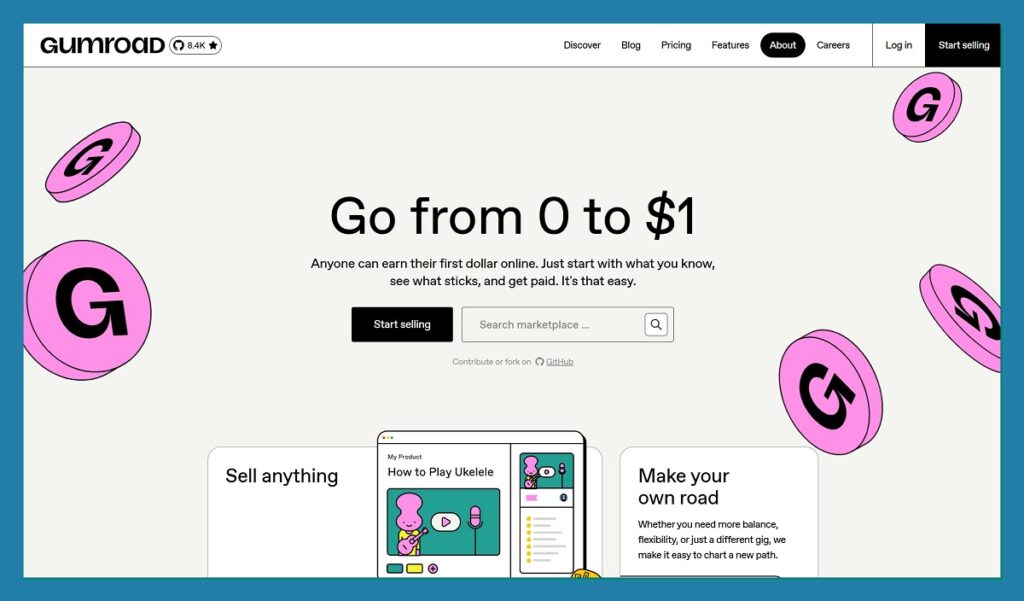
Gumroad offers a straightforward e-commerce solution tailored for musicians selling digital products. Whether it’s sample packs, beat licenses, sheet music, or instructional video content, Gumroad provides an uncluttered method for listing and delivering products with minimal effort.
The platform operates without a monthly subscription fee, featuring a simple pricing structure that makes it accessible for emerging artists or those experimenting with new product offerings. While it lacks built-in music players or deep fan engagement tools, Gumroad excels at efficiently delivering digital content to customers.
During testing, uploading a drum kit and a video series was a rapid and seamless experience. Gumroad automatically generated a checkout link that could be easily embedded on a website or shared directly with an audience.
Pros:
- Simple and intuitive for selling digital products.
- No monthly subscription fees.
- Easy checkout process for customers.
- Supports various digital file types.
- Good for creators looking to monetize specific digital assets.
Cons:
- Limited functionality for physical products.
- Basic design and branding options.
- No built-in community or fan engagement features.
- Higher transaction fees compared to some monthly plans.
Why Use Gumroad in 2026?
Gumroad is an excellent choice for musicians who want to sell straightforward digital products without the complexities of building a full online store. Its lightweight setup and creator-centric tools make it a suitable option for producers offering sample packs, educators selling lessons, or any musician providing downloadable content.
Gumroad is suitable for:
- Beatmakers and producers selling sample packs or licenses.
- Music educators offering online courses or lessons.
- Composers selling sheet music or digital compositions.
- Artists releasing exclusive digital content or bundles.
Gumroad isn’t suitable for:
- Artists primarily selling physical merchandise.
- Musicians requiring a comprehensive website with advanced features.
- Those looking for deep fan community building tools.
7. Ko-fi: Tips, Light Memberships, and One-Off Digital Sales
Starting Price: Free
AI Tools: No
Ko-fi provides a low-pressure environment for fans to support creators through tips, small purchases, or lightweight memberships. For musicians, it serves as an effective complement to their primary store or website, offering fans a direct way to contribute financially without the expectation of a full product in return.
Unlike platforms like Patreon, Ko-fi does not mandate monthly commitments, and its zero-fee option is particularly attractive for artists in the early stages of their careers. The platform also supports digital downloads, custom commission sales (e.g., personalized jingles), and basic membership tiers.
Testing Ko-fi involved uploading exclusive tracks and enabling donation options. While not designed as a primary store, it proves highly effective for capturing small, consistent income from fans who appreciate the artist’s work.
Pros:
- Free to start with no monthly fees (optional paid plans).
- Easy to set up for tips and small donations.
- Supports one-off digital sales and light memberships.
- Minimal setup required.
- Good for receiving fan support without a formal commitment.
Cons:
- Limited e-commerce features compared to dedicated platforms.
- Not ideal for managing large inventories or complex sales.
- Design and branding options are basic.
- Revenue share applies to free plan transactions.
Why Use Ko-fi in 2026?
Ko-fi is a no-fuss platform that enables musicians to generate supplementary income without the need to construct a full online store. It integrates seamlessly with existing websites or social media profiles, particularly for artists whose fans are inclined to offer small, consistent forms of support.
Ko-fi is suitable for:
- Musicians seeking to receive tips and donations from fans.
- Artists offering simple digital downloads or commissions.
- Creators looking for a low-barrier way to monetize their work.
- Those who already have an established online presence and want to add a support option.
Ko-fi isn’t suitable for:
- Artists requiring a comprehensive e-commerce solution for merchandise.
- Musicians needing advanced features for inventory or order management.
- Those focused on building tiered membership programs with extensive content gating.
8. Squarespace: Elegant Websites with Integrated E-commerce
Starting Price: $16 per month (billed annually)
AI Tools: Yes
Squarespace is renowned for its design-centric approach, offering some of the most aesthetically polished templates available. For musicians who prioritize a professional and visually appealing online presence, Squarespace masterfully combines strong branding capabilities with accessible e-commerce functionality.
While it may not possess the sheer breadth of e-commerce features found in platforms like Shopify, Squarespace effectively supports digital downloads, physical products, and even membership options. Its integrated calendar and booking tools are also highly beneficial for managing tours, lessons, or coaching services.
During the evaluation, a minimalist artist website was constructed using Squarespace, incorporating a press kit, biography, merchandise listings, and ticket links. The overall presentation was sharp and performed well, although e-commerce customizations were somewhat constrained compared to other platforms.
Pros:
- Stunning, professional website templates.
- User-friendly drag-and-drop editor.
- Integrated e-commerce for physical and digital products.
- Built-in marketing and SEO tools.
- Excellent for brand building and visual presentation.
Cons:
- E-commerce features are less advanced than specialized platforms.
- Limited app integrations compared to Shopify.
- Monthly costs can add up, especially for higher-tier plans.
- Less flexibility for highly custom design needs.
Why Use Squarespace in 2026?
Squarespace is the optimal choice for musicians who place a high value on their online brand identity and desire a cohesive, all-in-one website solution. Its ease of use, comprehensive marketing tools, and support for both physical and digital products position it as a strong middle ground between a dedicated artist site and a robust online store.
Squarespace is suitable for:
- Musicians who prioritize design and visual branding.
- Artists seeking an integrated website, blog, and store.
- Those who want to sell music, merch, and services from one platform.
- Independent artists and established acts looking for a polished online presence.
Squarespace isn’t suitable for:
- Artists requiring highly advanced e-commerce features or extensive customization.
- Musicians who need deep integrations with a wide array of third-party apps.
- Those prioritizing the absolute lowest cost for basic e-commerce functionality.
9. Wix: Customizable Artist Sites with AI Assistance
Starting Price: $17 per month (billed annually)
AI Tools: Yes
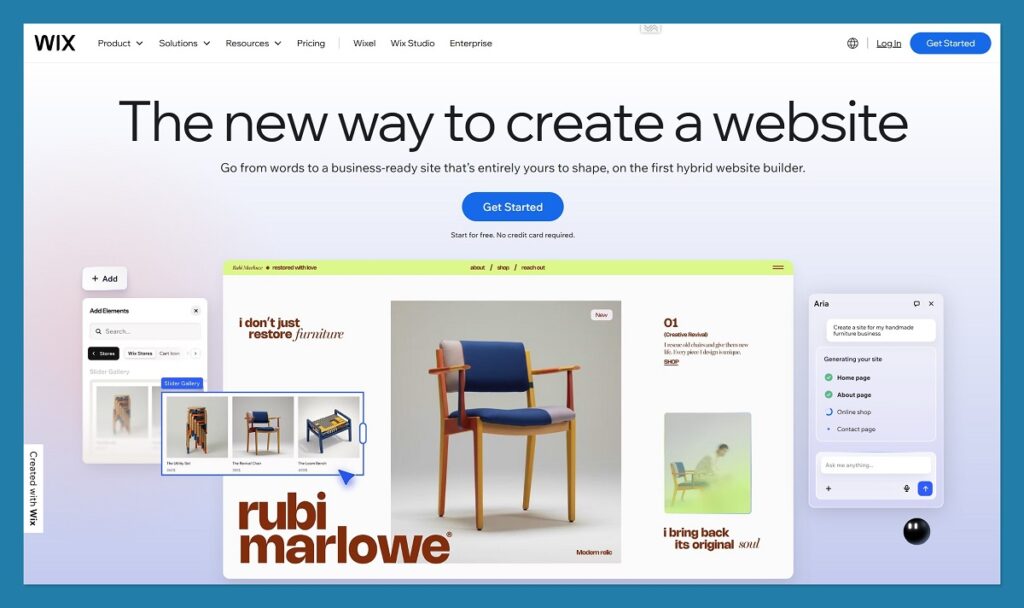
Wix continues to be a popular choice for website creation, celebrated for its versatility and user-friendliness. Musicians looking to build a site with complete creative control, integrated email marketing, e-commerce capabilities, and a vast selection of templates will find Wix highly accommodating.
Its drag-and-drop editor offers complete freedom over layout and design. Coupled with its expanding suite of AI tools, including an automated site builder and content generator, Wix emerges as one of the more accessible platforms for artists aiming to establish an online presence quickly.
During testing, a musician portfolio site was created using Wix’s AI builder, resulting in a rapid and surprisingly accurate setup. The AI tool gathered information about the artist’s goals, music genre, and sales requirements, then generated a site complete with product listings, a blog, and an email signup form.
Pros:
- Highly customizable drag-and-drop editor.
- Extensive template library.
- Integrated e-commerce and marketing tools.
- AI-powered site builder and content creation.
- Suitable for a wide range of artist needs.
Cons:
- Can become less performant with very complex sites.
- Once a template is chosen, it cannot be changed without rebuilding.
- E-commerce features are not as deep as Shopify.
- SEO capabilities, while improved, can be less robust than dedicated platforms.
Why Use Wix in 2026?
Wix seamlessly blends design freedom with built-in e-commerce and marketing tools, making it an excellent option for musicians constructing a personal brand website. Its AI tools expedite the setup process, while its editor provides sufficient power to develop a substantial artist website without requiring coding expertise.
Wix is suitable for:
- Musicians who want extensive design control over their website.
- Artists looking for an all-in-one solution with e-commerce and marketing features.
- Those who can benefit from AI assistance for faster site creation.
- A broad spectrum of artists, from solo performers to bands.
Wix isn’t suitable for:
- Musicians who require extremely advanced e-commerce functionality.
- Artists who need absolute control over their site’s underlying code or hosting.
- Those concerned about long-term scalability and potential performance limitations on highly complex sites.
10. WooCommerce: The Ultimate Control for Advanced Users
Starting Price: Free plugin (plus hosting and extensions)
AI Tools: Depends on theme or plugins used
WooCommerce represents the most flexible e-commerce solution available, though it demands the most significant setup effort. Built on the WordPress platform, it transforms any website into a fully functional store, granting musicians unparalleled control over design, features, and search engine optimization (SEO).
While this platform is exceptionally powerful, it is best suited for users with existing web hosting experience or those willing to invest in professional assistance. The trade-off for this complexity is unmatched adaptability—artists can build custom bundles, sell memberships, optimize SEO, and integrate virtually any desired tool or plugin.
When setting up a test artist store with WooCommerce, the extensive control was evident, but so was the time commitment. Custom themes, performance tuning, and plugin installations are integral to the process, but for those seeking a custom and scalable solution, the effort is well justified.
Pros:
- Unmatched flexibility and customization.
- Integrates seamlessly with WordPress.
- Vast library of plugins for extended functionality.
- Full control over design, features, and data.
- Excellent for SEO and custom workflows.
Cons:
- Requires self-hosting and technical management.
- Steep learning curve for beginners.
- Costs can accumulate with hosting, premium themes, and plugins.
- Support is community-based or requires paid extensions.
Why Use WooCommerce in 2026?
For musicians seeking a highly optimized, fully customized store with built-in SEO capabilities, WooCommerce is the definitive choice. While its setup is more involved, it offers a level of control that no other platform can match, making it ideal for technically adept artists or those with a clear vision for their online presence.
WooCommerce is suitable for:
- Musicians with technical expertise or those who hire web developers.
- Artists who require deep customization and control over their store.
- Those prioritizing SEO and advanced integration capabilities.
- Businesses planning for significant long-term growth and complex sales funnels.
WooCommerce isn’t suitable for:
- Beginners seeking a simple, out-of-the-box e-commerce solution.
- Artists who prefer managed hosting and minimal technical maintenance.
- Musicians who do not have the time or resources for extensive setup and ongoing management.
How to Choose the Right Platform for Your Music Career
Selecting the optimal e-commerce platform for your music career hinges not on finding a universally "best" tool, but on aligning what you sell with your desired business operational model. Before committing to a platform, consider the following critical questions:
1. What Are You Actually Selling?
Your product mix is the most significant determinant. If your primary focus is releasing music, Bandcamp offers superior digital delivery compared to general-purpose builders. For merchandise-centric artists, Shopify provides the necessary management tools for scaling. If you specialize in sample packs, stems, or lessons, Gumroad is specifically engineered for efficient digital file delivery with minimal setup. For artists whose income is driven by a highly engaged fan community, Patreon’s membership infrastructure is unparalleled.
2. How Big Is Your Catalog, and How Fast Is It Growing?
A five-item merchandise drop does not necessitate the same infrastructure as a 200-SKU store featuring bundles and pre-orders. Big Cartel’s free plan is suitable for selling a limited number of items occasionally. Shopify and WooCommerce are better long-term investments if you anticipate adding variants, offering bundles, or managing inventory across multiple sales channels.
3. Do You Need a Full Website or Just a Checkout?
Some platforms function as complete website builders (Squarespace, Wix, Bandzoogle), while others act as storefronts or provide checkout links that can be integrated into an existing site (Gumroad, Ko-fi, Bandcamp). If you already have a satisfactory website, there’s no need to replace it. If you’re starting from scratch and desire a single point of management for all your digital assets, Bandzoogle or Squarespace can save considerable time.
4. What Is Your Technical Comfort Level?
WooCommerce offers the most comprehensive control but requires users to manage hosting, updates, and plugins. Shopify provides a managed platform with a steeper learning curve than beginner-friendly tools. Big Cartel, Ko-fi, and Bandcamp are among the easiest to set up, requiring no prior technical background. It’s crucial to honestly assess how much time you wish to dedicate to platform maintenance versus music creation.
5. How Do Fees Affect Your Margins?
Low monthly fees do not always equate to lower overall costs. Bandcamp levies no subscription fee but takes a 10-15% commission on sales. Shopify charges a monthly fee but maintains low transaction fees if you utilize Shopify Payments. If you sell a few high-margin vinyl records monthly, a revenue-share platform might be more economical. Conversely, if you anticipate high sales volume, a fixed monthly fee could prove more cost-effective.

6. Do You Tour or Sell In Person?
For artists who sell merchandise at live shows, platforms with integrated point-of-sale (POS) tools (such as Shopify or builders that connect with Square) simplify inventory and tax reporting significantly. Platforms lacking POS support necessitate manual reconciliation of in-person sales, which can become cumbersome as your touring schedule intensifies.
Methodology
To compile this guide, extensive testing was conducted across multiple platforms over several weeks. Real stores were established, products were uploaded, and test transactions were processed where feasible. The evaluation considered the experience from both the artist’s and the fan’s perspectives, focusing on the following key criteria:
| Criteria | What We Evaluated |
|---|---|
| Ease of Setup | Time required to launch a functional store from signup, assuming no prior platform experience. Measured from signup to the first published product. |
| Digital Delivery | Reliability of handling digital downloads, file delivery, and access control for paid content. |
| Physical Product Support | Inventory management, shipping configuration, handling of variants, and bundles for merchandise-focused sellers. |
| Fees and Pricing | Monthly subscription costs, transaction fees, and payment processor fees. Total cost of ownership was calculated at various revenue levels. |
| Musician-Specific Features | Integrated music players, EPK functionality, ticketing systems, fan messaging capabilities, tour support tools, and membership tiers. |
| Design and Branding | Quality of templates, flexibility of customization, and the overall professional appearance of the store without requiring developer assistance. |
| Scalability | The platform’s capacity to handle catalog growth, international sales, and integration with third-party tools. |
| Support and Documentation | Availability of help resources, response times for support inquiries, and community forums relevant to musicians. |
Each platform was tested with a standardized set of products: a digital EP, a vinyl record, a t-shirt with variants, and a membership or tip option where applicable. This approach ensured consistent comparisons across diverse platforms. Pricing data was verified directly on each platform’s official website at the time of publication.
Final Verdict: Which Platform Should You Use?
The optimal e-commerce platform for your music career is determined by your current product offerings and your aspirations for future growth.
Here’s a final summary to guide your decision:
| Your Goal | Best Platform |
|---|---|
| Sell digital albums and tracks | Bandcamp |
| Launch sample packs or lessons | Gumroad |
| Build a merch store with bundles | Shopify |
| Sell a few indie products | Big Cartel |
| Create a recurring fan community | Patreon |
| Build a branded artist website | Bandzoogle |
| Create a polished e-commerce site | Squarespace |
| Sell online with full control | WooCommerce |
Each of these platforms possesses distinct advantages. For artists beginning their e-commerce journey, it’s advisable to start with the platform that best aligns with your most immediate objectives. As your audience expands and your product line diversifies, you can strategically transition to more advanced systems like Shopify or WooCommerce.
Frequently Asked Questions
Do I need a website to sell music online?
No, platforms like Bandcamp, Gumroad, and Ko-fi provide hosted storefronts and checkout links without requiring a separate website. However, having your own site enhances discoverability, provides control over branding, and facilitates email list building. Many artists begin with a hosted storefront and later integrate a full website as their career progresses.
Can I use more than one e-commerce platform simultaneously?
Yes, and this is a common practice among professional musicians. A typical setup might involve Bandcamp for music sales, Shopify or Big Cartel for physical merchandise, and Patreon or Ko-fi for memberships and fan support. These platforms do not conflict, and each effectively manages specific revenue streams better than a single all-encompassing tool might.
What is the cheapest way to sell music online?
Bandcamp offers the most cost-effective method for selling digital music directly to fans. It has no monthly fee and takes a 15% commission on digital sales, reducing to 10% after $5,000 in total sales. For physical products, Big Cartel’s free plan supports up to five products with no platform transaction fees.
Which platform has the lowest fees overall?
Bandzoogle and Big Cartel charge no platform fees on sales, though Bandzoogle requires a monthly subscription. WooCommerce is technically the lowest-fee option, as the core plugin is free, and costs are limited to hosting and payment processing. However, the time investment in setup and maintenance is substantial. For most musicians, the most economical platform is the one that matches their catalog size without incurring costs for unused features.
Do I need an LLC or business license to sell merch as a musician?
Requirements vary by jurisdiction and sales volume. In the U.S., an LLC is not typically required to start selling, but a sales tax permit may be necessary once certain thresholds are met. An LLC offers liability protection and tax flexibility as revenue grows. It is advisable to consult with a local accountant or small business advisor before making such decisions.
How do I handle shipping for physical merch?
Three primary options exist:
- Self-fulfillment: Offers the highest margins but consumes significant time, especially during tours.
- Print-on-demand: Services like Printful handle production and shipping, but reduce per-unit profit.
- Third-party logistics (3PL): Providers store and ship your inventory for a monthly fee, suitable for consistent volume.
Shopify and WooCommerce integrate with all three fulfillment models.
Can I sell tickets to my shows through these platforms?
Bandzoogle includes built-in ticketing tools designed for musicians. Shopify supports ticket sales through integrated apps and bundles. For most other platforms, a dedicated ticketing service like DICE, Eventbrite, or Seated is required, with links to these services then provided on your store or website.
What’s the difference between Patreon and a Shopify subscription?
Patreon is centered around community, exclusive content, and tiered memberships with integrated communication and content delivery. A Shopify subscription, in contrast, typically facilitates recurring physical product purchases, such as a monthly vinyl club or merchandise box. Patreon is superior for delivering value through access and community, while Shopify excels when the value proposition is a physical product delivered on a schedule.
Do these platforms handle sales tax and international orders?
Shopify, Squarespace, and Wix offer integrated tax calculation tools, and Shopify Markets Pro simplifies international compliance for cross-border sales. Bandcamp and Gumroad act as the merchant of record for digital sales in many regions, managing VAT collection and remittance. WooCommerce requires plugins like TaxJar or Avalara for tax automation.
Can I move my store to a different platform later?
Yes, although the process varies. Product data, customer lists, and order history can typically be exported as CSV files and imported into another platform. Design elements and custom code rarely transfer seamlessly. If significant scaling is anticipated, it is often more practical to start on a platform designed for growth (like Shopify or WooCommerce) than to undertake a complex migration