Web Accessibility: A Strategic Business Imperative for Traffic, SEO, and Revenue Growth

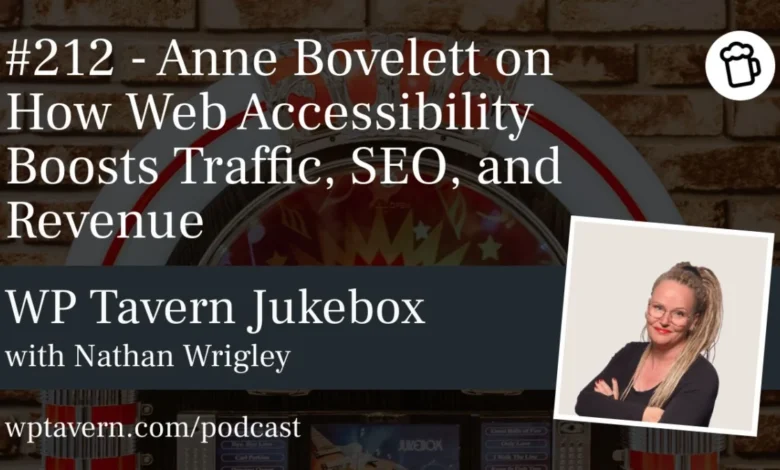
A recent discussion on the Jukebox Podcast from WP Tavern highlighted a critical, often-overlooked aspect of digital presence: web accessibility as a strategic business advantage rather than merely a moral obligation. Hosted by Nathan Wrigley, the episode featured Anne Bovelett, a seasoned accessibility strategist, who passionately argued that businesses neglecting web accessibility are "leaving serious money on the table," potentially amounting to millions and even billions in lost revenue. The conversation delved into compelling research, historical context, and practical implications, underscoring how compliant sites can significantly boost organic traffic, keyword rankings, authority, and reduce operational costs.
The Historical Oversight of Digital Inclusion
Nathan Wrigley initiated the discussion by expressing his puzzlement regarding the internet’s early development. Despite the web’s foundational promise to democratize information access, accessibility was largely overlooked. "The technology developed, the browsers developed, the web design industry developed, and it never got that importance," Wrigley observed, noting that only in the last three to five years has a "clarion call for accessibility" entered the mainstream. Early internet pioneers envisioned a global information superhighway, yet the architectural design often excluded significant portions of the population.
Anne Bovelett offered two primary reasons for this historical oversight. Firstly, accessibility was often approached as a "purely social issue," leading to an arrogant assumption by some creators that their users did not include individuals with disabilities. Secondly, she pointed to a phenomenon she described with the German word "verschlimmbesserung"—an attempt to improve something that inadvertently makes it worse, often through over-engineering. In the early days, the web relied heavily on semantic HTML, which inherently provided a structural foundation beneficial for assistive technologies like screen readers. However, as developers sought faster, more flexible tools, non-semantic elements like div and span became prevalent, often requiring extensive JavaScript to mimic the behavior of native HTML elements. This shift, driven by a desire for efficiency and visual flair, inadvertently stripped away much of the inherent accessibility.
Bovelett illustrated this with a vivid analogy: "Div is like tofu without seasoning." While div elements can be styled to look like anything, they lack intrinsic meaning or behavior without additional scripting. This departure from semantic coding, coupled with the rapid growth of frameworks prioritizing speed over intrinsic accessibility, created a web environment where inclusion became an afterthought rather than a core design principle. The consequence was a digital landscape where basic functionality became inaccessible to many, paving the road with "good intentions" but ultimately creating barriers.
Tangible Business Benefits: The Semrush Study
The podcast highlighted a groundbreaking study by Semrush in collaboration with accessibilitychecker.org, which analyzed 10,000 websites to quantify the business impact of accessibility. The findings provided concrete data points that challenge the perception of accessibility as a cost center, repositioning it as a significant investment with measurable returns.
The study revealed:
- 70% of websites were not compliant: This alarming statistic underscores the widespread neglect of accessibility standards across the digital landscape.
- 23% traffic increase tied to higher compliance: Websites with improved accessibility scores experienced an average increase in organic traffic. Bovelett explained this correlation: if assistive technologies cannot interpret a site, search engine crawlers likely struggle too. Search engines prioritize user experience, and an accessible site inherently offers a better experience for a broader audience, signaling higher quality to algorithms.
- 27% more keywords ranked with accessibility improvement: Enhanced accessibility leads to a broader keyword footprint. Semantic HTML, clear link descriptions (avoiding generic "click here" text), well-structured content, and proper image alt text all provide search engines with richer, more interpretable data about a page’s content. This enables sites to rank for a wider array of relevant search queries.
- 90% boost in authority score for compliant sites: Perhaps the most striking finding was the substantial increase in authority score for accessible websites. A higher authority score translates to greater trust and credibility in the eyes of search engines, leading to improved rankings and visibility. This boost is a direct consequence of a site being perceived as high-quality, user-friendly, and comprehensive by algorithms that increasingly mimic human understanding.
Bovelett stressed that "compliance" should not be the sole goal, as it often leads to doing the "bare minimum." Instead, she advocated for a human-centric approach, emphasizing that search engines’ primary "customer" is the user. By designing for people, businesses naturally align with what search engines value. The rise of AI in search further amplifies this, as AI models struggle to interpret poorly structured or non-semantic content, effectively rendering it invisible.
The E-commerce Industry’s "Billion Pound Mistake"
Beyond SEO and traffic, accessibility has a profound direct impact on revenue, particularly in e-commerce. Anne Bovelett referenced the British "Click Away Pound Report," a seminal study that quantifies the financial losses incurred by businesses due to inaccessible online shops. The report revealed staggering figures:
- In 2016, the "click away pound"—revenue lost due to inaccessible e-commerce sites—totaled £11.75 billion (approximately $14.8 billion USD).
- By 2019, this figure had escalated to £17 billion (approximately $21.4 billion USD).
Bovelett speculated that if a new report were commissioned today, the numbers would be even more shocking, given the further degradation of web accessibility since 2019, partly due to the proliferation of AI trained on inaccessible code. These figures highlight that businesses are, as she put it, "thieving their own wallet" by failing to embrace inclusive design.
A particularly compelling statistic from Bovelett’s own article, "The E-commerce Industry’s Billion Pound Mistake," underscored user behavior: "A shocking 75% of disabled customers have willingly paid more for a product from an accessible website, rather than struggle with a cheaper inaccessible one." This reveals that for many users, the ease of access and dignity of a smooth transaction outweigh minor price differences. The analogy of a physical store where products are locked away, requiring a difficult, confusing process to access, perfectly illustrates the frustration of an inaccessible website. Users will simply go to the next "shop" that makes the purchasing journey straightforward, even if it costs a little more. This demonstrates a clear market segment willing to pay a premium for a superior, inclusive experience.
Beyond Revenue: Reduced Support Costs and Enhanced User Experience
The benefits of accessibility extend beyond increased revenue and improved search visibility to include significant reductions in operational costs, particularly customer support. Bovelett cited an example of a local tax office in the Netherlands that underwent a full accessibility redesign. This initiative resulted in a reported 30% reduction in support requests. This is because accessible design empowers users to complete tasks independently, reducing the need for direct assistance.
When users can navigate a website, find information, and complete transactions without encountering barriers, they feel empowered and respected. This translates into higher user satisfaction, stronger brand loyalty, and a positive reputation. Conversely, inaccessible sites often force users into vulnerable positions, requiring them to disclose disabilities to support staff to gain assistance, leaving a "very bad taste." For government services or essential utilities, where users have no alternative, this can lead to frustration and distrust. For businesses with competitive alternatives, it leads to customer churn.
Bovelett shared personal experiences to illustrate the broad spectrum of accessibility needs. As someone with ADHD, age-related hearing loss, and needing multiple pairs of glasses, she represents a diverse user profile. She described the frustration of trying to follow video manuals with background music and no subtitles, or navigating sites with poorly described links. These are not niche issues; they affect a vast and growing demographic, including older populations who increasingly rely on digital services for daily tasks, such as managing taxes or banking.
Addressing the Implementation Challenge: The Role of an Accessibility Strategist
Implementing accessibility effectively requires a systemic shift within organizations. Bovelett highlighted a critical gap: the absence of a dedicated role that bridges the technical, design, content, and executive layers. She referred to this as the "sheep with five legs" in Dutch—a rare and crucial individual. Often, accessibility officers are overwhelmed with compliance mandates, while developers and designers operate in silos, lacking a holistic understanding of how their work impacts accessibility.
An ideal accessibility strategist, Bovelett explained, needs to possess a unique blend of skills: the ability to "kick the shins of the C-suite in a professional manner" by demonstrating the clear business case, while also collaborating effectively with design, development, and content teams. This requires a nuanced understanding of each discipline’s processes to foster communication and proactive problem-solving. Rather than managers dictating solutions, it’s about cultivating a culture where developers feel empowered to raise concerns about design choices that might create accessibility barriers, and designers understand the implications of their visual decisions. Integrating accessibility from the outset—a "shift-left" approach—is far more efficient and cost-effective than retrofitting solutions later.
The Future of Web Accessibility and AI
The conversation briefly touched upon the implications of artificial intelligence in web development. Bovelett expressed concern that much of the AI currently being used for coding is trained on existing, often inaccessible, web content. This risks perpetuating and even amplifying accessibility issues if not addressed proactively. As AI becomes more integrated into web design and development workflows, ensuring that these tools are trained on accessible data and guided by inclusive design principles will be paramount to prevent a further decline in web accessibility.
Conclusion: An Economic Imperative for the Modern Business
The Jukebox Podcast episode with Anne Bovelett served as a powerful reminder that web accessibility is not merely a philanthropic endeavor or a regulatory burden, but a vital strategic investment for any modern business. The data from Semrush and the Click Away Pound Report unequivocally demonstrate that prioritizing accessibility leads to substantial economic gains: increased organic traffic, improved SEO rankings, boosted authority, higher conversion rates in e-commerce, and reduced customer support costs.
For website owners, developers, and digital business leaders, the message is clear: embracing accessibility is a proactive step towards expanding market reach, enhancing brand reputation, and securing long-term profitability. By shifting the perspective from a moral obligation to an economic imperative, businesses can unlock significant growth opportunities, cater to a broader audience, and build a more inclusive and robust digital presence. As Bovelett aptly summarized, "No matter what, people will always think with their wallet today and tomorrow," and the data now unequivocally shows that accessibility is a direct path to a healthier bottom line.