Mastering the Robots.txt File for Search Engine Optimization and AI Crawler Management

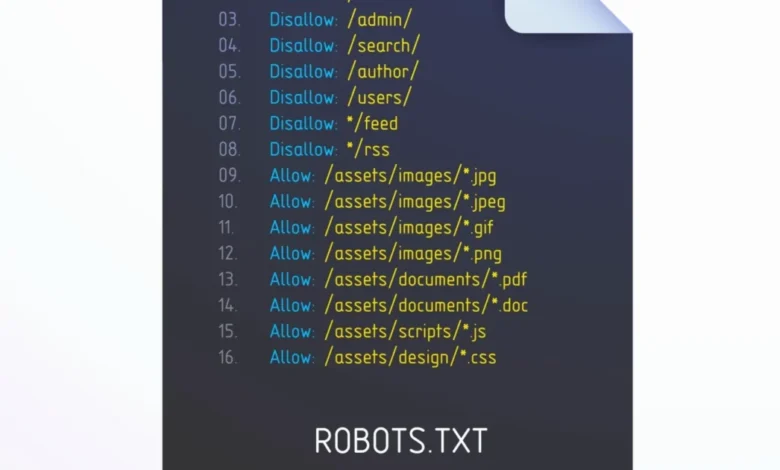
The robots.txt file remains the primary interface between website administrators and the automated systems that traverse the internet. As the digital landscape shifts from traditional search engine indexing to a hybrid environment defined by Large Language Models (LLMs), generative AI agents, and specialized scrapers, the necessity for precise crawl management has never been greater. This text-based file, which resides in the root directory of a domain, serves as the authoritative set of instructions for how web crawlers—or "bots"—interact with a site’s architecture. Failure to manage these directives can lead to the depletion of crawl budgets, the accidental indexing of sensitive internal data, or the unintentional exclusion of content from vital AI-driven search results.
Understanding the fundamental mechanics of this file requires a grasp of its core directives: User-agent, which identifies the specific bot; Disallow, which restricts access to certain paths; Allow, which grants access to specific URLs; and Sitemap, which provides the location of XML maps to facilitate discovery. While these components appear straightforward, the order of precedence—where specific rules override global ones and the most specific path takes priority—often serves as a point of failure for site administrators.

The evolution of the robots.txt protocol can be traced back to its inception in 1994, when the rise of early search engines necessitated a way to prevent bots from overloading web servers. Since then, the protocol has been formalized under RFC 9309, which standardized how user agents should parse and respect these files. In 2024, the importance of this file has been underscored by the proliferation of AI training crawlers. Unlike traditional search bots, which are designed to index pages for retrieval, AI bots often perform deep scrapes to gather data for training foundation models. This distinction has forced a paradigm shift in how publishers and developers view their robots.txt files, moving beyond simple SEO maintenance toward a strategic approach to data governance.
Data from the industry suggests that the volume of non-essential traffic is a significant concern for site performance. Large e-commerce platforms, in particular, face the threat of "infinite crawl space," where dynamically generated URLs—often produced by faceted navigation, filtering, or internal search parameters—can create millions of near-identical pages. Left unchecked, these pages consume server resources and waste a site’s "crawl budget," the amount of time and processing power a search engine is willing to allocate to a single domain. By implementing strict Disallow rules for parameters such as ?sortby= or ?session_id=, administrators can ensure that search engines like Googlebot prioritize high-value content, such as core product pages or landing pages, over transient or redundant data.
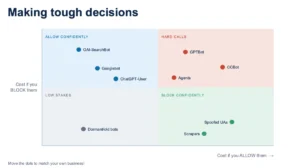
The management of AI crawlers represents the most recent challenge in this field. As of 2026, the industry has seen a clear divergence between "search-focused" bots and "training-focused" bots. For example, OpenAI maintains the OAI-SearchBot, which is intended to help surface content in chat interfaces, while simultaneously operating GPTBot, which is dedicated to model training. Because these bots serve different purposes, administrators can now create nuanced rules that permit their content to be cited in AI search answers while prohibiting its use in the training of proprietary neural networks. A study conducted by BuzzStream in early 2026 highlighted this growing trend, finding that nearly 79% of major news organizations in the U.S. and U.K. had moved to block at least one training-specific bot, reflecting a widespread desire to control the commercial usage of intellectual property.

However, the efficacy of these blocks is not universal. While legitimate bots from major providers like OpenAI, Anthropic, and Google generally respect robots.txt directives, the ecosystem is increasingly populated by independent scrapers and data-mining operations that ignore these instructions entirely. Furthermore, "user-requested" fetchers—bots that visit a site because a user explicitly asked a chatbot to summarize a specific URL—often bypass robots.txt by design. In these instances, the robots.txt file serves only as a request for compliance; true enforcement requires server-level authentication or the deployment of a robust web application firewall (WAF) to perform rate-limiting and access control.
The technical nuances of implementing these rules cannot be overstated. A common error involves the misuse of wildcards or the assumption that case-insensitive rules apply to URL paths. In reality, while the names of the directives themselves are case-insensitive, the path matching within the file is strictly case-sensitive. A rule intended to block /Private/ will not affect a request for /private/, potentially leaving sensitive directories exposed. Furthermore, the precedence rules established by Google indicate that when multiple directives conflict, the engine will prioritize the most specific instruction. For instance, if a directory is disallowed, but a specific file within that directory is granted an "Allow" rule, the bot will honor the "Allow" directive for that specific file. This logic allows for precise surgical control over what is visible to the public web.
For site administrators, the troubleshooting process is as vital as the configuration itself. The Google Search Console (GSC) offers a dedicated robots.txt report that allows users to parse their files for syntax errors and view the version currently being indexed. Experts recommend that for large-scale operations, administrators should also utilize the open-source Google robots.txt parser library. This tool enables developers to simulate how Google’s own crawler will interpret the file, effectively catching "logic bombs" before they are pushed to a live environment. By testing rules in a staging environment first, organizations can prevent accidental de-indexing, which can cause significant drops in organic traffic that may take weeks to recover from.

The implications for broader digital sustainability are also becoming a focus for search engine providers. Google has frequently emphasized that reducing unnecessary crawl requests contributes to a lower carbon footprint for both the search engine and the host server. By trimming the fat from the crawl process—eliminating requests for broken images, non-essential JavaScript bundles, and redundant search parameters—webmasters are not only improving their SEO rankings but also participating in a larger industry-wide effort to minimize the computing power required to maintain the global information index.
Looking ahead, the role of the robots.txt file is likely to become more integrated with machine-readable metadata. As the legal and ethical frameworks regarding AI training continue to evolve, the ability to communicate machine-readable permissions will be critical. Some legal experts have suggested that the "opt-out" mechanism provided by robots.txt may eventually serve as a primary component in establishing "implied consent" for data usage. While no court has yet ruled definitively on the matter, the current reliance on robots.txt as the gatekeeper for AI training implies that the file is becoming more than just an SEO tool; it is now a foundational element of digital property rights.
To maintain a healthy crawl status, administrators should adopt a regular audit schedule. Every quarter, a review of server logs should be conducted to identify which bots are the most active and whether they are focusing their attention on high-value areas of the site. If the logs reveal that a significant percentage of traffic is coming from unauthorized or low-value scrapers, the robots.txt file should be updated accordingly. Simultaneously, ensuring that XML sitemaps are correctly linked in the robots.txt file remains the fastest way to signal to crawlers that new content is ready for indexing, particularly for news-heavy sites that rely on rapid inclusion in Google News and Discover feeds.

Ultimately, the robots.txt file is a communication tool that demands clarity and maintenance. It is a living document that must adapt to the shifting priorities of search engines and the evolving nature of the web. Whether the goal is to protect sensitive backend data, prevent the wastage of server resources, or navigate the complex relationship with AI companies, the principles of precision and specificity remain the gold standard. By treating the robots.txt file as a critical component of technical infrastructure rather than an afterthought, site owners can ensure their digital assets are crawled on their own terms, maintaining the delicate balance between maximum search visibility and optimal resource efficiency.