TangiMap: Bridging the Gap Between Digital Software and Tactile Hardware Using Artificial Intelligence

Over the past two decades, the consumer electronics landscape has undergone a profound metamorphosis, systematically replacing physical buttons, tactile knobs, and responsive sliders with flat, digital glass interfaces. This sweeping minimalist movement began in earnest when technology giants eliminated traditional tactile features—most notably when Apple removed the physical home button from its flagship iPhone lineup in 2017. Similar design philosophies rapidly bled into other industries. Modern automobiles integrated climate controls and radio presets into touch-sensitive infotainment panels, while high-end kitchen appliances replaced mechanical dials with digital glass panels.
While this transition allowed for sleek, modern aesthetics and endlessly customizable software layouts, it introduced a hidden cost: the loss of intuitive, eyes-free control. Humans rely heavily on proprioception—the body’s ability to sense movement, position, and action—to navigate the physical world. Turning a physical volume knob or gripping a gaming controller does not require visual confirmation. Users can execute complex maneuvers purely through muscle memory. Conversely, interacting with flat digital screens demands constant visual attention, introducing cognitive friction and, in many cases, reducing operational precision.
Recognizing this friction, researchers have long sought ways to marry the infinite adaptability of digital software with the ergonomic superiority of physical controls. Now, a team of computer scientists has introduced an innovative framework that solves this dilemma by dynamically mapping software functions onto physical hardware.
The Genesis of TangiMap: Redefining Tangible Inputs
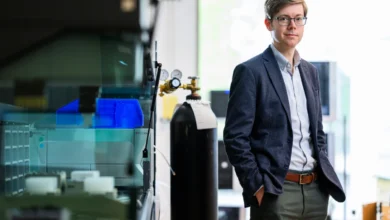
Developed jointly by researchers at the Massachusetts Institute of Technology (MIT) and Boston University, a new system called TangiMap is bridging the divide between software applications and physical control devices. Co-developed by Yunyi Zhu, a doctoral student in MIT’s Department of Electrical Engineering and Computer Science and a researcher at MIT’s Computer Science and Artificial Intelligence Laboratory (CSAIL), along with Chang Xiao, an assistant professor at Boston University, the system was officially presented at the ACM Symposium on User Interface Software and Technology.
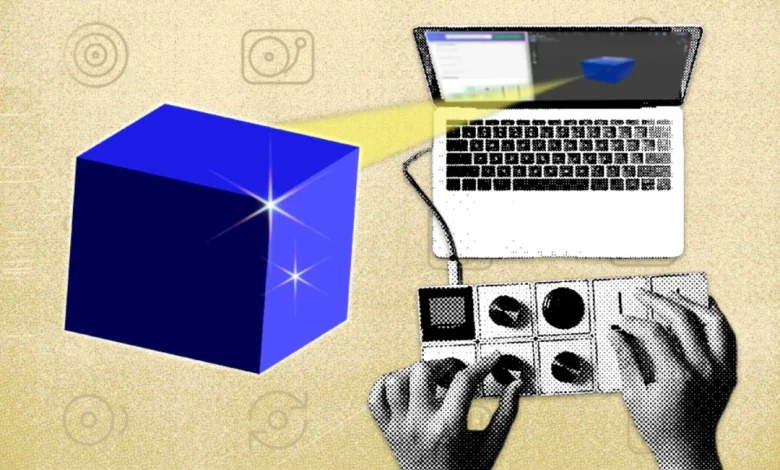
TangiMap operates on a deceptively simple premise: it turns static physical controllers—such as audio mixing boards, MIDI pads, and macro keypads—into dynamic, context-aware command centers. Much like a professional DJ can reprogram a soundboard to trigger audio loops, effects, or vocal samples depending on the performance requirements, TangiMap alters the functional role of a device’s physical inputs on the fly. When a user switches from editing photographs to mixing audio tracks, the physical knobs and sliders automatically adapt to control the new software environment, guided by advanced artificial intelligence.
The brilliance of the system lies in its ability to eliminate the rigid preprogramming that has historically limited physical peripherals. Traditional hardware controllers are usually hardcoded to perform specific actions within a single application. TangiMap shatters this limitation by leveraging semi-autonomous AI agents that interpret the active software environment and dynamically reassign physical inputs in real time.
Beneath the Hood: How AI and Large Language Models Power TangiMap
The technical architecture behind TangiMap relies on a sophisticated orchestration of artificial intelligence components. At its core, the system utilizes an AI agent—a semi-autonomous program engineered to reason, make decisions, and execute well-defined tasks within a computing environment.
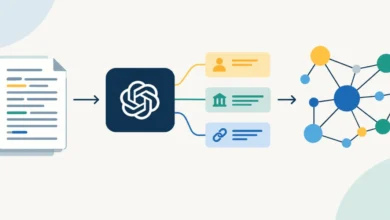
To successfully map software parameters to physical hardware, the AI agent must first comprehend what the user is doing. It gathers contextual data from multiple pathways. It can pull information directly from a program’s Application Programming Interface (API), utilize a Model Context Protocol (MCP) server to establish secure communication pipelines between AI agents and software applications, or analyze a live screenshot of the user’s workspace interpreted through an advanced vision-language model.
Once the agent has synthesized this contextual data, it hands the information over to a large language model (LLM). The LLM processes the gathered parameters and compiles them into a structured configuration file. This file acts as a dynamic translation layer, instantly binding specific digital functions—such as exposure levels in photo editing software or polygon attributes in 3D modeling applications—to specific knobs, faders, and buttons on the physical peripheral.
"TangiMap builds on our broader vision of reprogramming common objects to be more dynamic," explains Yunyi Zhu, who completed her undergraduate and Master of Engineering degrees at MIT before pursuing her doctorate under the supervision of MIT Associate Professor and co-researcher Stefanie Mueller. "Here, AI agents help us adapt physical controls to whatever we’re working on. We want to bring back physical controls so we can interact with our devices eyes-free, the way you adjust a car’s volume without looking away from the road. Physical controls also let you adjust several settings at once, like tweaking brightness and contrast together when editing an image, which is hard to do on a screen."
Practical Applications Across Creative Industries
To demonstrate the versatility of their framework, Zhu and Xiao tested TangiMap across a diverse array of demanding professional software environments, successfully transforming standard, off-the-shelf hardware into highly specialized control interfaces.
In one primary demonstration, the research team repurposed a standard audio mixing console into a dedicated photo-editing controller. By connecting the mixer to Adobe Lightroom, users were able to manipulate complex color-grading parameters—such as hue, saturation, and luminance—using physical faders and knobs. A complementary graphical user interface displayed on the computer monitor provided real-time visual feedback, confirming the adjustments made by the physical inputs.
The team also applied the system to sound-mixing software, empowering audio engineers and musical performers to execute real-time mixing changes using tactile controls that automatically updated their assignments based on the active track or plugin parameters.
Beyond media production, TangiMap proved equally effective in 3D computer graphics and character animation. The researchers reprogrammed a basic hardware mixer to integrate seamlessly with Blender, an open-source 3D creation suite. Within this setup, users could type descriptive prompts into a text box to generate 3D models. Once generated, specific material properties—such as surface roughness, metallic sheen, and color tint—could be fine-tuned physically using the mixer’s hardware dials.
Furthermore, within Adobe Character Animator, TangiMap successfully linked facial expressions, body movements, and environmental triggers to individual buttons on a control pad. This allowed digital artists to "puppeteer" 2D cartoon characters live, matching physical keystrokes and button presses to fluid, real-time animation movements.
Chronology of Development and Academic Reception
The conceptualization and execution of TangiMap reflect a steady evolution in human-computer interaction (HCI) research, a field deeply rooted at institutions like MIT CSAIL.
- 2017: Apple officially removes the physical home button from the iPhone lineup, accelerating the broader industry trend toward all-digital, touch-based glass interfaces across consumer electronics, automotive design, and smart appliances.
- 2020–2021: Yunyi Zhu completes her Bachelor’s and Master of Engineering degrees in electrical engineering and computer science at MIT, laying the groundwork for her doctoral research focused on programmable physical objects and tangible user interfaces.
- 2023–2024: Research intensifies around the integration of large language models and autonomous AI agents into physical computing environments. Zhu, working alongside Associate Professor Stefanie Mueller and Boston University Assistant Professor Chang Xiao, conceptualizes a context-aware framework capable of translating software states into hardware configurations.
- Early October 2024: The research team formally presents TangiMap at the prestigious ACM Symposium on User Interface Software and Technology (UIST), garnering widespread academic interest and industry praise for bridging the gap between digital workflows and physical controls. The project receives critical financial support, in part, through Google’s Gemini Academic Program Award.
Current Limitations and Future Horizons
Despite its impressive capabilities, TangiMap remains an active area of academic research with several hurdles to clear before commercial adoption can occur. Currently, the research team has had to manually construct custom user interfaces (UIs) for each software application tested. Moving forward, Zhu and Xiao are striving to streamline this workflow, aiming to develop a system where a designer can automatically generate the required UI simply by taking a photograph of their physical control device.
Additionally, the researchers are heavily focused on the ergonomics of human-computer interaction. Physical interaction is deeply context-dependent; how a user grips a hardware mixer while producing electronic music differs significantly from how they position their hands when playing a video game or editing architectural models. Future iterations of TangiMap must account for these variations in hand placement, ensuring that controls are mapped logically and comfortably relative to the user’s physical posture.
To validate these improvements, Zhu plans to conduct comprehensive user studies to gather empirical feedback on whether this paradigm of "smart DJing" genuinely enhances creative productivity and reduces cognitive fatigue.
Broader Implications: The Intelligent Object Era
While TangiMap currently focuses on creative software suites and traditional hardware peripherals like mixers and control pads, the ultimate vision harbored by its creators is far more sweeping. The researchers view TangiMap as a foundational stepping stone toward a future where everyday physical objects possess native digital intelligence.
"The same way our phones and computers generalize to a range of tasks, we want other objects to be more intelligent," Zhu notes. "I would like to build physical items that use an AI agent as a brain to decide what to reprogram into. They could understand what to transform into, given a specific situation."
To illustrate this potential, consider mundane household or industrial items. A chemical storage jar, equipped with embedded sensing and AI processing capabilities, could verbally verify whether its lid is properly sealed when queried. If a user wishes to review safety guidelines or chemical properties, the container could dynamically alter its physical or digital display to present that precise information.
While such versatile, shape-shifting, and highly interactive everyday objects remain years away from mainstream consumer markets, the convergence of more powerful artificial intelligence agents, advanced vision models, and intricate digital fabrication pipelines is steadily bringing that future into focus. By returning the sense of touch to our increasingly intangible digital world, systems like TangiMap signal the beginning of a profound counter-revolution in how humanity interacts with technology.