Streamlining WordPress Management and AI Integration with the Launch of Novamira HQ

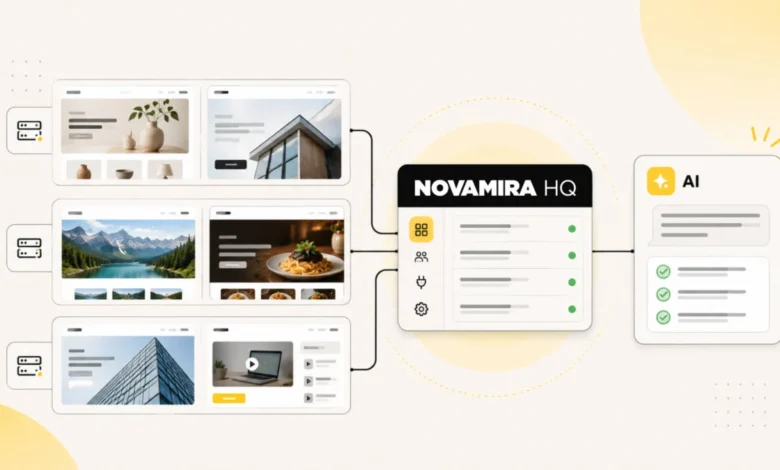
For web agencies and freelance developers managing a sprawling portfolio of WordPress sites, the fragmentation of hosting infrastructure has long been a significant technical hurdle. Client sites are often distributed across a diverse range of environments—from high-performance managed hosting providers like Kinsta and WP Engine to traditional cPanel resellers and custom-configured virtual private servers (VPS). Integrating generative AI tools into these workflows has historically required a tedious, repetitive process: configuring each site individually within every AI interface utilized by the development team.

The launch of Novamira HQ, a free, open-source desktop application, marks a structural shift in how developers bridge the gap between their hosting environments and AI-driven development tools. By centralizing management into a single, unified interface, the application allows developers to establish a persistent connection between their AI clients and their entire fleet of WordPress sites.
The Evolution of WordPress AI Integration
The necessity for such a tool arises from the rapid adoption of AI-assisted coding. Until now, users of the Novamira WordPress plugin were forced to manage site connections on a per-instance basis. If an agency managed 50 sites, those 50 sites had to be manually authorized and integrated into AI platforms like Claude Desktop or Cursor. Each addition of a new client site necessitated a recursive setup process, creating a bottleneck that negated much of the efficiency promised by AI automation.

Novamira HQ addresses this by acting as a localized "command center." It functions as an abstraction layer, pulling data from hosting API keys and individual site installations into a single, consolidated registry. This development follows a broader trend in the WordPress ecosystem: the push toward "headless" or "decoupled" management, where the control plane is removed from the WordPress dashboard itself and relocated to the developer’s local machine or a centralized management portal.
Technical Infrastructure and Compatibility
Novamira HQ is designed for cross-platform compatibility, supporting macOS (Apple Silicon and Intel), Windows x64, and Linux x86_64 architectures. By bundling all necessary dependencies, the application removes the requirement for users to install complex local environments like Node.js, lowering the barrier to entry for non-developer stakeholders.

The application currently supports a wide array of hosting providers, including Kinsta, Hostinger, InstaWP, WP Engine, Rocket.net, Pantheon, Cloudways, Pressable, Plesk, and xCloud. For sites hosted on platforms not natively integrated, the application allows for manual connection via HTTPS, provided the Novamira plugin is active. Once connected, the AI client—whether it is Claude, Cursor, or an MCP-compatible terminal—views all sites as a unified network.
Security and Data Sovereignty
A critical aspect of the Novamira HQ architecture is its stance on security and data privacy. In an era where third-party management tools often require users to hand over administrative credentials to a centralized cloud server, Novamira HQ adopts a decentralized approach.

The application does not store hosting credentials on external servers; instead, it utilizes the operating system’s native credential store. There is no "Novamira account" required for the software to function, and the application does not maintain a persistent connection to a central cloud authority. This architecture ensures that the developer remains the sole custodian of their clients’ login tokens.
Furthermore, the software employs a restricted operational scope. It lacks the administrative permissions to delete sites, modify DNS records, or perform high-risk database operations without explicit, manual confirmation from the user. For agency owners, this provides a compelling answer to client inquiries regarding the security of third-party AI integrations: the credentials remain locally siloed, and the AI’s access is limited to the specific tasks authorized by the developer.

Chronology and Operational Workflow
The deployment of the Novamira HQ system follows a standardized sequence designed to minimize configuration time:
- Local Installation: The user initializes the desktop application. Unlike cloud-based SaaS solutions, the software operates entirely on the local machine.
- Provider Synchronization: Users connect their hosting accounts using API tokens. The application automatically fetches the site list, including sub-environments such as staging and development instances.
- Authorization: Each site is authorized via a one-time process, which occurs locally. This eliminates the need to input sensitive passwords into AI chat windows.
- AI Linking: The user configures their preferred AI client (e.g., Claude Desktop). A desktop extension or configuration file is generated, linking the AI client to the local HQ instance.
- Operational Execution: The developer can now issue cross-platform commands. For example, a user can request a status report on all active sites or initiate a backup on a staging environment across multiple disparate hosts simultaneously.
Broader Industry Implications
The introduction of Novamira HQ reflects a maturing stage in the integration of AI within the web development lifecycle. Initially, AI tools were treated as "chatbots"—isolated entities that required manual context-feeding. The current shift toward Model Context Protocol (MCP) and localized connection managers suggests that the future of web development lies in the "agentic" model, where the AI acts as an autonomous administrator capable of executing multi-step workflows across an entire infrastructure.

From a macroeconomic perspective, this reduces the "administrative tax" on agencies. By automating the connection between sites and AI, firms can potentially reduce the man-hours required for routine maintenance tasks—such as checking for updates, verifying site health, or executing staging-to-production pushes. If a developer can manage 100 sites with the same effort previously required for ten, the competitive landscape for maintenance contracts may see a downward pressure on pricing, alongside an increase in the complexity of services offered.
Future Outlook and Beta Development
Novamira HQ is currently in its beta phase, with developers releasing updates on a weekly cadence. The roadmap for the project includes expanded support for additional hosting providers and deeper integration with CI/CD pipelines.

For agencies weighing the transition to this new workflow, the primary consideration is the trade-off between the initial time investment of setup versus the long-term gains in operational speed. With the source code available on public repositories for audit, the tool provides a level of transparency that is increasingly rare in the commercial software space.
As the project matures, the focus will likely shift from basic site management to advanced automation, such as automated code auditing across hundreds of sites or proactive security patching. By standardizing the way AI interacts with WordPress, Novamira HQ is positioning itself as a foundational layer in the modern web development stack. For those who manage diverse, multi-host portfolios, the ability to query, monitor, and update an entire ecosystem through a single natural-language interface represents a significant leap forward in operational efficiency.

The industry will be watching closely to see if other management platforms adopt similar local-first, open-source strategies to compete with this new standard of AI-integrated site administration.