Preparing for 2027: Emplifi Study Reveals How Marketing Leaders Plan to Harness Artificial Intelligence and Shift Social Media Strategies

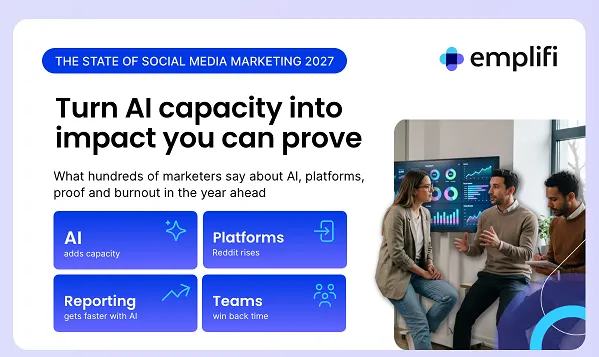
As organizations around the globe look toward the horizon of 2027, forward-thinking brands are actively recalibrating their long-term strategies to incorporate emerging digital tools, most notably artificial intelligence. To understand how industry leaders are preparing for this technological shift, customer engagement platform Emplifi recently released a comprehensive research initiative examining the evolving priorities of marketing professionals. By surveying over 400 high-level decision-makers—including marketing managers, directors, and corporate executives—the study provides a rare window into the strategic calculus guiding modern brand management, product discovery, and social media engagement.
The findings arrive at a critical juncture for the global marketing industry. Over the past several years, the rapid maturation of generative artificial intelligence, shifting consumer discovery habits, and platform fragmentation have radically altered how brands communicate with audiences. The Emplifi report serves as an empirical roadmap for enterprises seeking to optimize internal workflows and maintain a competitive edge in an increasingly automated marketplace.
Methodology and Background of the Study
To compile the data for its latest report, Emplifi surveyed a targeted cohort of 405 marketing executives, directors, and managers spanning various industries and geographical regions. The research methodology was designed to capture qualitative and quantitative insights regarding how leadership teams allocate resources, evaluate software solutions, and measure return on investment across digital channels.
The genesis of this research lies in the unprecedented acceleration of AI adoption that began in earnest in late 2022 and early 2023. As foundational AI models transitioned from experimental novelties to enterprise-grade utilities, marketing departments faced immense pressure to integrate these technologies into daily operations. However, early adoption was frequently characterized by ad-hoc experimentation rather than cohesive, data-driven strategy. By 2027, industry analysts predict that AI integration will no longer be a differentiator but a baseline operational requirement. Emplifi’s research specifically aims to identify the gap between current operational workflows and the structured, automated frameworks that executives envision for the medium-term future.
The Evolution of Artificial Intelligence in Marketing Workflows
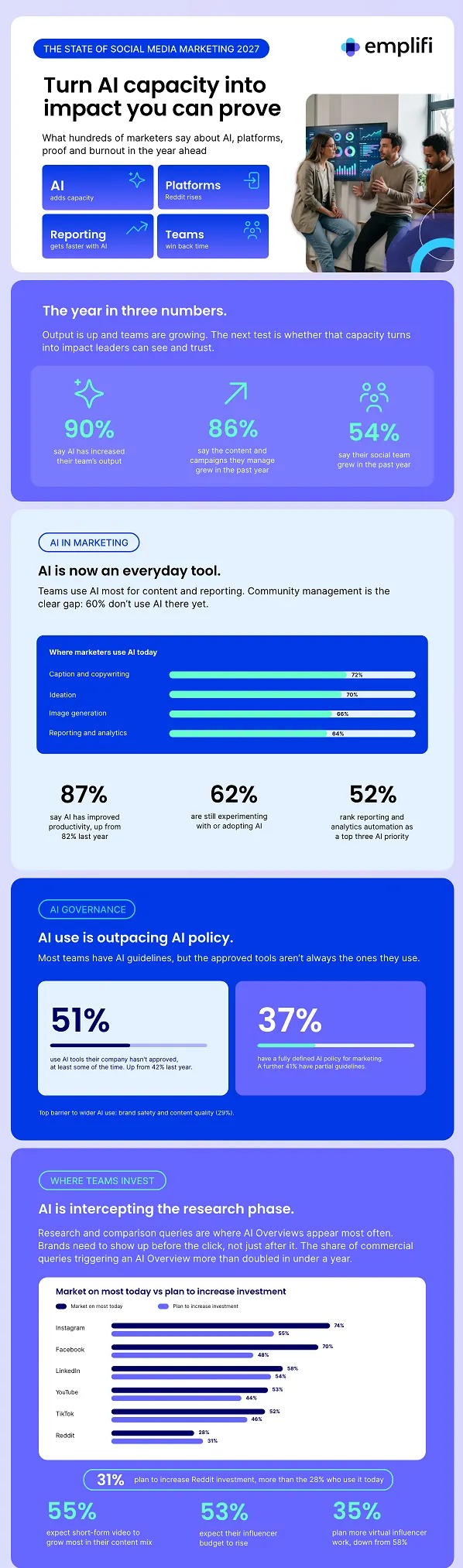
At the core of the Emplifi findings is the shifting role of artificial intelligence within marketing workflows. While initial deployments of AI largely focused on content generation—such as drafting social media copy, generating static imagery, or assisting with basic copywriting—the 2027 outlook points toward deep structural integration.
Marketing managers and directors surveyed in the report indicate that future workflows will rely on AI for predictive analytics, hyper-personalized customer segmentation, real-time campaign optimization, and automated customer service orchestration. Rather than replacing human creativity entirely, the prevailing sentiment among surveyed executives is that AI will function as a force multiplier, handling data-heavy, repetitive tasks to free up creative personnel for high-level strategy and conceptual development.
This evolution mirrors broader technological trends across the enterprise software sector. According to supplementary macroeconomic data from various digital transformation indexes, global enterprise spending on artificial intelligence integration is projected to compound significantly over the next three years. Marketing departments, traditionally among the heaviest adopters of SaaS solutions, are leading this charge by demanding native AI capabilities within their existing tech stacks.
Shifting Paradigms in Product and Brand Discovery
Beyond internal workflow optimization, the Emplifi study sheds light on how consumers are changing the ways they discover new products and brands. Traditional search engine optimization (SEO) and linear social media advertising funnels are undergoing a profound transformation as consumers increasingly turn to alternative discovery mechanisms.
The report highlights the growing influence of conversational search engines, recommendation algorithms, and social commerce ecosystems. Consumers are no longer relying solely on traditional web searches to find products; instead, they are engaging with AI-driven discovery platforms, short-form video algorithms, and influencer-led communities. For brand marketers, this means that visibility in 2027 will require a diversified presence that extends far beyond traditional corporate websites.
Executives participating in the survey emphasized the necessity of optimizing brand content for algorithmic discovery models. This includes structuring data so that it can be easily synthesized by large language models, leveraging micro-influencers for authentic peer-to-peer recommendations, and ensuring seamless transactional pathways within social media platforms. The modern brand discovery journey has become decentralized, requiring marketing leaders to adopt a multifaceted approach to audience acquisition.
Social Media Engagement Trends and Strategic Implications
Social media continues to serve as the primary battleground for consumer attention, yet the tactics required to drive meaningful engagement are shifting rapidly. The Emplifi research underscores a movement away from vanity metrics—such as broad follower counts and unengaged impressions—toward community-centric metrics centered on active participation, brand loyalty, and direct conversions.
Surveyed marketing directors noted that audiences are increasingly fatigued by overly polished, corporate messaging. In response, successful brands are pivoting toward authentic, value-driven content that fosters genuine community interaction. Furthermore, the integration of social commerce features—allowing users to discover, evaluate, and purchase products without ever leaving a social application—is fundamentally altering campaign design.
To operationalize these insights, marketing teams are restructuring their internal talent and resource allocations. The demand for data analysts, community managers, and AI integration specialists has risen sharply among the surveyed organizations, signaling a structural evolution within modern marketing departments.
Industry Reactions and Expert Analysis
In the wake of the report’s publication, industry analysts and marketing associations have weighed in on the broader implications of the findings. Independent marketing technologists point out that while the ambition to adopt advanced AI and social strategies is high, execution remains a persistent challenge for many organizations.
"The challenge for brands looking toward 2027 is not recognizing the value of these tools, but successfully bridging the execution gap," noted one independent digital marketing strategist. "Many companies possess legacy data silos and fragmented technology stacks that make seamless AI integration difficult. Reports like Emplifi’s provide a vital benchmark, but leadership teams must be willing to invest in foundational data hygiene and workforce training if they hope to realize these efficiencies."
Other industry observers have emphasized the ethical and regulatory dimensions of increased AI reliance. As marketing departments automate customer interactions and predictive personalization, regulatory scrutiny regarding data privacy, algorithmic bias, and consumer transparency continues to intensify. Forward-thinking enterprises are therefore incorporating robust governance frameworks alongside their AI deployment strategies to mitigate potential compliance risks.
Conclusion: Preparing for the 2027 Landscape
The insights compiled by Emplifi offer a timely and rigorous examination of the forces shaping the future of marketing. As organizations finalize their strategic plans for the coming years, the mandate is clear: survival and growth in the digital economy will depend on the intelligent integration of artificial intelligence, an adaptable approach to decentralized product discovery, and an uncompromising commitment to authentic community engagement.
By understanding the priorities and challenges identified by their peers through this comprehensive survey of marketing managers, directors, and executives, brands can better position themselves to navigate the complexities of the modern digital marketplace. The transition toward fully optimized, AI-enhanced workflows is already underway, and those organizations that act decisively today will be best equipped to lead their industries tomorrow.
Related posts: