The integration of artificial intelligence into local development workflows has reached a significant milestone with the advent of efficient, open-source large language models (LLMs) capable of autonomous tool usage. By leveraging the Ollama framework and the Qwen3 model, developers can now construct sophisticated AI agents that reside entirely on their local hardware. This architecture provides a privacy-focused alternative to cloud-based APIs, ensuring that sensitive source code, documentation, and personal notes remain isolated from external servers.
The Evolution of Local Agentic Workflows
Historically, AI agents were synonymous with cloud-based platforms, requiring developers to transmit proprietary data to remote servers for processing. This dependency introduced significant latency, cost, and security concerns. The current shift toward local agents is supported by the rapid optimization of "small" language models—those typically ranging from 4B to 7B parameters—which can now perform complex reasoning tasks on consumer-grade hardware.
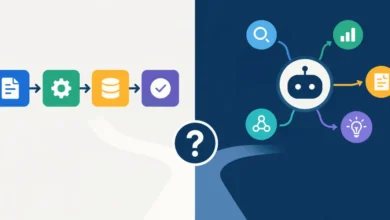
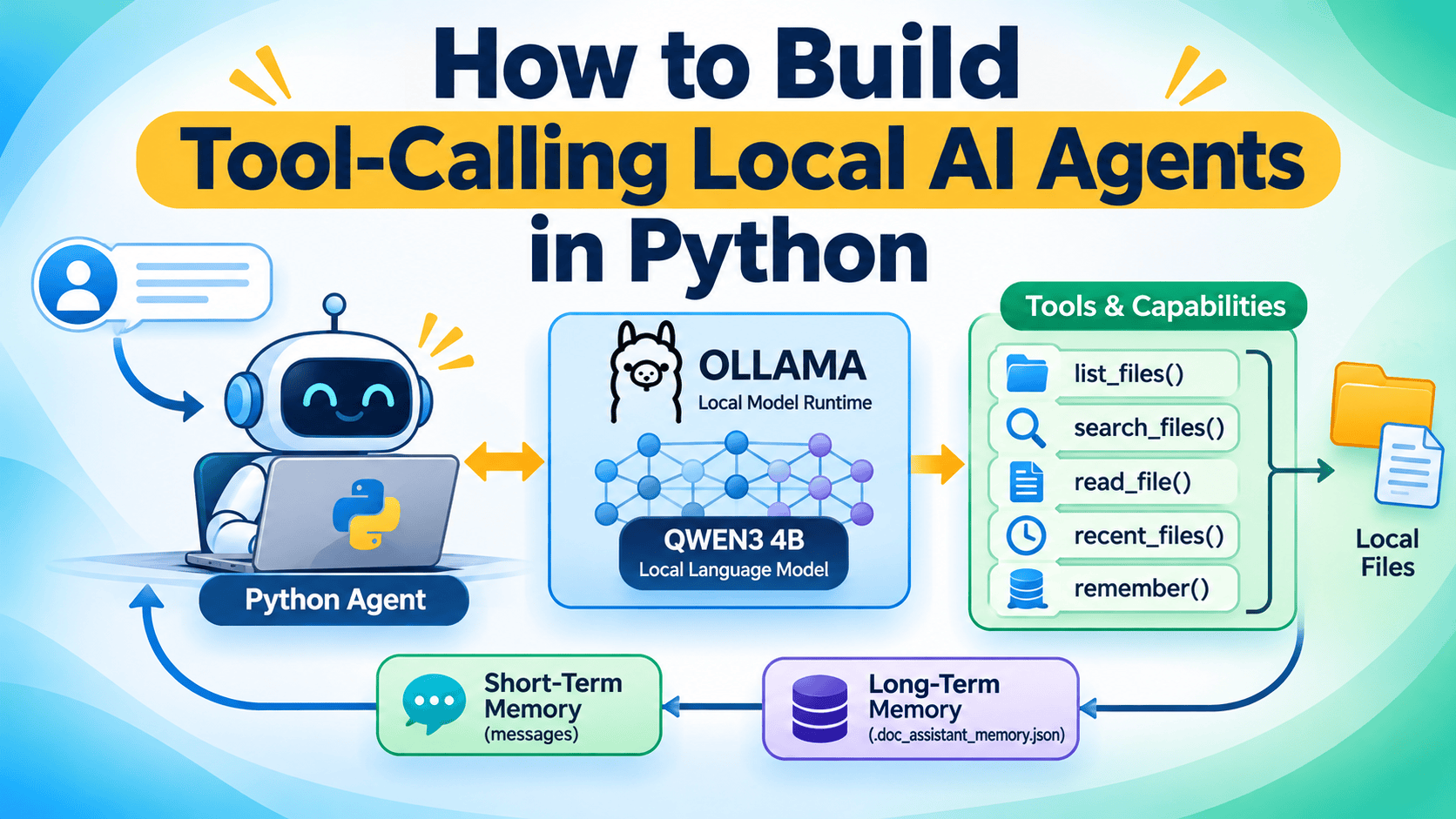
Tool calling represents the core functionality of these modern agents. Unlike standard chatbots that simply generate text, a tool-calling agent acts as an orchestrator. It can identify when a request necessitates external data, invoke a specific function to retrieve that data, parse the result, and iterate on its findings. This "reasoning loop" transforms a static model into an active participant capable of interacting with the local file system.
Chronology of the Local Agent Architecture
The development of a robust local assistant follows a structured lifecycle, moving from environment isolation to the implementation of the execution loop.
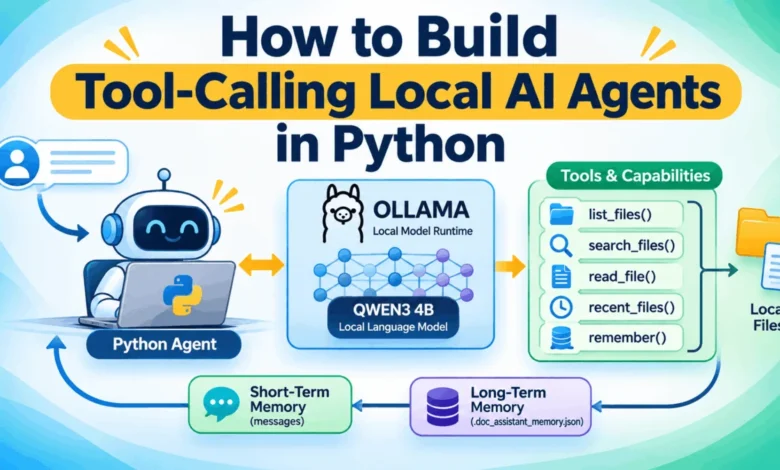
- Environment Provisioning: The foundational layer requires the installation of the Ollama server, which acts as the local inference engine. By deploying the Qwen3-4B model, developers gain access to a architecture specifically fine-tuned for instruction following and function calling. Establishing a virtual environment using Python 3.10 or higher is critical to prevent dependency conflicts.
- Defining the Tool Interface: The intelligence of an agent is defined by its available capabilities. For a project-based assistant, five essential tools are typically implemented: listing directory contents, searching specific file strings, reading file segments, checking file modification timestamps, and persistent memory storage.
- The Execution Loop: The agent operates through a synchronous loop where the model is prompted to select a tool, the Python interpreter executes the requested function, and the output is fed back into the model’s context. This cycle continues until the agent produces a final, natural-language response.
- Memory Management: To avoid redundant processing, agents utilize two forms of memory: "Short-term" history, managed by trimming the message list to fit within the model’s context window, and "Long-term" storage, managed by a JSON-based file that records user-specific facts across separate sessions.
Technical Specifications and Performance Constraints
Maintaining performance in a local environment requires careful resource management. A primary technical challenge is the "context window"—the total number of tokens the model can process at once. When an agent performs multiple tool calls, the conversation history, tool definitions, and raw output from files can quickly exhaust available GPU memory.
Developers are encouraged to set context lengths dynamically based on hardware capabilities. While 32K tokens is a common benchmark for modern local LLMs, resource-constrained systems may need to limit context to 8K or 16K to ensure the model remains performant. Furthermore, implementing character limits on tool outputs—such as capping search results at 3,000 characters—prevents the model from being overwhelmed by large datasets, thereby preserving accuracy and reducing inference time.
Security and Data Integrity in Local AI
One of the most significant advantages of this architecture is the "sandbox" nature of the local agent. By utilizing Python’s pathlib module, developers can enforce strict directory boundaries. A well-constructed safe_path function ensures that the model cannot access files outside of the defined project directory, effectively preventing unauthorized read or write operations on sensitive system files.
Unlike cloud-based agents, which often operate in a "black box," the local execution loop allows developers to inspect the logs of every tool call. This transparency allows for a granular audit of the agent’s decision-making process. If the model incorrectly attempts to access a file or passes invalid arguments, the error is caught, formatted as a text-based response, and returned to the model, allowing it to "self-correct" in real-time.
Broader Implications for Software Development
The transition toward locally hosted, tool-calling agents carries profound implications for the software development industry. By moving the "agentic" intelligence closer to the data, companies can maintain strict data sovereignty. This is particularly relevant in sectors such as finance, healthcare, and legal services, where strict compliance regulations often prohibit the use of public cloud-based AI services.
Furthermore, the ability to "remember" project-specific context allows for a more personalized development experience. An agent that understands the specific testing frameworks, coding standards, and project structure of a user’s repository can provide more relevant and context-aware assistance than a generic, cloud-native coding assistant.
Future Outlook and Scalability
While current local agents are primarily designed for individual project assistance, the trajectory of this technology points toward multi-agent systems. In such environments, specialized agents could collaborate on complex software architecture tasks, with one agent handling documentation, another managing testing, and a third performing code refactoring.
The current limitation—the requirement for manual tool definition and docstring optimization—will likely be mitigated by future iterations of models that can auto-generate their own tool schemas. As local models become more efficient and capable of handling larger context windows without proportional increases in hardware requirements, the line between local and cloud-based AI utility will continue to blur.
For developers seeking to adopt this technology, the focus should remain on the reliability of the tool interface. As noted by engineers in the field, the success of an agent is less about the sophistication of the model and more about the clarity of the instructions provided in the function docstrings. By treating the agent as a junior developer who requires clear, bounded tasks, users can unlock a highly efficient, private, and customizable workflow that significantly enhances productivity in complex coding environments.