Big Cartel vs Etsy: Navigating the Shift in Marketplace Terms and Seller Autonomy

The landscape for independent creators and small business owners is undergoing a significant shift as Etsy, one of the world’s largest online marketplaces, moves to implement updated Terms of Use that grant the platform and its third-party partners expanded rights to use seller content for artificial intelligence training. As of October 26, 2026, Etsy announced that these changes, slated for full implementation on December 16, 2026, would allow the platform to utilize seller-uploaded material to "develop, train, test, and improve" machine learning technologies. This policy adjustment has prompted a wave of migration among long-term sellers who are now re-evaluating their reliance on massive, centralized marketplaces in favor of more autonomous, brand-centric platforms like Big Cartel.
A Chronology of the Policy Shift
The tension between Etsy and its community escalated throughout November 2026. Following the initial publication of the revised terms on October 26, widespread concern began to ripple through seller forums and social media channels. Many creators expressed alarm that their original designs, product photography, and creative assets could be ingested by AI models without explicit, granular consent or a clear mechanism for opting out.
By mid-November, the discourse moved from online forums to mainstream news outlets, including reports from The New York Times that confirmed a segment of the seller base had begun shuttering their shops. On November 16, 2026, Etsy’s Vice President of Customer Operations attempted to address the growing backlash, stating in a community post that the company does not use content to "train AI models designed to copy your original work or replace your creativity." Despite this reassurance, the core language of the December 16 clause remains unchanged in the official terms as of late November, leaving many sellers seeking alternatives that offer more stringent intellectual property protections.
Comparing the Business Models: Marketplace vs. Independent Storefront
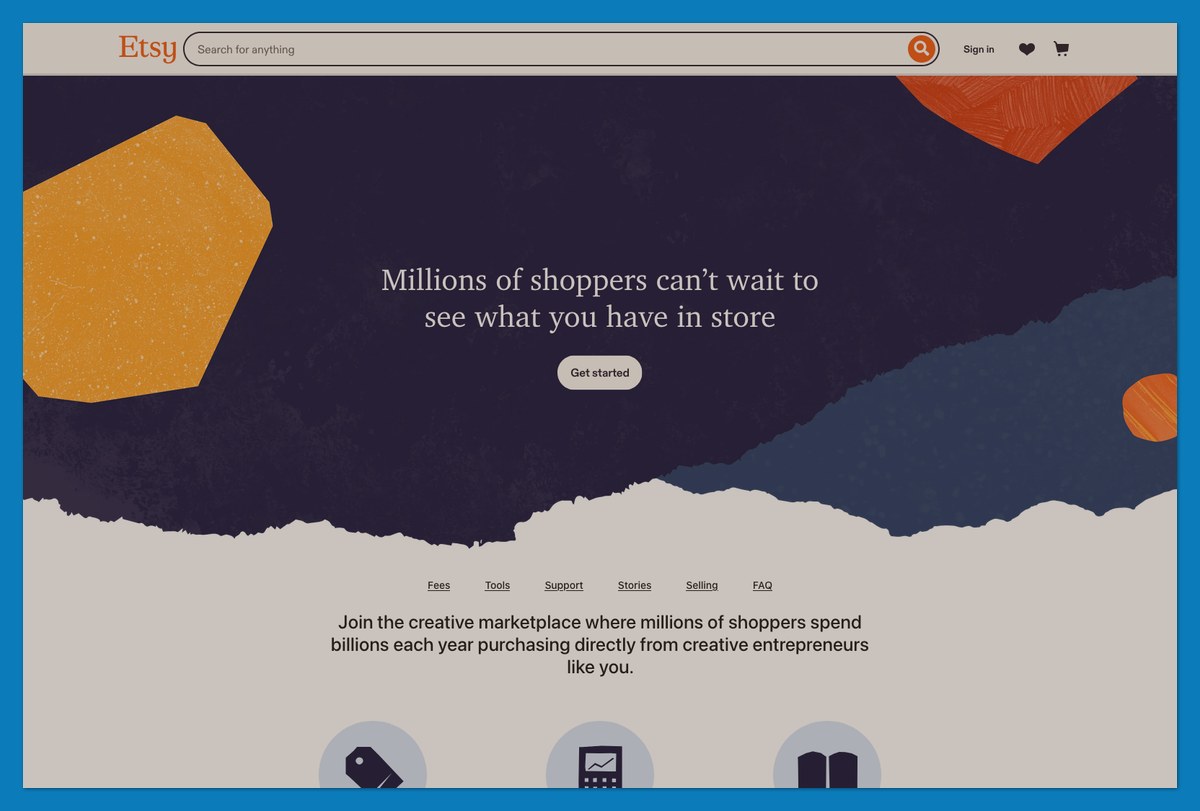
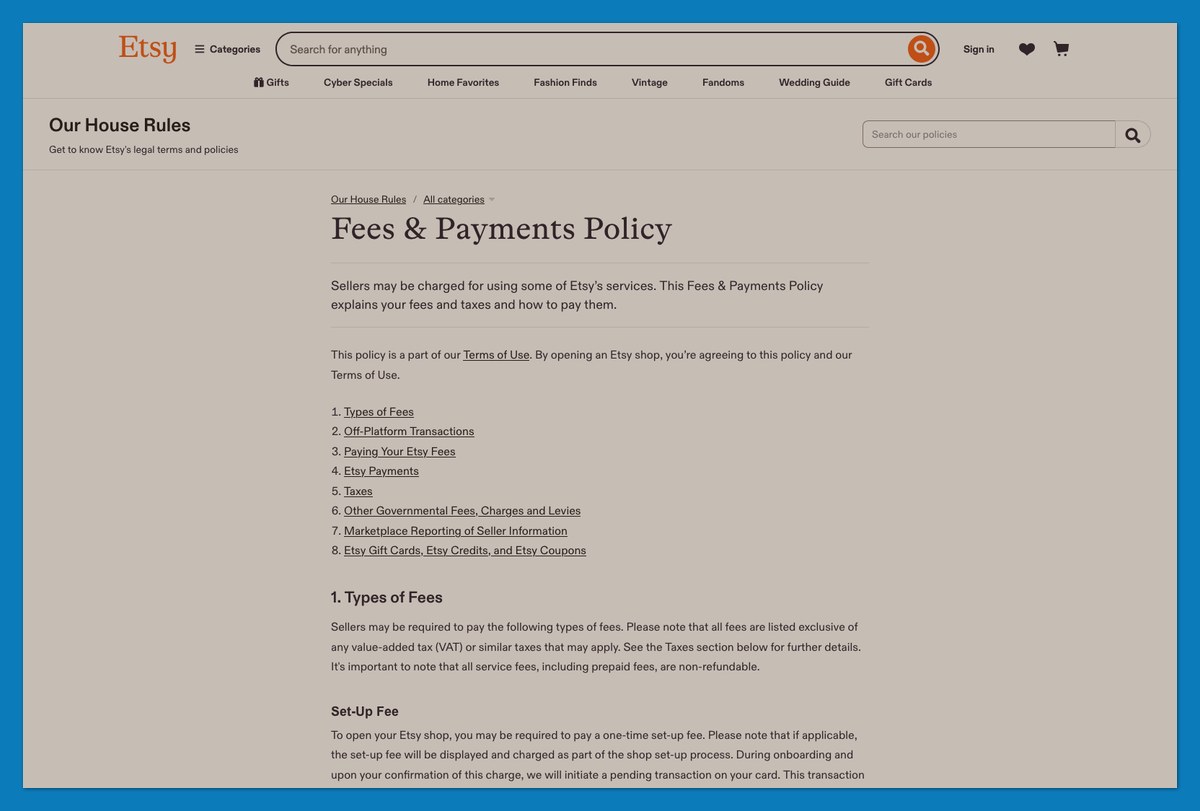
To understand the migration, it is necessary to contrast the fundamental operating models of these two platforms. Etsy functions as a global marketplace—a digital bazaar where the platform itself drives traffic through its search engine and algorithm. With over 87.5 million active buyers recorded in the 12 months ending September 30, 2026, Etsy offers an unparalleled opportunity for discovery. However, this convenience comes at a cost: a 6.5% transaction fee, additional payment processing charges, and the necessity of operating within the platform’s overarching brand and technical framework.
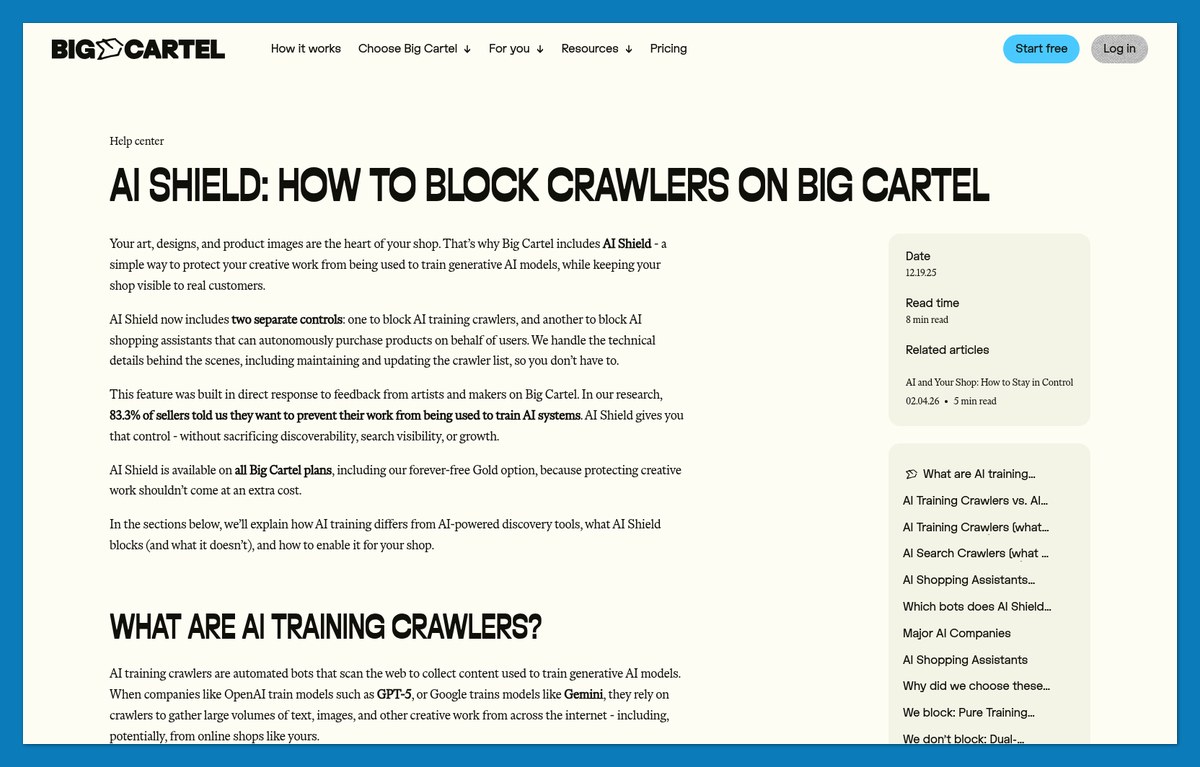
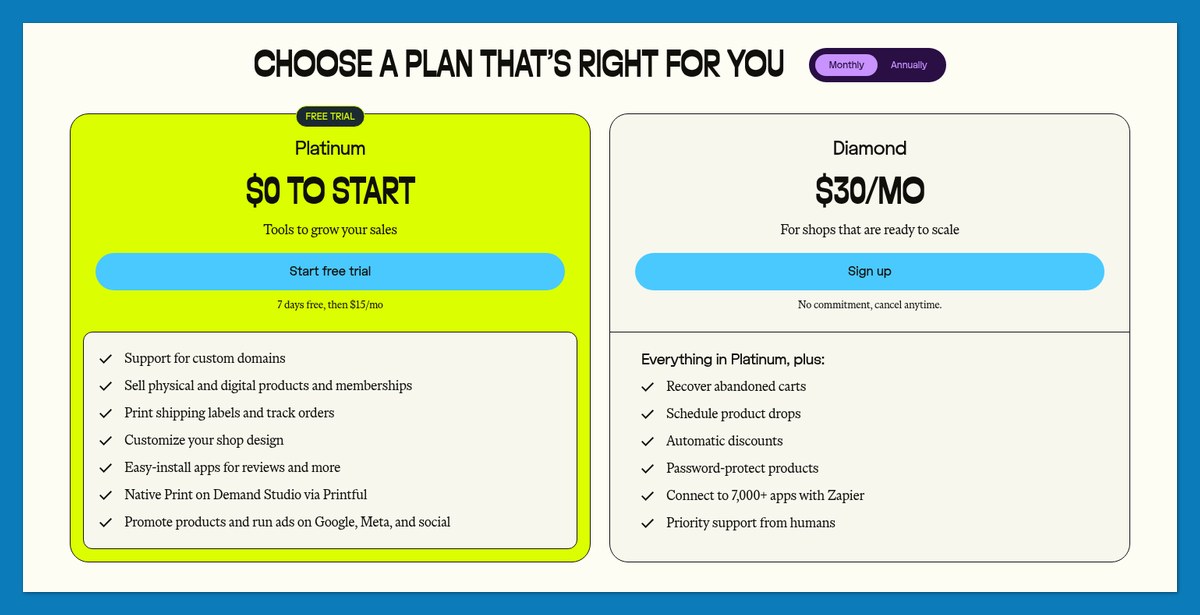
In contrast, Big Cartel operates on an independent storefront model. It does not provide an internal marketplace; instead, it offers tools for merchants to host their own domain and manage their own customer relationships. This shift requires the merchant to take full responsibility for marketing and traffic acquisition. However, for those concerned about content usage and branding, Big Cartel offers a different set of trade-offs, most notably a more limited, "purpose-restricted" license and the inclusion of an "AI Shield" tool that allows users to block certain training crawlers via a robots.txt implementation.

Financial Analysis: Cost Structures at $500 in Monthly Sales
A critical component of this migration is the bottom-line impact on profitability. For a typical seller generating $500 in monthly revenue across 20 orders, the cost of doing business varies significantly between the two platforms.
On Big Cartel’s Platinum plan—which costs $15 per month—a seller utilizing Stripe for payment processing would face roughly $20.50 in transaction-related fees, bringing their total monthly overhead to $35.50. This assumes the seller is not using additional paid marketing tools. Conversely, an Etsy seller with the same volume faces a more complex fee structure. Between the standard 6.5% transaction fee, 3% plus $0.25 payment processing per order, and listing fees, the total cost often climbs to approximately $56.50. If an order is attributed to Etsy’s "Offsite Ads" program, which becomes mandatory for sellers exceeding $10,000 in sales over a 365-day period, the costs can rise even further.
While Etsy is often more cost-effective for smaller, lower-volume shops due to the absence of a monthly subscription, the cost-benefit analysis shifts as a business scales. Big Cartel’s fixed-fee structure provides more predictability, whereas Etsy’s per-sale fees can compound, particularly when combined with mandatory advertising programs.
Data Privacy and the AI Shield Implementation
The primary driver of the current seller exodus is the perceived threat to intellectual property. Big Cartel’s approach to this concern has been to emphasize its "AI Shield" feature, launched in late 2025. This tool allows store owners to toggle settings that prevent specific AI crawlers from indexing their site. While this does not provide an absolute guarantee—as it relies on the compliance of the bots themselves—it represents a proactive stance toward data control that many sellers feel is currently missing from the Etsy ecosystem.
It is important to note that both platforms maintain licensing agreements that grant them broad, non-exclusive rights to host and display content. However, the legal discourse surrounding these terms is evolving. Etsy’s current position is that its use of content is restricted to service improvement, but the lack of a clear, universal opt-out for US-based sellers remains a point of contention for privacy advocates and business owners alike.
Strategic Considerations for Migration
For sellers deciding to transition from Etsy to an independent platform like Big Cartel, the logistical process is a vital step in ensuring business continuity. The process generally involves four key phases:
- Preparation: Before altering the Etsy shop, merchants should download their active listing data as a CSV file via the Etsy Shop Manager. This file serves as the blueprint for populating the new store.
- Platform Setup: Establishing the new storefront, connecting a custom domain, and configuring payment gateways (such as Stripe or PayPal) are essential first steps. During this phase, enabling protective tools like AI Shield is recommended before the store goes live.
- Data Migration: Using the CSV export, products can be imported into the Big Cartel dashboard. This typically requires a manual review of images and descriptions, as the import process may not capture all formatting nuances.
- Customer Communication: Perhaps the most significant challenge is the "traffic gap." Since Big Cartel does not have a native marketplace audience, sellers must proactively guide their existing customer base to the new URL. This is frequently achieved through email marketing, social media engagement, and including direct links in outgoing shipping packages.
Broader Implications for the Ecommerce Sector
The shift toward independent hosting platforms suggests a growing maturity among small-scale creators regarding their digital sovereignty. As AI technologies continue to integrate into the backbone of digital commerce, the question of who "owns" the data generated by creative work will likely become a central issue for regulatory bodies and platform operators.
The current situation highlights a fundamental tension in the digital economy: the trade-off between the ease of discovery offered by large platforms and the control and autonomy offered by independent solutions. While Etsy remains a powerful tool for reaching a global audience, the recent updates to its terms have exposed a vulnerability in that model. For many, the ability to protect the integrity of their creative work is increasingly outweighing the convenience of a built-in customer base.
As we look toward 2027, the success of this migration will depend on whether independent creators can effectively bridge the marketing gap. Those who treat their business as a brand rather than a listing will likely find that the benefits of independent storefronts—lower transaction fees, full customer ownership, and increased content control—offer a more sustainable path forward in an increasingly automated digital landscape.
Related posts: