The Business Case for Employee Advocacy in 2026: Why the C-Suite Demands Hard Metrics Over Brand Passion

Securing executive buy-in for modern corporate initiatives has long ceased to be an exercise driven purely by qualitative passion or visionary enthusiasm. In the current economic climate, corporate leadership teams across the global enterprise landscape operate under strict fiscal scrutiny, demanding hard proof, predictable returns, and scalable operational models before greenlighting new strategies. When marketing and communications leaders attempt to elevate an employee advocacy program up the corporate ladder, the foundational backbone of their pitch must rely heavily on empirical data. Decision-makers require clear definitions of what employee advocacy truly entails, paired with granular, measurable benefits that directly impact the enterprise’s bottom line, brand resilience, and talent acquisition pipelines.

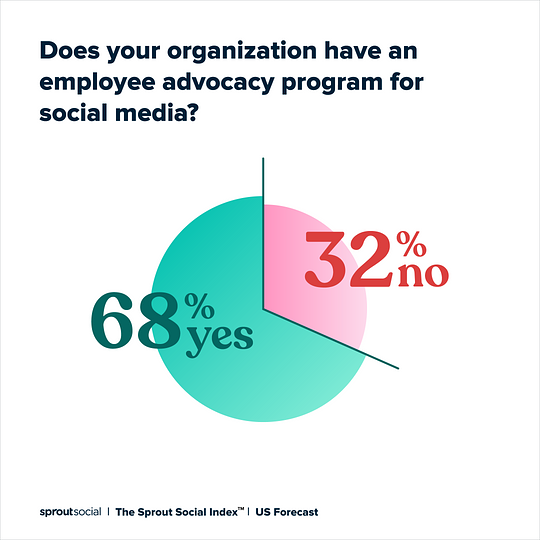
As organizations navigate the complexities of digital marketing in 2026, employee advocacy has evolved from an informal, grassroots social media experiment into an essential pillar of corporate growth strategy. Modern enterprises are moving away from ad-hoc employee posting habits and transitioning toward highly sophisticated, structured programs backed by dedicated administrative teams, centralized technological tools, standardized governance processes, and comprehensive training protocols. Industry research indicates that over two-thirds—specifically 68%—of marketing professionals currently report that their organizations operate a formal employee advocacy program. This widespread adoption signals that advocacy is no longer an experimental nice-to-have, but rather a proven standard operating procedure within high-performing corporate communications departments.
The Evolution and Strategic Objectives of Modern Advocacy Programs
Tracing the chronology of employee advocacy reveals a fascinating shift in corporate communication. A decade ago, sharing company news on personal social media channels was largely left to the discretion of hyper-engaged executives or exceptionally loyal sales representatives. These early efforts were fragmented, difficult to track, and nearly impossible to scale uniformly across a global workforce. Over time, as organic reach on corporate social media pages declined due to shifting platform algorithms and ad-saturated newsfeeds, organizations began to recognize an untapped asset: the collective, authentic digital footprints of their entire employee base.
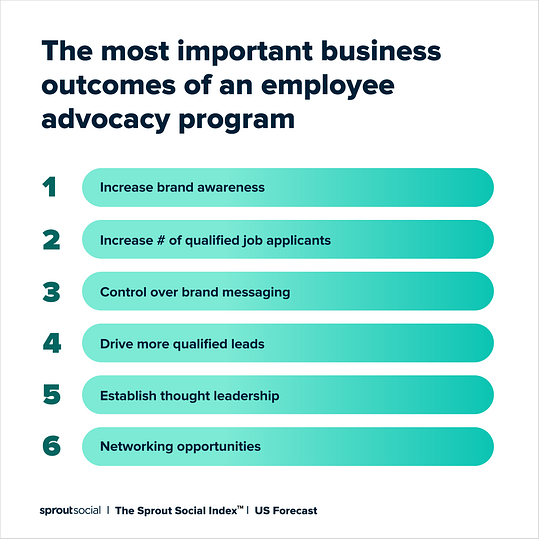
By the mid-2020s, industry pioneers began formalizing these networks, deploying dedicated software solutions to streamline content distribution. Today, organizations establishing structured advocacy programs typically center their initiatives around three primary business objectives: exponentially increasing brand awareness, attracting a higher volume of qualified job applicants, and maintaining rigorous control over core brand messaging. Secondary objectives cited by corporate leaders include driving highly qualified sales leads, establishing key personnel as recognized industry thought leaders, and opening valuable networking channels for client-facing teams.
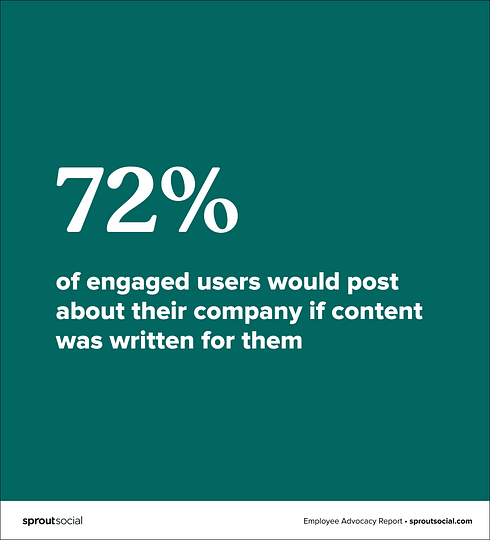
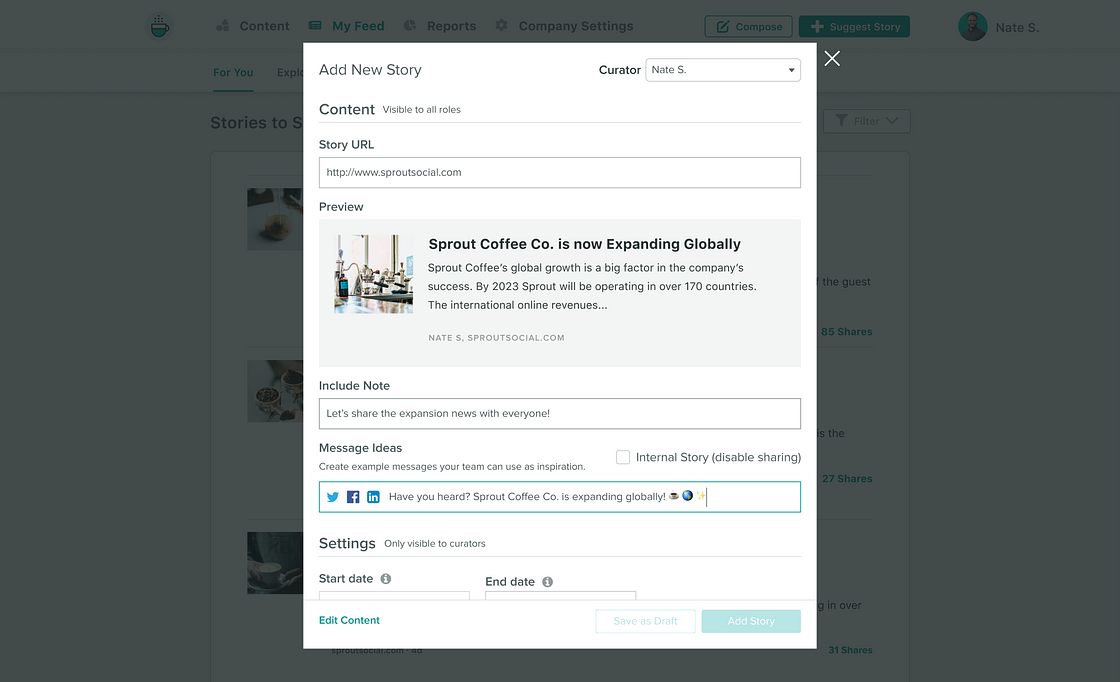
Despite the clear strategic advantages, mobilizing a workforce requires solving a fundamental operational challenge: the content-supply problem. Data compiled in recent industry reports highlights that 72% of engaged employees express a willingness to post company-related content on their personal social media profiles, provided that the material is pre-written, professionally curated, and easy to access. When organizations eliminate the friction of content creation—supplying teams with centralized, pre-approved messaging hubs—participation rates soar. In fact, comprehensive deployment metrics show that up to 85% of properly onboarded employees actively share curated corporate content on their personal channels when equipped with the right technological infrastructure.
Humanizing the Enterprise: Trust and the Frontline Advantage
One of the most compelling arguments for C-suite investment lies in consumer psychology and trust architecture. Modern audiences have grown increasingly skeptical of polished, top-down corporate messaging originating from executive suites or centralized marketing accounts. Paid media campaigns face soaring acquisition costs and rapidly diminishing returns as consumers learn to tune out corporate advertising.
Data from contemporary influencer and brand advocacy studies reveals a striking generational shift in consumer trust: 40% of consumers discover new products and services through employee-generated content at least once a month. Furthermore, granular consumer preference benchmarks indicate that 46% of audiences actively desire to hear from frontline, everyday employees, compared to a mere 10% who prefer communications originating from C-suite executives.
This dramatic disparity underscores the immense power of human credibility. Frontline employees, engineers, customer success representatives, and mid-level specialists project an authenticity that glossy corporate handles simply cannot replicate. By activating these authentic voices, enterprises can scale organic reach and humanize their brand identity at virtually zero additional media cost. Corporate leaders are rapidly realizing that while paid advertising budgets stretch thinner each quarter, the organic credibility of their workforce represents an inexhaustible, highly trusted distribution channel.
Quantifying Amplification and Revenue Impact
The measurable impact of structured employee advocacy extends far beyond qualitative brand sentiment, delivering profound results in both raw amplification and direct revenue generation. Enterprise case studies from major global corporations illustrate the staggering scale achievable through systematic workforce advocacy.
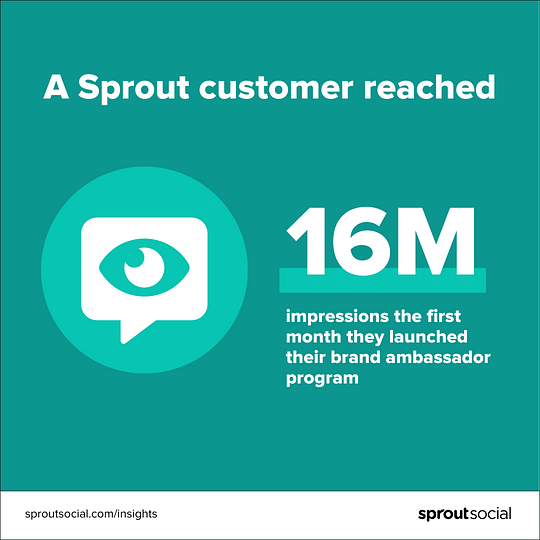
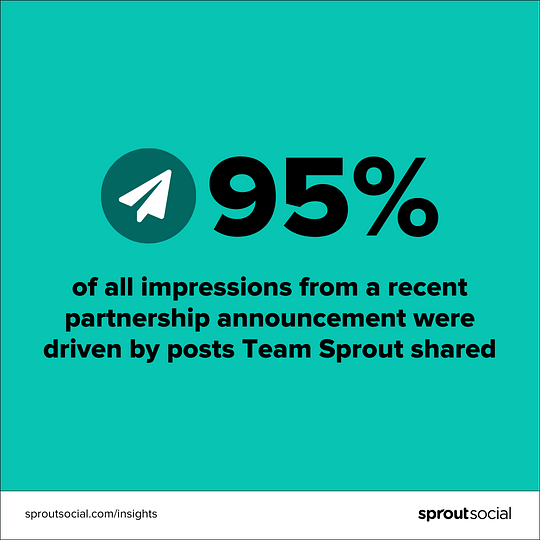
For instance, enterprise software provider Ivanti deployed a structured brand ambassador program utilizing centralized advocacy technology and witnessed an immediate surge in reach, expanding its total footprint by 16 million impressions within the first month alone. Similarly, platforms like Sprout Social routinely generate tens of millions of impressions annually through employee-shared content. In notable instances of major corporate announcements—such as a global partnership disclosure with Salesforce—an astounding 95% of the total 740,000 impressions generated were directly driven by posts shared voluntarily by employees across their personal networks.
Beyond top-of-funnel reach, advocacy serves as a direct accelerator for sales pipelines and revenue targets. Enlisting employees as brand advocates generates qualified inbound leads without draining digital advertising budgets. For example, enterprise software leader Infor successfully generated $100,000 in earned media value within a single month through targeted advocacy initiatives.
For sales professionals, active participation in social selling yields undeniable career and corporate performance benefits. Research indicates that 72% of engaged users find that sharing company content directly supports their day-to-day sales efforts. Among casual users, 62% report similar professional benefits. Furthermore, industry data compiled by LinkedIn demonstrates that sales representatives who actively practice social selling and share company insights are 51% more likely to consistently reach or exceed their established sales quotas. By integrating advocacy reporting dashboards directly with Customer Relationship Management (CRM) software, revenue operations teams can accurately quantify earned media value, track pipeline progression, and tie employee shares directly to closed-won deals and event registrations.
Talent Acquisition and Employee Retention Dynamics
In addition to driving marketing reach and sales conversion, employee advocacy plays a critical role in human resources strategies, specifically in recruitment and retention. Modern job seekers rarely rely solely on official career pages; instead, they conduct deep-dive research across social media platforms to evaluate corporate culture, employee sentiment, and workplace authenticity. When current employees organically celebrate their workplace culture, share company milestones, and highlight internal achievements, they build a formidable employer brand that attracts top-tier talent.
Advocacy also fosters a profound sense of internal ownership, loyalty, and belonging among existing staff. When employees are invited to act as active stewards of the brand rather than passive observers, their long-term engagement, morale, and retention rates improve significantly. Forward-thinking organizations now integrate recruitment teams directly into their advocacy ecosystems. By broadcasting curated stories regarding open positions, internal promotions, and company milestones through internal newsletters and one-click sharing tools, companies ensure that hiring news reaches potential candidates through the most trusted medium possible: their future colleagues.
Fact-Based Analysis of Implementation Implications
As organizations look toward the remainder of the decade, the integration of structured employee advocacy into enterprise digital strategy represents a low-risk, high-yield operational imperative. The transition from informal social media sharing to formal, measurable advocacy programs requires minimal capital expenditure compared to traditional paid advertising campaigns, yet yields exponentially higher trust metrics.
However, corporate leaders must approach implementation with strategic discipline. Successful programs require dedicated oversight, intuitive technological platforms that prioritize user experience, and clear guidelines that balance brand compliance with authentic personal expression. Enterprises that fail to formalize their advocacy efforts risk lagging behind competitors who have already weaponized their workforces as trusted digital ambassadors. Ultimately, the data confirms that employee advocacy transforms internal human capital into measurable reach, accelerated revenue, and resilient recruiting power that traditional paid marketing channels simply cannot match.