When digital administrators discover that non-human visitors account for a significant portion of their website traffic, the immediate instinct is often to deploy aggressive blocks. Recent telemetry from hosting infrastructure providers highlights the scale of this phenomenon, documenting extreme events such as a single property enduring 3.6 million requests in twenty-four hours distributed across more than 360,000 unique IP addresses. Similarly, managed hosting environments have recorded hyper-active crawlers generating up to 3.75 million requests targeting add-on utilities within the same timeframe, while recurrent algorithmic loops have driven hundreds of millions of hits before automated countermeasures were engaged.
However, these extreme anomalies fail to represent the broader operational reality for the majority of web publishers. Recent empirical analysis encompassing more than 5,000 WordPress installations reveals that automated artificial intelligence crawlers account for a median bandwidth consumption of merely 1.57 percent. Conversely, properties positioned at the 90th percentile experience a substantial 17.8 percent bandwidth usage from these entities, while the top 1 percent reaches an overwhelming 90.3 percent. Intriguingly, more than one thousand evaluated sites registered zero AI-bot bandwidth usage entirely.

This vast statistical disparity illustrates that simply identifying the presence of automated traffic and diagnosing a structural infrastructure threat are fundamentally distinct challenges. The strategic interventions executed by a webmaster directly influence overall server performance, third-party integrations, search engine visibility, and the capacity of emerging AI tools to accurately index and surface published material. Consequently, digital publishers must understand the precise behaviors of these crawlers prior to modifying system configurations. Analysis of industry data reveals seven prevalent miscalculations site administrators commit when evaluating and mitigating automated web traffic.
Treating Gross Percentage Metrics as a Diagnostic Conclusion
A frequent misstep among web administrators involves reacting exclusively to aggregate percentage figures. If automated agents constitute twenty percent of a domain’s total incoming requests, this metric alone provides insufficient data to determine whether the traffic profile constitutes a technical liability. Requests targeting heavily cached static content place minimal pressure on server architecture, whereas a fraction of that volume repeatedly querying dynamic endpoints—such as internal site search functions, faceted filter archives, or e-commerce checkout mechanisms—can exhaust application threads rapidly.
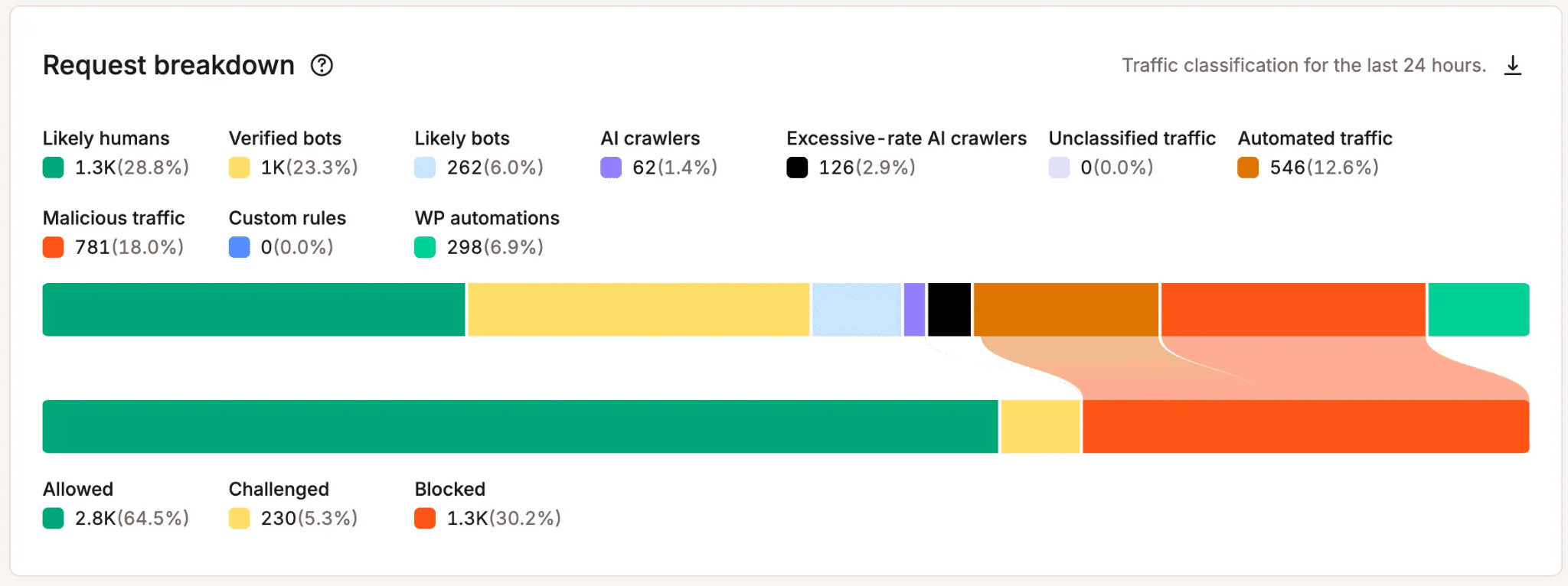
Industry research demonstrates that mean daily AI-bot request volumes per site fluctuate between 667 and 928 across multiple monitoring intervals, whereas median figures range merely from 33 to 67 requests daily. Furthermore, approximately one-quarter of monitored domains receive zero AI crawler traffic on any given measurement day. This skewing effect, driven by a minor cohort of heavily targeted properties, proves that network-wide averages are dangerous benchmarks for individual platform decisions. System operators are advised to evaluate internal telemetry, categorizing incoming traffic by user agent, geographic origin, request path, and classification type before enacting restrictive firewall policies.
Applying Blanket Blocks to All Automated Traffic
The nomenclature surrounding automated web agents has evolved rapidly, encompassing diverse operational profiles. Certain systems harvest public data exclusively for foundational model training or generative search indexing, while others retrieve content dynamically in real-time to satisfy direct user queries. Major technology firms maintain distinct user agents for these discrete functions. For instance, OpenAI operates specific crawlers for model improvement alongside alternative agents dedicated to real-time search discovery. Restricting the latter can inadvertently suppress a website’s visibility within conversational search platforms.
Similar operational architectures are deployed by Anthropic, Perplexity, and Google, which offer specialized directives allowing publishers to differentiate between general model training and conversational retrieval visibility. Grouping all automated systems into a single category strips administrators of granular control. While a publisher may legitimately wish to withhold proprietary content from model training repositories, forfeiting conversational discovery entirely can diminish referral traffic. Consumer studies indicate that a significant plurality of users routinely visit primary corporate web properties following conversational recommendations, highlighting the commercial trade-offs of indiscriminate blocking strategies.
Conflating Routine Crawler Spikes with Security Emergencies
While malicious automation remains a persistent vector for distributed denial-of-service attacks, credential stuffing, and brute-force intrusions, a verified AI crawler dispatching elevated volumes of legitimate requests represents an operational inefficiency rather than a malicious security breach. Industry CTOs and technical experts emphasize that systemic overreactions pose a greater risk to routine platform stability than underreactions, primarily because much of the disruptive traffic originates from legitimate systems executing inefficient traversal patterns.

When server infrastructure experiences acute degradation—manifesting as sluggish page delivery or resource exhaustion—stabilizing the hosting environment takes precedence. Temporary mitigation strategies, such as challenging or rate-limiting incoming crawler traffic, are appropriate emergency protocols. However, converting these emergency measures into permanent architectural policy without investigating the root cause frequently introduces unintended functional friction. Comprehensive mitigation frameworks allow administrators to apply graduated challenges or behavioral thresholds, distinguishing between adversarial attacks and poorly optimized automated retrieval.
Fixating on Request Volume While Ignoring Resource Destination
A critical analytical error involves monitoring raw request counts while ignoring the computational cost of the targeted Uniform Resource Locators. A request directed at a statically cached blog post requires negligible processing power, whereas a dynamic query directed at an un-cached database search or parameterized filtering page necessitates database queries, PHP thread allocation, and dynamic page generation.
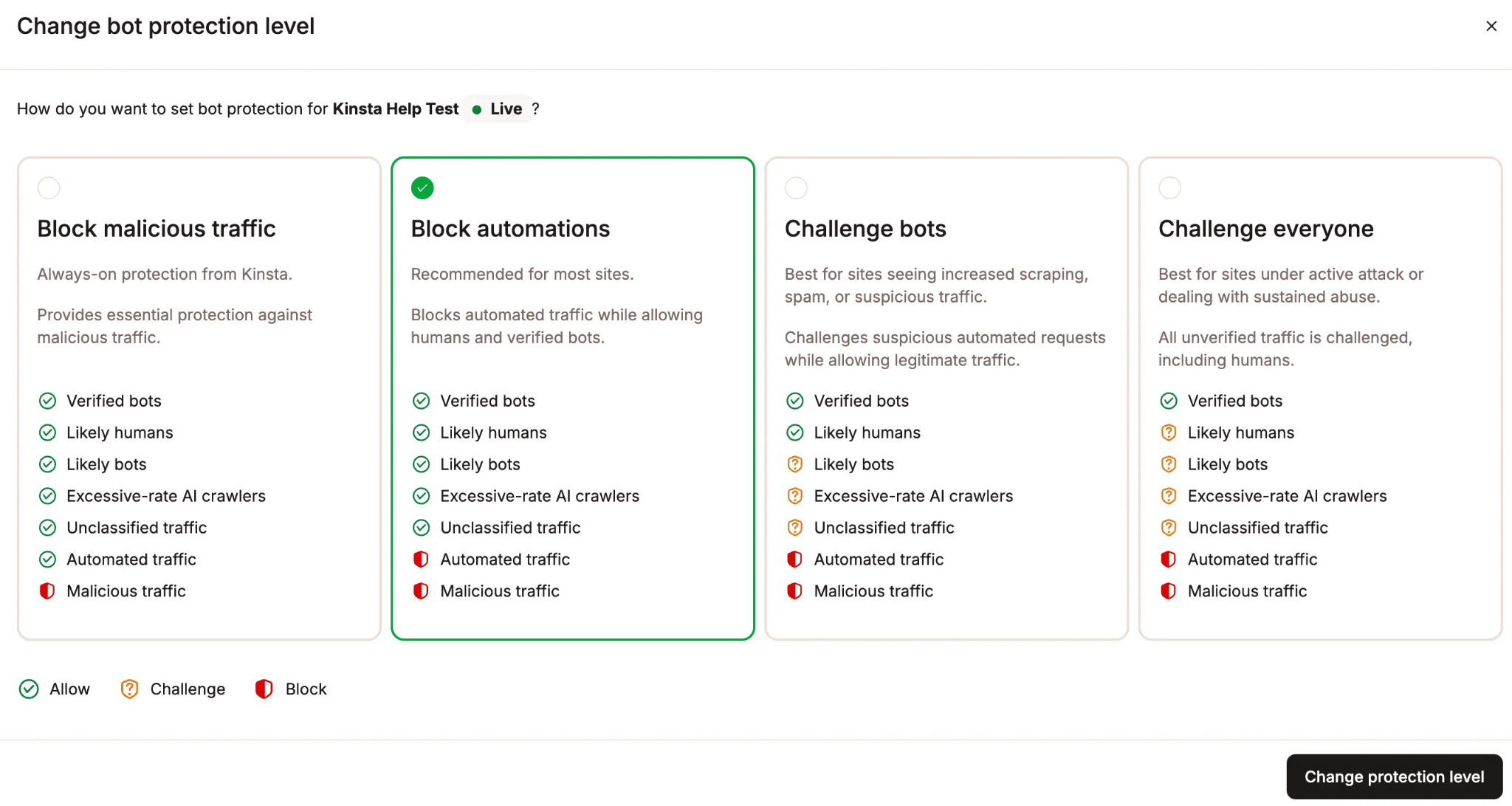
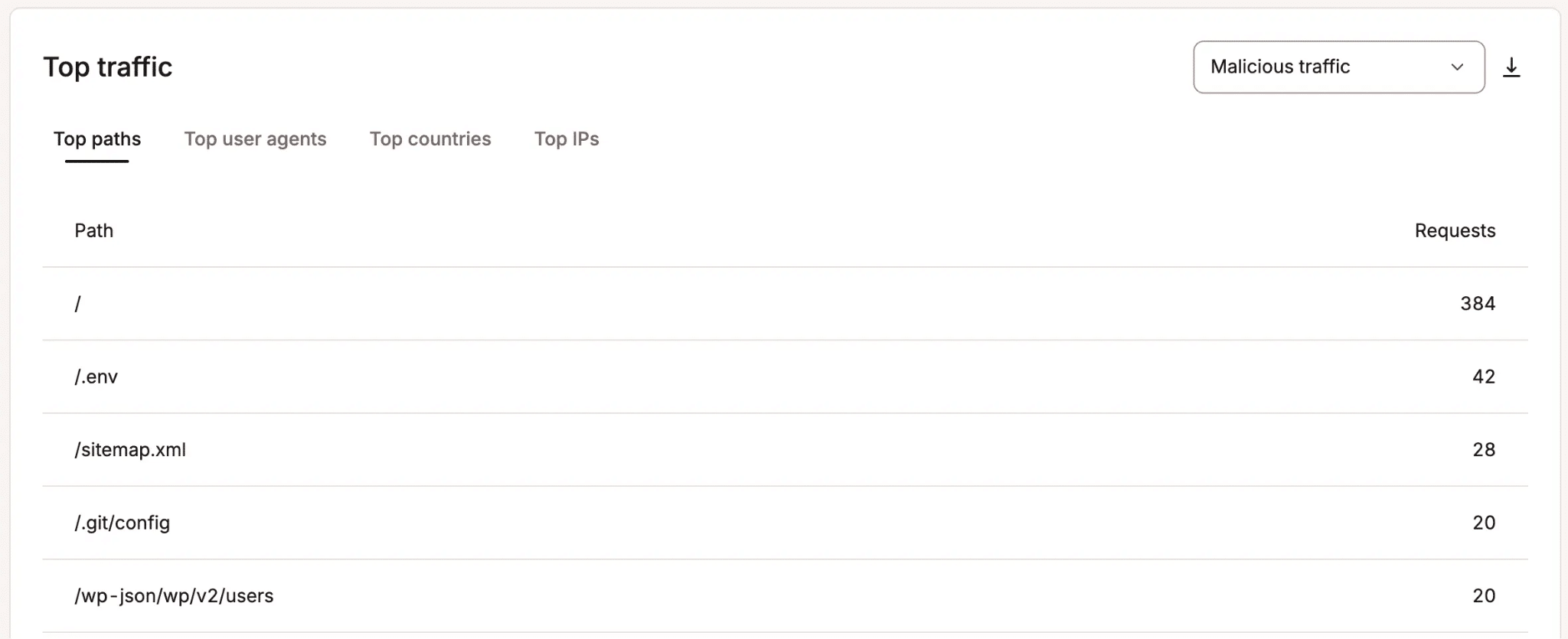
Empirical infrastructure metrics indicate that between roughly 77 and 90 percent of AI crawler requests target dynamic assets, contrasted with human traffic distributions that heavily favor static or cached routing. When thousands of automated requests target dynamic database queries every minute, the performance degradation resembles a denial-of-service event. Consequently, system administrators must audit their traffic logs by examining the exact pathways requested rather than relying solely on aggregate user-agent summaries.
Failing to Resolve Underlying Crawl Traps
Blocking an aggressive bot provides immediate physical relief to a strained server, but it frequently fails to resolve the structural web architecture flaw that attracted the crawler in the first place. Content management systems routinely generate vast permutations of URLs through query parameters, faceted archives, pagination sequences, calendar archives, and dynamic filtering mechanisms.
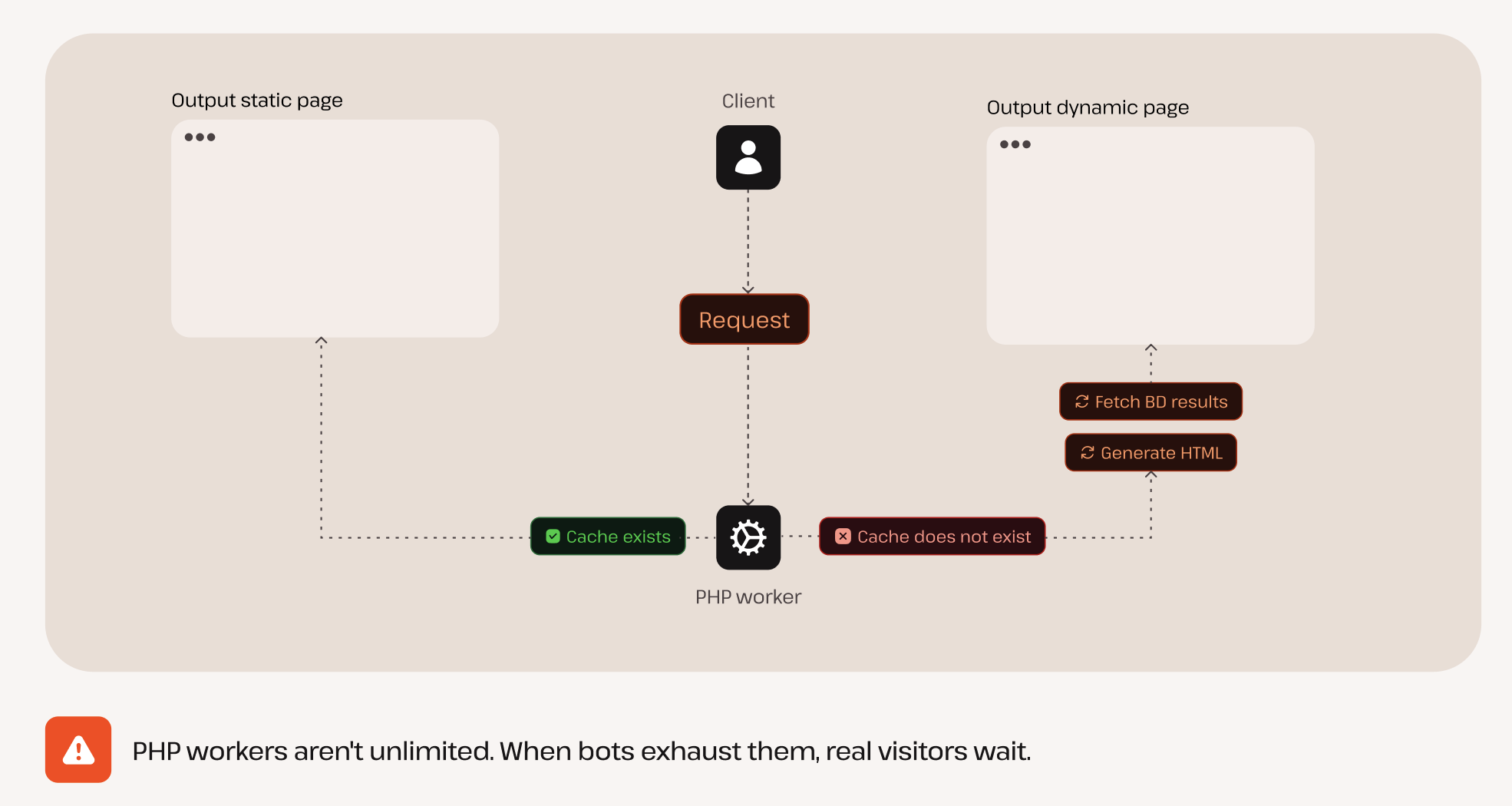
While human users readily recognize when minor URL variations yield redundant content, automated parsers process every distinct link as a novel discovery pathway, triggering endless recursive loops. When a specific path dominates crawler telemetry, administrators must inspect the underlying URL structure to eliminate redundant parameters or optimize internal linking hierarchies. Addressing the structural vulnerability ensures long-term operational stability, preventing subsequent crawlers from encountering the same architectural inefficiencies.
Assuming Robots.txt Directives Provide Absolute Enforcement
Modifying a site’s robots.txt file is a standard administrative procedure for communicating crawling preferences to reputable automated systems, but it operates independently of technical enforcement. The protocol relies entirely on the compliance of the visiting agent and does not physically obstruct incoming HTTP requests from reaching the server infrastructure.
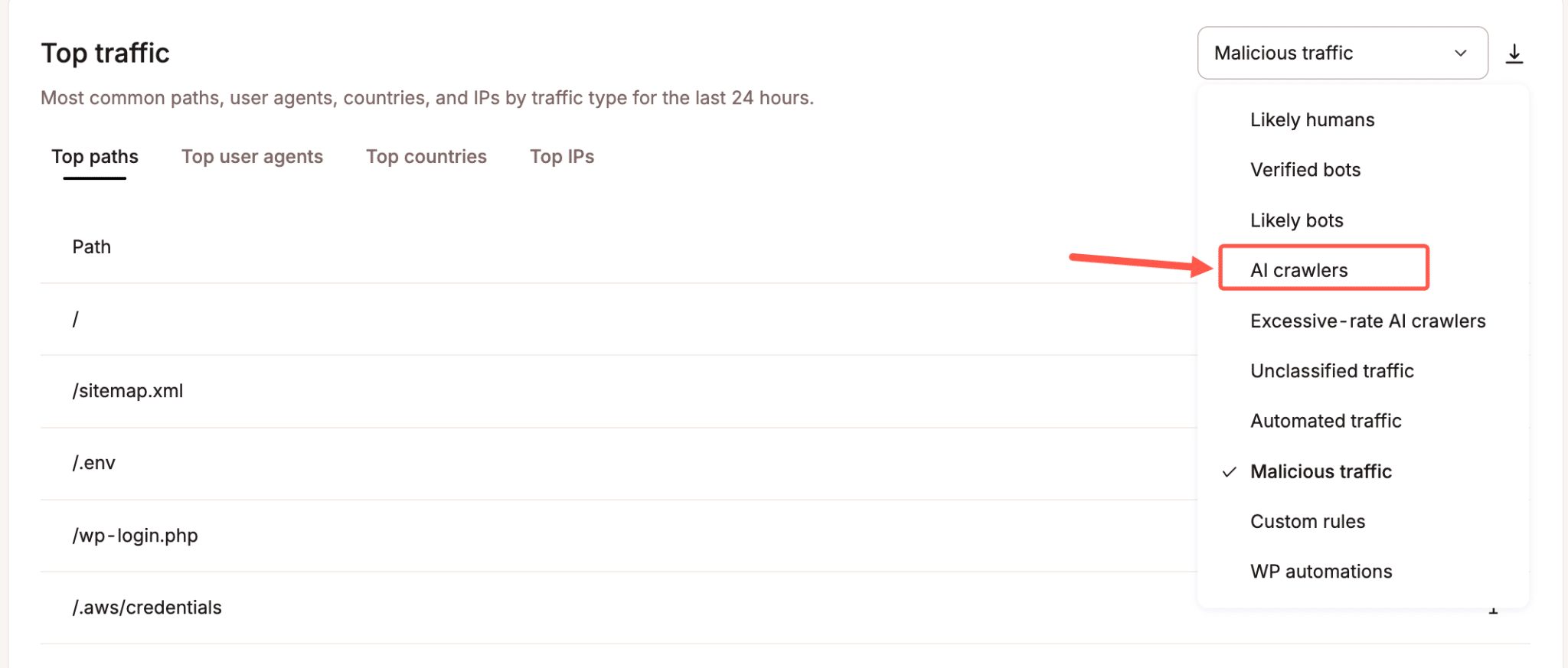
While structured metadata files communicate indexing preferences effectively, definitive access control must be managed at the server or firewall level. Publishers who rely exclusively on text-file modifications often remain exposed to non-compliant scrapers or high-rate systems that exceed comfortable server processing thresholds. Verifying traffic logs post-implementation remains an essential step to confirm whether crawler activity has genuinely subsided.
Replicating External Firewall Rules Without Impact Assessments
A pervasive administrative error involves adopting aggressive perimeter security rules sourced from third-party case studies without auditing their localized impact. Security postures optimized for regionally isolated platforms—such as geographic access challenges or aggressive browser verification scripts—frequently introduce severe false-positive rates when deployed on international e-commerce platforms or content networks with global audiences.
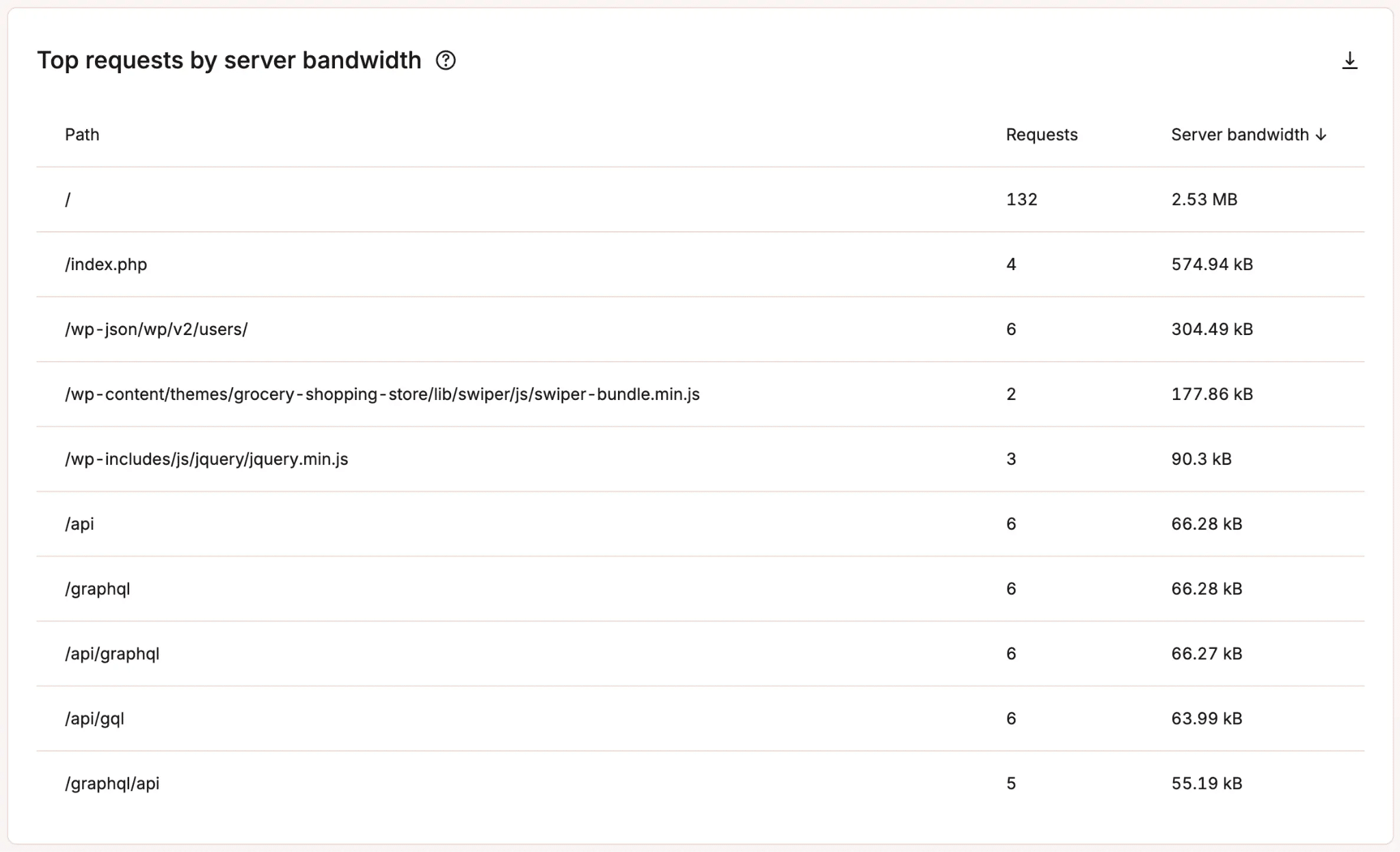
Stacking multiple overlapping security layers, including hosting-level defenses, cloud-based proxies, security plugins, and custom web application firewall rules, further complicates troubleshooting when legitimate integrations, application programming interfaces, webhooks, or automated monitoring tools are inadvertently blocked. Industry standards recommend utilizing unified protection mechanisms equipped with automated exceptions for trusted infrastructure pathways, ensuring that standard platform automations remain fully operational while effectively mitigating abusive traffic anomalies.