CC Sabathia and Amber Sabathia Discuss Life After Baseball, the PitCCh In Foundation, and New Career Horizons

The landscape of Major League Baseball is defined by its brevity, where even the most exceptional athletes rarely sustain careers stretching past a decade and a half in the modern era. CC Sabathia defied these standard athletic timelines, delivering 19 electric seasons on the mound to cement his legacy as one of the most dominant and durable left-handed pitchers of his generation. However, the physical demands of professional sports eventually necessitated a transition, and in 2019, the six-time All-Star and World Series champion officially concluded his historic playing career.
As the New York Yankees prepare to honor his enduring impact by retiring his iconic No. 52 jersey, CC and his wife, Amber Sabathia, are reflecting on the complexities of life after baseball. Beyond the accolades and retirement celebrations, the couple remains deeply focused on their philanthropic efforts through the PitCCh In Foundation, alongside Amber’s rising career as a prominent sports agent with CAA Sports. Together, the Sabathias represent a model of post-athletic transition, blending community stewardship with high-level executive business acumen.
The Genesis of Philanthropy: Founding PitCCh In
The roots of the PitCCh In Foundation trace back to 2008, a pivotal period of professional transition for CC Sabathia. Amidst high-stakes free-agency negotiations that would eventually lead him to the New York Yankees, the pitcher faced uncertainty regarding his geographic future in professional baseball. Yet, his personal mission remained entirely clear: he needed to establish a formal vehicle for community reinvestment.
Reflecting on the foundation’s origins, Amber Sabathia highlights the intentionality behind the endeavor. While CC had previously engaged in monetary philanthropy within their hometown of Vallejo, California, the couple sought a more structured and measurable approach to ensure their contributions generated authentic, long-term transformation. Establishing a formal foundation provided the necessary oversight to achieve that goal.
Rooted in CC’s formative childhood experiences—specifically his time spent attending a local Boys & Girls Club—the foundation was naturally aligned with youth development through sports and education. CC often refers to the organization half-jokingly as his "fifth child," underscoring how deeply integrated the philanthropic mission has been within the family dynamic over the past decade and a half. Rather than operating as an isolated PR initiative or a reactive project, PitCCh In became a generational commitment focused on direct community engagement rather than passive financial donations.
Evolution of Impact: Programs and Signature Events
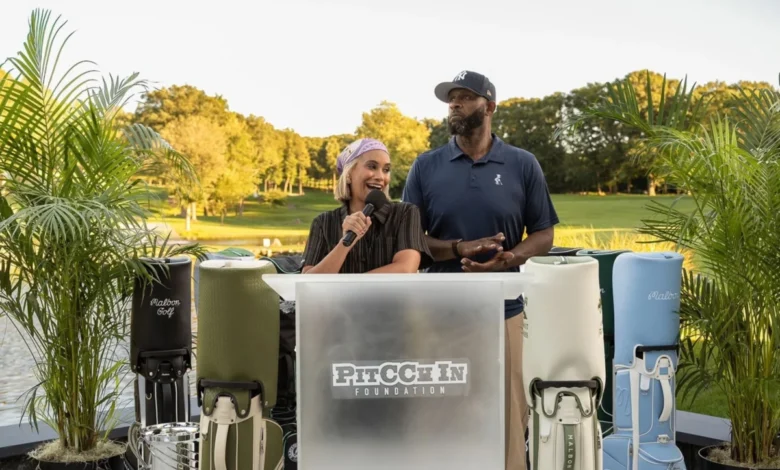
Over the past 16 years, the PitCCh In Foundation has scaled its operations to deliver three primary signature programs designed to equip young people with essential resources for academic and athletic success: the All-Star Baseball Clinic, the Youth Backpack Program, and comprehensive community field renovations. These core initiatives are continually supported by high-profile fundraising endeavors, most notably the annual Sabathia Shootout golf classic, which recently marked its sixth anniversary.
The Celebrity Golf Classic has emerged as a premier networking and fundraising event, seamlessly bridging the worlds of professional sports and entertainment. This year’s iteration drew an elite roster of attendees, including NFL Hall of Famer Michael Strahan, media personality Angie Martinez, former NBA standouts J.R. Smith, Matt Barnes, and Dellin Betances, baseball great Gary Sheffield, and recording artist Ja Rule. While athletic camaraderie and competitive spirit run high on the links—with participants frequently singling out Matt Barnes for his strong showing on the course—CC emphasizes that the true measure of the foundation’s success lies far away from the fairways.
For the Sabathias, the most rewarding aspect of the foundation remains direct, sustained interaction with the youth they serve. From annual holiday distribution caravans to revitalizing community athletic spaces alongside organizations like the Bronx Knights, the ability to witness the long-term personal growth of students from various Boys & Girls Clubs stands as the organization’s greatest achievement.
Transition to the Executive Suite: Amber Sabathia at CAA Sports
While CC’s post-playing days involve media engagements, public appearances, and philanthropic leadership, Amber Sabathia carved out an entirely new professional frontier within the business of sports. In 2021, two years following her husband’s retirement from Major League Baseball, Amber joined CAA Sports as a certified baseball agent, introducing a rare insider perspective to player representation.
Her decades-long proximity to the highest levels of professional athletics provided an invaluable masterclass in the realities of the industry. Having lived through the emotional and logistical turbulence of high-stakes trades, free agency cycles, and contract negotiations, Amber developed an acute understanding of the human element in sports management—a perspective that cannot be replicated in academic textbooks.
Entering the agency space, however, required mastering the rigorous technical mechanics of professional baseball operations. This included navigating complex contract structures, understanding the nuances of the Collective Bargaining Agreement (CBA), and honing strategic negotiation skills. Crucially, Amber quickly recognized that effective representation relies as much on active listening as it does on financial bargaining.
By bridging her lived empathy as a player’s spouse with professional negotiation expertise, she has established a client roster built on mutual trust and unwavering loyalty. In an industry defined by intense competition and transactional relationships, Amber’s client-first philosophy has positioned her as a respected and formidable advocate within the sports agency landscape.
Broader Implications and Legacy
The convergence of CC Sabathia’s jersey retirement ceremony and the ongoing expansion of the PitCCh In Foundation highlights a broader trend among elite professional athletes. Modern sports figures increasingly view retirement not as a conclusion, but as a transitional springboard into sustainable entrepreneurship, corporate executive roles, and institutional philanthropy.
Historically, athletes faced significant post-career challenges regarding identity, financial management, and professional purpose. However, figures like the Sabathias demonstrate how structured early planning, family enterprise integration, and purpose-driven community involvement can mitigate these hurdles. By leveraging personal platform power to institutionalize philanthropic efforts, retired athletes are establishing enduring legacies that transcend box scores and championship rings.
As the Sabathia family navigates this latest chapter, their trajectory offers a blueprint for modern sports transition. Whether through empowering the next generation of students through structured athletic and educational programs or redefining player advocacy in the executive suite, CC and Amber Sabathia continue to shape the sports ecosystem long after the final pitch has been thrown.