Google Ads introduces channel prioritization to grant advertisers greater control over budget allocation

For years, the digital advertising landscape has been defined by the "black box" nature of automated campaign types, most notably Performance Max. Advertisers have long grappled with the rigid, all-or-nothing approach inherent in Google’s ecosystem, where campaign settings often forced ads into a broad array of channels—Search, Discover, Gmail, Maps, YouTube, and the Display Network—without allowing for granular budget steering. This lack of control has frequently been a point of contention for performance marketers seeking to optimize return on ad spend (ROAS) by trimming underperforming placements.
In a significant pivot, Google announced a new feature last month: "channel prioritization." This update represents a shift in how Google manages automated campaigns, allowing advertisers to assign "High" or "Low" priority labels to specific channels. By providing this toggle, Google is offering a middle ground between complete automation and manual exclusion, addressing long-standing complaints from advertisers regarding wasted spend on low-intent or low-conversion traffic sources.
The Evolution of Campaign Control
The history of Google Ads has been a trajectory toward increased automation. In 2021, Google introduced Performance Max (PMax), a goal-based campaign type that utilizes machine learning to serve ads across all of Google’s inventory. While effective for scaling, it stripped away the traditional levers of control that Search Engine Marketing (SEM) professionals relied upon.
Before this latest update, an advertiser running a PMax campaign had to accept that their budget would be distributed by an algorithm that prioritized conversion probability above all else. If an advertiser believed that the Display Network was diluting their results, they had few options beyond excluding specific URLs or limiting their campaign to brand-safe placements. With channel prioritization, the advertiser can now signal to the algorithm that certain channels should be treated as secondary, effectively constraining the percentage of the daily budget allocated to those areas.
Understanding the Mechanism of Prioritization
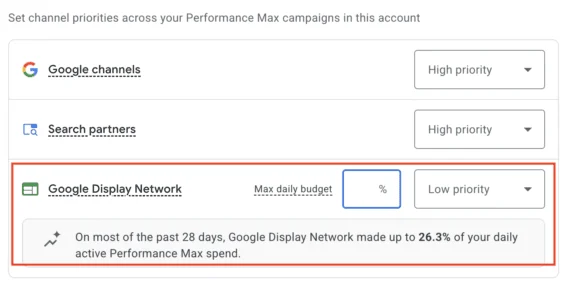
The implementation of channel prioritization is integrated directly into the Google Ads interface under the "Insights and reports" tab. By toggling a channel to "Low," advertisers can define a maximum daily spend percentage. This is a critical departure from previous iterations, where the system’s internal bidding model determined the spend distribution entirely.

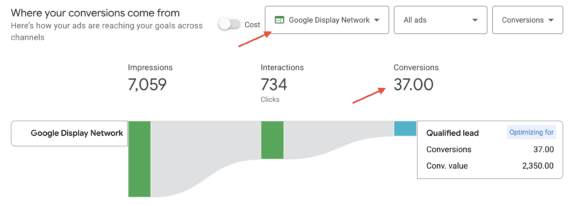
To utilize this effectively, advertisers must cross-reference the priority settings with the platform’s updated channel performance report. For example, if an analysis of a 28-day window shows that a specific channel—such as the Google Display Network—is consuming 26.3% of the total budget but only delivering a disproportionately small percentage of conversions, the advertiser now has the data-backed justification to mark it as "Low priority."
Conversely, if a channel is responsible for 48.1% of conversions while utilizing only 26.3% of the total spend, the system allows for that channel to be categorized as "High priority." This ensures that the algorithm focuses the bulk of the campaign’s financial resources where the actual conversion volume is originating, rather than allowing the model to chase broader, lower-quality reach.
Chronology and Development
The introduction of this feature follows a series of updates to Performance Max and Search campaigns throughout 2025 and 2026.
- Early 2025: Increased pressure from enterprise advertisers for more transparency in automated campaigns led to more granular reporting on channel-level performance.
- Mid-2026: Google began beta testing "Channel Steering," a precursor to the current prioritization feature, among a select group of high-spend accounts.
- Late 2026: The global rollout of "Channel Prioritization" was announced, marking the first time that Google allowed for explicit budget-capping on specific Google-owned properties within a single campaign structure.
This timeline reflects a broader industry shift where large tech platforms are beginning to reconcile their push for AI-driven automation with the demand for human-led strategic oversight.
Analyzing the Impact on Search Partners
One of the most anticipated applications of this feature is within standard Search campaigns, particularly regarding "Search Partners." Historically, Search Partners—a network of third-party websites and platforms that display Google search results—have been viewed with skepticism by some performance marketers.
Critics have often argued that traffic originating from Search Partners is of lower intent than that coming directly from Google.com, leading to higher bounce rates and lower conversion rates. Previously, an advertiser had only two choices: include the partners or exclude them entirely. By moving Search Partners to "Low priority," advertisers can now retain the reach that the network provides while minimizing the financial impact of potentially unqualified clicks. This allows for a "test and learn" approach that was previously impossible without cutting off the channel completely.
Limitations and Structural Constraints
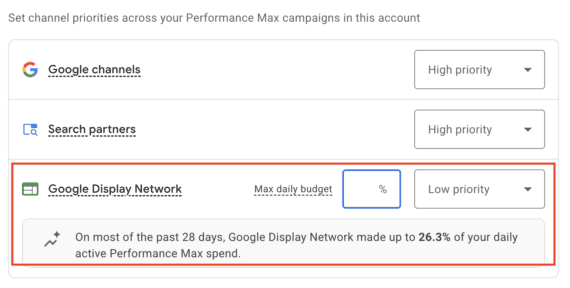
Despite the potential benefits, the update is not without its limitations. The most significant hurdle for advanced marketers is the "Google Channels" grouping. In this classification, Google bundles several disparate platforms—Search, Discover, Gmail, Maps, and YouTube—under one umbrella for priority setting.
This presents a challenge: an advertiser may find that their campaign performs exceptionally well on Google Search but underperforms on Maps. Under the current iteration of the feature, there is no way to set a "High" priority for Search while keeping Maps at "Low." They are effectively tethered to the same setting. This maintains the "all-or-nothing" restriction, albeit on a slightly more granular scale than before.
Industry analysts have noted that this grouping likely serves as a safeguard for Google’s machine learning models. By keeping the priority settings broader, Google ensures that the AI has enough data liquidity to continue optimizing. If advertisers were allowed to isolate every single sub-channel with a unique budget cap, the volatility of the model could potentially increase, leading to a decrease in overall campaign performance.
Broader Implications for Digital Marketing
The introduction of channel prioritization signifies a shift in the philosophy of automated advertising. It recognizes that "full automation" is not a one-size-fits-all solution. As budgets tighten and the demand for proof of performance increases, advertisers are increasingly looking for ways to audit the AI’s decisions.
For small-to-medium businesses (SMBs) with limited campaigns, account-level settings offer a simplified way to manage distribution. For large-scale advertisers, the ability to set priorities at the campaign level allows for highly customized strategies that can align with the specific goals of different product lines or target audiences.
However, the effectiveness of this tool remains to be seen in the coming fiscal quarters. The industry is currently watching to see how strictly the Google Ads algorithm adheres to these "Low priority" spend caps. If the system consistently overrides these settings in favor of its own conversion predictions, the utility of the feature may be diminished.
Strategic Recommendations for Advertisers
For those looking to leverage channel prioritization, the best practice is to start with a data-first audit. Before adjusting any priorities, advertisers should review at least 30 days of channel-level performance data to ensure that their decisions are based on statistically significant patterns rather than short-term anomalies.
- Audit Performance: Identify channels that have a high cost-per-acquisition (CPA) relative to the account average.
- Set Benchmarks: Before toggling a channel to "Low," establish a baseline for total campaign performance.
- Test Incrementally: Change one variable at a time. If an advertiser changes the priority for Search Partners, they should allow two to three weeks for the machine learning model to adjust before making further changes to other channels.
- Monitor Volume: Ensure that by limiting a channel’s priority, the campaign is not losing out on high-intent, low-cost conversions that might have been overlooked in the initial analysis.
Ultimately, while channel prioritization provides more breathing room, it does not replace the need for constant oversight. The feature should be viewed as a tool for fine-tuning, not as a "set-it-and-forget-it" mechanism. As Google continues to refine its automated offerings, the ability to interpret and respond to these new control features will be a defining skill for performance marketers in the coming years.
The introduction of this tool is a clear signal that Google is listening to the feedback of the professional advertising community, moving away from the rigid walls of its earlier AI initiatives. Whether this leads to higher efficiency or simply adds another layer of complexity to campaign management remains a subject of ongoing debate, but for the time being, it offers a much-needed lever for those aiming to reclaim control over their advertising budgets.
Related posts: