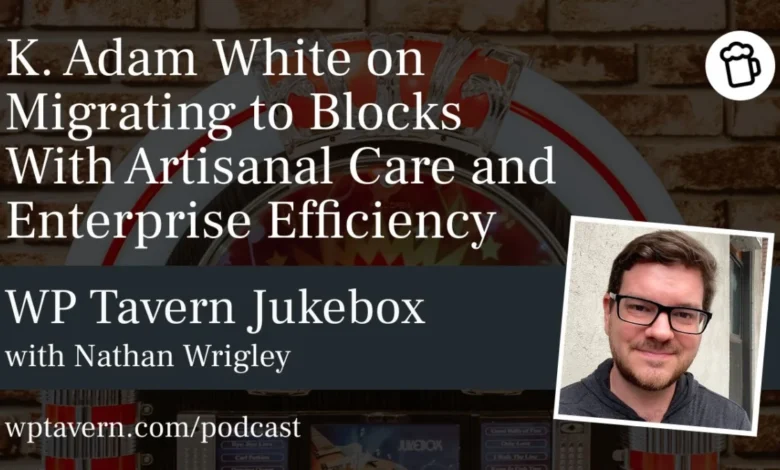
The landscape of enterprise content management is undergoing a significant shift as large-scale organizations increasingly pivot toward the WordPress block editor. At the recent WordCamp US, K. Adam White, Principal Engineer at the enterprise WordPress consultancy Human Made, presented a technical deep dive into the complexities of migrating hundreds of thousands of posts from proprietary CMS platforms like Sitecore into the modern WordPress Gutenberg ecosystem. The discussion underscored a critical tension in current web development: the need to maintain rigorous brand fidelity and visual consistency while scaling content migration workflows to accommodate massive archives.
The Evolution of Enterprise WordPress Migrations
For nearly two decades, WordPress has evolved from a simple blogging tool into a robust enterprise-grade content management system. However, the transition to the block editor, which began with the introduction of the Gutenberg plugin in 2017, represented a fundamental change in how content is structured. Unlike legacy CMS architectures that often rely on static HTML templates or rigid database schemas, WordPress now utilizes a block-based architecture that treats individual content elements—paragraphs, images, columns, and media—as modular units.
For enterprise clients, this shift offers unparalleled flexibility, allowing editorial teams to compose complex layouts without deep technical intervention. Yet, the migration path for organizations with deep content archives remains fraught with technical challenges. Moving tens or hundreds of thousands of existing posts requires more than simple data mapping; it demands a process that preserves the original layout, styling, and structural integrity of the content while translating it into a format that the modern block editor can natively interpret.
Technical Challenges in Large-Scale Content Auditing
The primary obstacle in migrating from systems such as Sitecore or proprietary page builders is the disparity between legacy content structures and the block-based model. In many traditional enterprise systems, page layouts are governed by complex relational databases that separate content from presentation. Replicating this in WordPress requires an audit-first approach.
White emphasized that simple automated scripts are insufficient for high-stakes migrations. Instead, the process necessitates an "artisanal" approach to data auditing. By leveraging advanced language models and custom Node.js scripts, developers can now analyze massive datasets to identify edge cases that were previously obscured by the volume of content. This includes identifying specific layout patterns—such as FAQ accordions, hero sections, or complex media embeds—that require unique translation logic. By mapping these patterns to specific WordPress block configurations, agencies can ensure that the migration does not result in the loss of visual fidelity.
Automation and the Role of Modern Tooling
To bridge the gap between artisanal precision and industrial scale, Human Made has pioneered new migration workflows, including the development of internal tools like "Rehydrator." This tool functions by leveraging existing theme patterns as templates during the migration process. Rather than attempting to force raw legacy data into generic containers, the system injects content directly into pre-defined, brand-compliant block structures.
The emergence of AI-powered agents has further accelerated these workflows. These tools are currently being utilized to perform cross-site audits, helping developers identify anomalies in content structure across thousands of pages. According to industry observations, the ability to rapidly validate migrations—often by processing entire content types in a single pass—has reduced the time-to-market for complex enterprise migrations from months to weeks.
The Human-Editorial Interface
A recurring theme in the discourse surrounding Gutenberg is the learning curve for editorial teams. Transitioning from a system where layouts were strictly enforced by IT departments to one where editors have more autonomy requires a balanced approach to permissions. While WordPress provides robust content management capabilities, enterprise environments often require stricter guardrails.
To manage this, consultancies are increasingly implementing "partially synced patterns" and custom interface restrictions. By limiting the options available to editors—such as disabling custom color pickers or restricting access to advanced layout controls—organizations can maintain brand consistency. This allows editors to focus on content creation while the underlying theme.json configurations enforce the design system. As White noted, the goal is not to impose draconian control, but to provide an environment where editorial teams can operate efficiently without the risk of accidentally breaking site-wide design guidelines.
Addressing Gaps in the WordPress Ecosystem
Despite the progress made in the block editor, professional stakeholders in the enterprise sector point to specific, persistent gaps. Granular content permissions—specifically the ability to restrict editing access to individual blocks within a post—remain a primary concern. Current WordPress capabilities are largely binary, operating at the post or user-role level rather than the component level.
Furthermore, there is a clear demand for more mature editorial workflow solutions. While various third-party plugins exist to manage content moderation and publication scheduling, there is a growing consensus among developers that these features should be more firmly integrated into the WordPress core. The need for a standardized approach to content staging, review cycles, and internationalization is critical for the continued adoption of WordPress as a direct competitor to traditional, highly-structured enterprise platforms.
Strategic Implications for the Future of CMS
The implications of this shift are significant. As organizations prioritize future-proof, open-source technology, the capacity to migrate seamlessly to WordPress becomes a competitive advantage. The focus has moved away from merely "lifting and shifting" content to building sustainable, block-driven architectures that can evolve alongside design trends.
For the wider WordPress community, the focus on pattern-driven development suggests a move toward standardization. By composing sites from reusable, modular patterns, developers can avoid the bloat associated with bespoke blocks, relying instead on the stability of the core block library. This methodology not only improves the longevity of a site but also makes it significantly easier for future development teams to manage and scale the platform.
Conclusion: The Path Forward
The successful migration of an enterprise-level site to WordPress is no longer a matter of technical impossibility, but one of strategic execution. The combination of automated auditing, AI-assisted pattern mapping, and a rigorous approach to editorial training has paved the way for larger, more complex organizations to embrace the flexibility of the block editor.
While challenges remain—particularly regarding granular user permissions and native editorial workflows—the industry is responding with sophisticated, albeit sometimes bespoke, solutions. As these tools continue to mature and potentially influence the future development of the WordPress core, the barrier to entry for enterprise organizations looking to modernize their digital presence will likely continue to diminish. The focus for developers, therefore, must remain on maintaining the delicate balance between the industrial requirement for scale and the artisanal demand for precision, ensuring that the final output serves both the editorial team and the end-user with equal efficacy.
Related posts: