Manhattan District Attorney Seizes Dozen Domains in Landmark Crackdown on Nonconsensual Deepfake Pornography Websites

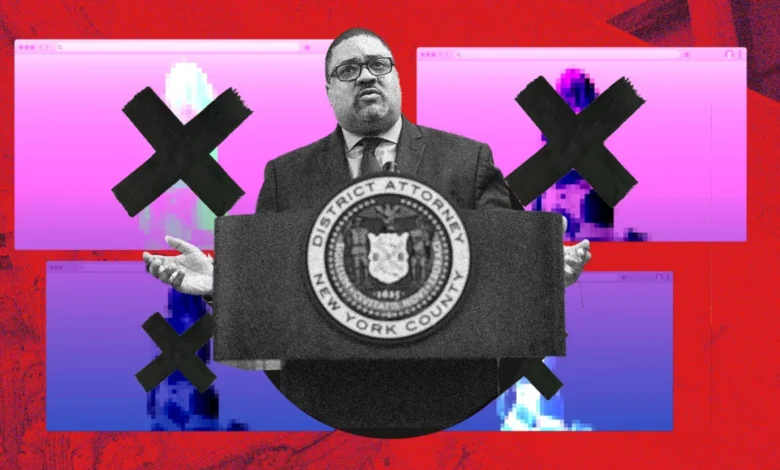
In a decisive escalation against the proliferation of synthetic nonconsensual intimate imagery (NCII), the Manhattan District Attorney’s Office announced this week the successful seizure of 12 web domains that had served as hubs for the unlawful distribution, marketing, and monetization of deepfake pornography. The operation represents one of the most significant legal interventions against the shadow industry of AI-generated sexual content since the emergence of the technology in late 2017. These websites, which have operated with varying degrees of anonymity for years, were utilized to host and trade in explicit videos featuring the likenesses of approximately 1,200 individuals, a demographic overwhelmingly comprised of women, including high-profile celebrities, activists, athletes, musicians, and elected political figures.
The seizure, executed under the authority of New York State’s criminal procedure laws and backed by warrants issued through the New York State Supreme Court, signals a shift from reactive content moderation to proactive, infrastructure-level disruption. By targeting the domain names themselves, authorities have effectively rendered these specific platforms unreachable, even for users employing VPNs to circumvent geographic restrictions. This coordinated strike underscores a growing determination among law enforcement agencies to dismantle the technical backbone of a digital ecosystem that has long prioritized profit over the privacy and safety of its victims.
A Chronology of Escalating Harm
The rise of deepfake pornography has been marked by a rapid evolution in both technical accessibility and societal impact. When the technology first surfaced in late 2017, the creation of synthetic sexual media required significant computing power and specialized technical knowledge. By 2019, the barrier to entry had lowered significantly, as automated "nudify" bots and user-friendly software enabled individuals with little technical expertise to generate hyper-realistic, nonconsensual imagery in a matter of seconds.
Throughout the subsequent years, researchers identified a "dark industry" of interconnected websites, social media groups, and telegram channels dedicated to the mass production of NCII. The websites targeted by the Manhattan District Attorney were part of a sophisticated, if illicit, economy. Many of these platforms functioned as repositories, reposting content that originated on more notorious forums, such as the now-defunct MrDeepFakes. The lifecycle of these images often began on fringe platforms, migrated to larger hosting sites for monetization through advertising and affiliate links, and were subsequently distributed across private social media groups, effectively ensuring the content remained persistent and difficult to purge from the internet.
Data-Driven Analysis of the Threat Landscape
The scale of the abuse is substantial. According to findings shared by the American Sunlight Project, a nonprofit organization that monitors digital harms, the 12 seized domains were not merely random collections of imagery but organized catalogs. Some platforms featured individual profiles for public figures, complete with their names, titles, and grids of manipulated videos.
Recent documentation indicates the breadth of the target pool: researchers have identified at least 56 European politicians, 16 US politicians, and two UK-based officials among those whose likenesses were exploited. The impact on these individuals is not merely reputational; it represents a systemic attempt to silence and harass women in the public eye. For many victims, the emotional toll is compounded by the professional repercussions, as deepfakes can interfere with career trajectories and personal security.
The economic model underpinning these sites is also significant. Many of these domains were heavily trafficked, with archived data suggesting millions of views across the entire network. Some sites claimed to have been active since 2018, indicating a long-term commercialization of sexual violence. By swapping the faces of celebrities into existing pornographic material, operators could generate high-engagement content with minimal overhead, leveraging the fame of the victims to drive traffic and ad revenue.
Official Responses and the Legal Framework
Manhattan District Attorney Alvin Bragg addressed the gravity of the situation in his formal statement, emphasizing that these violations transcend the digital realm, inflicting lasting trauma on victims. "These horrific violations of privacy follow victims into their careers and personal lives and take an immense toll on emotional and mental well-being," Bragg stated. He further encouraged victims to reach out to his office’s cybercrime bureau, noting that investigations remain active regarding both the operators of these platforms and the individuals who uploaded the malicious content.
The legal mechanism for this takedown relies on an increasingly robust, albeit still evolving, legislative landscape. The US Take It Down Act and similar state-level statutes have provided law enforcement with clearer mandates to seek the removal of deepfake content and the seizure of the hosting infrastructure. While critics have long argued that regulation has failed to keep pace with the velocity of AI development, the Manhattan DA’s action suggests that existing laws regarding the unlawful sharing of intimate images can be applied to domain-level enforcement when the intent is clearly malicious and exploitative.
Broader Implications for the Digital Ecosystem
The success of the Manhattan seizure raises critical questions about the future of platform accountability. Leonie Oehmig, a researcher at the Institute for Strategic Dialogue (ISD), views the action as a pivotal victory, noting that it proves coordinated enforcement is achievable despite the fragmented nature of international digital regulation. However, experts warn that seizing domains is only one aspect of a much larger puzzle.
"Effective intervention needs to target the ecosystem at multiple points," says Oehmig. A comprehensive strategy must address several key areas:
- Creation Tools: Addressing the software and AI models designed explicitly for "undressing" photos or generating NCII.
- Promotion and Discovery: Curbing the role of social media and search engines in the visibility of these sites.
- Infrastructure: Holding domain registrars and web hosting companies accountable for the content they facilitate.
- Monetization: Cutting off the financial lifelines, including advertising networks and payment processors that allow these sites to profit from nonconsensual abuse.
The role of technology companies also remains under intense scrutiny. While major platforms have implemented policies to prohibit the sharing of deepfake imagery, the speed at which such content can be generated and re-uploaded poses a constant challenge. The legal pressure being exerted by the Manhattan DA’s office adds a layer of accountability that may force hosting services and infrastructure providers to implement more stringent vetting processes for the domains they service.
The Path Forward
As the investigation continues, the focus will likely shift to identifying the individuals behind the operation of these websites. The legal complexity of tracing the owners of domains—who often hide behind layers of shell companies, proxy services, and offshore registrations—remains a significant hurdle. Nevertheless, the public seizure of these domains serves as a clear warning to those who facilitate the creation and distribution of synthetic NCII.
The case also highlights the urgent need for a more unified approach to digital safety. While celebrities have the resources to push for the removal of content, the vast majority of victims—including private citizens, minors, and those in lower-profile roles—often lack the support or knowledge to effectively scrub their likenesses from the internet. The "Take It Down" movement is gaining momentum, and legislative efforts in the United States and abroad are increasingly focusing on the rights of individuals to control their digital likeness.
Ultimately, the seizure of these 12 domains serves as a landmark event in the ongoing struggle for bodily autonomy in the digital age. By moving against the infrastructure of exploitation, the Manhattan District Attorney’s Office has demonstrated that while the technology used to commit these acts is decentralized and borderless, the enforcement of law can still be targeted, meaningful, and effective. The precedent set by this operation will likely inform future legal strategies, as authorities seek to balance the rapid growth of generative AI with the fundamental necessity of protecting human rights and dignity in an increasingly synthetic world.