Earth just experienced its hottest month ever recorded as a summer of climate extremes concludes with a warning for the future.

The global climate system has reached a harrowing new milestone, with August 2026 officially confirmed as the hottest month in recorded history. This record does not stand in isolation; it serves as the brutal culmination of a summer defined by relentless heatwaves, record-shattering oceanic temperatures, and an intensifying El Niño event that is fundamentally altering weather patterns across every continent. Data released by the European Union’s Copernicus Climate Change Service confirms that the planet’s average temperature for the month climbed to 1.65 degrees Celsius above preindustrial levels, a figure that underscores the accelerating pace of anthropogenic global warming.
A Chronology of Escalating Heat
The recent climate data paints a portrait of a planet under significant thermal stress. The trajectory toward these record-breaking figures has been building for years, but the 2026 season represents a distinct shift in intensity.
June 2026 began the trend by securing its place as the second-hottest June ever documented. By July, the momentum had surged, with the month tying with July 2024 for the second-hottest July on record, falling just short of the peaks observed in 2023. August then acted as the apex of this seasonal surge, tying with July 2023 to claim the title of the single hottest month since modern record-keeping began in the mid-19th century.
In the United States, the National Oceanic and Atmospheric Administration (NOAA) corroborated this grim timeline, announcing that the 2026 summer season was the hottest on record for the nation. This exceeds the thermal benchmarks set during the Dust Bowl era of the 1930s, a period long cited as the baseline for extreme North American heat. The consistency of these records—spanning multiple months and continents—suggests that the warming is no longer a localized anomaly but a systemic shift in the global baseline.
The Convergence of Climate Change and El Niño
While the burning of fossil fuels remains the primary driver of long-term global warming, the current atmospheric conditions are being exacerbated by a powerful, strengthening El Niño event. This natural climate pattern, characterized by the warming of surface waters in the eastern Pacific Ocean, typically adds an extra 0.1 to 0.2 degrees Celsius to global average temperatures.
Climate scientists have noted that this year’s El Niño is forecasted to reach a level of strength that could further destabilize weather systems well into 2027. The lag between the onset of an El Niño and its full expression in global temperature averages suggests that the heat witnessed this summer may be merely a precursor to what is to come. Meteorological models indicate that the peak impact of this cycle will likely be felt next year, meaning the 2027 summer could potentially surpass the records set during this current, record-breaking season.
Human and Ecological Toll
The consequences of these rising temperatures have moved beyond statistical abstractions, manifesting in tangible, often lethal, impacts on human populations and natural ecosystems. In Europe, the heat was not merely uncomfortable; it was catastrophic. Preliminary health data suggests that as many as 35,000 excess deaths occurred across Germany, France, and Spain due to back-to-back, prolonged heatwaves.
These high temperatures have also acted as a force multiplier for wildfire activity. In France, researchers documented the emergence of a "pyrocumulonimbus" cloud—a massive, self-generating thunderstorm produced by the intensity of a wildfire—marking a disturbing new development in European fire behavior. In Spain, the situation grew so dire that a critical NASA deep-space observatory was directly threatened by advancing flames, forcing emergency mitigation measures.
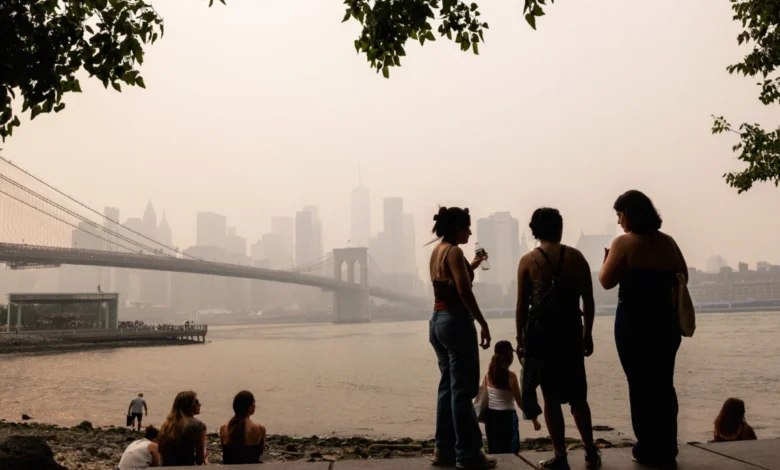
In North America, the ecological and health impacts were similarly severe. Smoke from intense, prolonged wildfires in Canada and the northern United States descended upon the densely populated Northeast, blanketing cities in hazardous air quality and forcing millions to remain indoors. The combination of fire, drought, and extreme heat has placed an unprecedented strain on agricultural systems, power grids, and emergency response infrastructure.

Scientific Analysis: The 1.5-Degree Benchmark
The Paris Agreement’s goal of limiting long-term average warming to 1.5 degrees Celsius above preindustrial levels remains the primary focus of international climate policy. While the record-breaking heat of August 2026 does not constitute a permanent breach of this threshold—which is measured over decades rather than single months—it serves as an urgent warning that the world is rapidly approaching this dangerous tipping point.
According to recent reports from the United Nations, the likelihood of temporarily crossing the 1.5-degree threshold within the next few years has increased significantly. Samantha Burgess, strategic lead for climate at the European Center for Medium-Range Weather Forecasts, emphasized the gravity of the situation in a recent statement: "August 2026 was a remarkable month in the global climate record. Combined with record global sea surface temperatures and the warmest summer on record for Western Europe, these observations show how climate change is driving extremes across both the atmosphere and the oceans."
The implications are clear: the planet is entering a phase of climate volatility that makes extreme events more frequent, more intense, and more difficult to predict. The oceans, which have historically acted as a heat sink, are now exhibiting record-breaking surface temperatures, further reducing their ability to buffer the planet against the worst effects of greenhouse gas emissions.
Global Responses and Calls for Ambition
The international community has responded with growing alarm. UN Secretary-General António Guterres has been vocal in his assessment of the summer’s events, framing them as a systemic failure to curb emissions. "This summer’s scorching heat, raging wildfires, and deadly floods are a warning of what lies ahead," Guterres stated. He argued that the world must now focus on making any potential overshoot of the 1.5-degree target as short-lived as possible, calling for an "overshoot of ambition" in transitioning away from fossil fuels.
Economic analysts are also beginning to factor these climate shifts into their long-term forecasts. With the increasing cost of climate-related disasters—ranging from destroyed infrastructure to productivity losses caused by extreme heat—there is mounting pressure on governments to accelerate the decarbonization of their economies.
The data from this summer reinforces a consensus among the scientific community: the climate is not merely changing, but accelerating. The heat records of 2026 are likely to be viewed as a pivotal moment in the history of global climate policy, a period when the theoretical risks of global warming translated into undeniable, widespread reality.
Moving Forward: The Need for Adaptation and Mitigation
As the Northern Hemisphere transitions into autumn, the focus shifts toward the long-term implications of these heat trends. Adaptation strategies, such as building heat-resilient urban infrastructure, reforming agricultural practices to withstand extreme drought, and upgrading power grids to handle the surge in cooling demand, are becoming essential requirements for national security and public health.
However, mitigation remains the only path to preventing the most catastrophic climate scenarios. The requirement to halt the burning of fossil fuels and drastically lower carbon emissions is no longer a distant goal but a present-day necessity. The window to maintain a stable climate is narrowing, and as the 2026 records illustrate, the margin for error is shrinking with every passing month.
The scientific consensus is unequivocal: the planet is currently on a trajectory toward a hotter, more unstable future. Whether the international community can rise to meet the challenge of this "overshoot of ambition" will define the climate reality for future generations. For now, the records set in August serve as both a historical marker and a final, clear warning that the era of climate stability has ended, replaced by a new, more volatile chapter in Earth’s geological history.