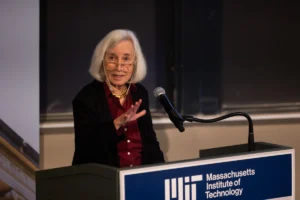
MIT Center for Real Estate Appoints Walter Torous as Executive Director and Shapes New Strategic Era for Urban Development and Finance


The Massachusetts Institute of Technology has officially announced a significant leadership transition within the MIT Center for Real Estate (CRE). Walter Torous, a distinguished senior lecturer bridging the MIT Department of Urban Studies and Planning (DUSP) and the MIT Sloan School of Management, has been named the incoming executive director of the CRE, effective July 1, 2026. This appointment marks a pivotal moment for the globally recognized institution as it prepares to navigate an increasingly complex era defined by digital disruption, macroeconomic volatility, and profound shifts in global urbanization.
Alongside Torous’s appointment, Hashim Sarkis, dean of the MIT School of Architecture and Planning, announced that Justin Steil, a noted professor of law and urban planning, will step into the role of faculty chair of the Academic Curriculum Council, representing the CRE. Together, Torous and Steil are expected to spearhead a comprehensive modernization of the center’s pedagogical framework, aligning academic rigor with the fast-evolving demands of the international real estate sector.
The leadership restructuring comes at the conclusion of the tenure of STL Champion Professor Siqi Zheng, who served as the CRE faculty director from July 2020 through June 2026, guiding the institution through the unprecedented disruptions of the global pandemic and the subsequent transformation of urban environments.
Navigating Structural Shifts in Global Real Estate
The appointment of Torous reflects a deliberate pivot toward deep financial and technological fluency within MIT’s real estate leadership. Real estate markets across the United States, Europe, and Asia are currently grappling with structural transformations that challenge traditional valuation models, asset management strategies, and architectural designs.
In the residential sector, demographic shifts—chiefly an aging global population that is choosing to age in place—have created systemic supply imbalances and affordability pressures. Simultaneously, the commercial real estate landscape is undergoing its most volatile period in decades. The widespread adoption of hybrid work models, lingering post-pandemic vacancies, evolving retail consumption habits driven by e-commerce, and stricter environmental regulations are collectively buffeting conventional office and retail assets.
"We’re in a period of turmoil, and I view the center’s role as being primarily to educate the next generation of leaders, especially in technology and financial markets, which are becoming ever more important to the functioning of real estate assets and markets," Torous stated following his appointment. He emphasized that future professionals must be exceptionally facile with emerging technologies to insulate themselves from cyclical market shocks and to serve as responsible, visionary stewards of the built environment.
Leadership Structure and Collaborative Strategic Vision
In his expanded capacity as executive director, Torous will retain his ongoing leadership of the Master of Science in Real Estate Development (MSRED) program. His operational remit will encompass the direct oversight of the center’s teaching portfolio, corporate consortium activities, major public events, fundraising initiatives, budget allocation, and overarching strategic planning.
Dean Sarkis underscored the unique institutional identity that these leadership changes aim to reinforce. "Together, Walter and Justin will guide CRE’s academic and strategic direction as it continues to strengthen its role within our school and the Institute," Sarkis noted. "Their appointments reflect the center’s distinctive position at the intersection of finance, design, planning, technology, and public policy—and its long-standing commitment to understanding real estate not only as a market force, but also as a driver of urban transformation and social change."
Working closely with Steil, Torous aims to break down traditional academic silos. The proposed strategy involves expanding the MSRED curriculum well beyond the boundaries of DUSP, integrating specialized coursework from the MIT School of Architecture and Planning, the Department of Civil and Environmental Engineering, the MIT Media Lab, and the MIT Sloan School of Management. This cross-disciplinary approach is designed to ensure that graduates possess a holistic understanding of how physical design, data analytics, financial engineering, and public policy intersect in modern real estate development.
Academic Background and Distinguished Pedigree
Walter Torous brings a wealth of institutional and academic experience to his new role. Prior to his arrival at MIT in 2013, Torous served as a professor at the Anderson School of Management at the University of California at Los Angeles (UCLA). During his tenure at UCLA, he distinguished himself as the founding director of the prestigious Ziman Center for Real Estate, establishing a benchmark for academic-industry collaboration. His academic CV also features prominent faculty appointments at the University of Michigan and the London Business School.
Since joining the MIT faculty, Torous has played an instrumental role in shaping the MSRED program, imparting foundational knowledge in real estate finance, capital markets, and mortgage securitization to successive cohorts of graduate students. Dean Sarkis lauded this contribution, noting that Torous has fundamentally shaped how generations of practitioners view the financial mechanics underpinning property markets.
Chronology of Leadership and Institutional Evolution
The MIT Center for Real Estate has maintained a 43-year history of educating graduate students and fostering industry leadership. The timeline of its recent leadership reflects a steady evolution toward integrating advanced data science and economic analysis into urban planning:
- 1983–2020: The CRE establishes itself as a global authority in real estate education, bridging urban planning and business management through its flagship MSRED program.
- July 2020: STL Champion Professor Siqi Zheng assumes the role of CRE faculty director, steering the center through the complex market disruptions and shifting urban paradigms brought on by the Covid-19 pandemic.
- 2013–Present: Walter Torous joins MIT, directing the MSRED program and focusing his empirical research on mortgage default mechanisms, financial distress, and the integration of machine learning into real estate analytics.
- June 2026: Siqi Zheng concludes her successful six-year tenure as faculty director.
- July 1, 2026: Walter Torous officially assumes the position of executive director of the MIT Center for Real Estate, with Professor Justin Steil taking on the role of faculty chair of the Academic Curriculum Council.
Cutting-Edge Research and the Integration of Artificial Intelligence
An economist by training, Torous is widely recognized for his rigorous empirical studies of financial derivatives, mortgage-backed securities, and corporate debt restructuring. His recent scholarly inquiries have increasingly focused on the intersection of advanced technology and market behavior.
In the wake of the pandemic, Torous has utilized machine learning algorithms to investigate the structural evolution of the U.S. commercial office market. By analyzing vast datasets concerning occupancy rates, lease structures, and urban mobility, his research aims to provide developers and institutional investors with actionable insights into the viability of modern office assets.
This empirical focus mirrors a broader institutional push to embed artificial intelligence and large language models (LLMs) into the daily practice of real estate decision-making. Recognizing that predictive analytics and automated valuation models are fundamentally altering underwriting and asset management, the MSRED curriculum has recently introduced specialized coursework exploring the applications of AI in real estate. Under the joint leadership of Torous and Steil, the center plans to expand these technology-focused offerings significantly.
Leveraging a Global Alumni Network
Another cornerstone of Torous’s strategic vision for the CRE involves deepening engagement with the center’s extensive alumni community. Over its four-decade history, the CRE has graduated more than 1,200 professionals who currently occupy senior leadership positions across global real estate investment firms, development corporations, financial institutions, and public agencies.
"A lot of our alums have assumed important positions in the real estate industry around the world," Torous observed. "In terms of training the next generation of real estate leaders, there’s a lot that we can learn from the industry leaders we’ve already produced."
By creating structured mentorship pipelines, continuing education modules, and collaborative industry forums, Torous intends to harness this global network to keep the curriculum responsive to real-time market realities. This active feedback loop between academia and private enterprise is intended to ensure that MIT graduates remain at the forefront of industry innovation.
Broader Implications for the Real Estate Sector
The leadership transition at the MIT Center for Real Estate arrives at a critical juncture for the global economy. As central banks navigate complex interest rate environments and institutional investors re-weight portfolios in response to climate risk and demographic shifts, the demand for sophisticated, adaptable real estate professionals has never been higher.
By placing an expert in financial economics and mortgage markets at the helm, alongside a legal and urban planning scholar like Justin Steil, MIT is signaling that the future of real estate education cannot rely on traditional silos. The success of future development projects will depend entirely on professionals who can seamlessly integrate financial acumen, technological capability, regulatory compliance, and environmental stewardship.
Through this refreshed leadership team and an aggressively modernized curriculum, the MIT Center for Real Estate aims to solidify its status as the premier global incubator for the next generation of urban innovators, policy-makers, and market leaders.
Related posts: