Why Marketing Metrics Must Shift From Activity to Financial Accountability in the Age of AI

The modern corporate landscape demands that marketing organizations transition from vanity metrics to hard financial accountability, a transformation made even more urgent by the rise of artificial intelligence in search and advertising ecosystems. During a recent strategic consulting engagement for a multinational corporation operating across 75 countries, analysts uncovered a pervasive industry blind spot: the reliance on superficial key performance indicators (KPIs) such as "Cost Per Session" and basic impressions. For decades, marketing analytics has struggled with an overemphasis on top-of-funnel activity rather than bottom-line profitability. However, as ad-tech platforms automate spending and search engines pivot toward generative AI interfaces, corporations that fail to measure true business impact risk subsidizing digital platforms at the expense of their own margins.
The Evolution of Marketing Metrics: From Activity to Accountability
Historically, corporate marketing departments have operated under a distinct separation of powers from the financial office. Chief Marketing Officers (CMOs) build visionary campaigns designed for brand awareness and customer acquisition, while Chief Financial Officers (CFOs) evaluate expenditures based on strict return criteria. This disconnect has historically allowed marketing teams to report high activity volumes—measured in clicks, views, and traffic sessions—without demonstrating equivalent value to the balance sheet.
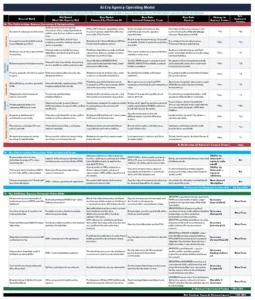
To bridge this divide, modern enterprise analytics requires a three-tier evaluation framework: Activity, Outcomes, and Accountability. While standard reporting frequently stops at the activity level, celebrating spikes in traffic or response rates driven by automated ad tools like Google Advantage+, financially sophisticated organizations push deeper into outcomes, measuring revenue, order volume, and conversion rates. Yet, true alignment with the C-suite demands accountability, which factors in campaign costs and the cost of goods sold (COGS) to calculate genuine profitability.
A Comparative Case Study in Digital Advertising Performance
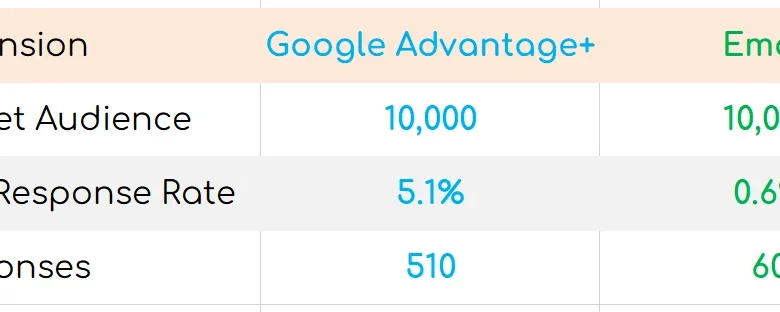
An empirical examination of corporate multi-channel campaigns illustrates the stark contrast between activity-based metrics and accountability frameworks. In a comparative evaluation of Google Advantage+ AI-powered campaigns versus targeted email marketing, the initial activity view heavily favored the programmatic ad platform, which generated 173 orders and $17,000 in revenue compared to email’s 14 orders.
However, introducing financial inputs—specifically campaign costs and COGS—completely reverses the performance hierarchy. When evaluated using Return on Ad Spend (ROAS), Google Advantage+ registered a modest 2.4, while email achieved a remarkable 9.6. When moving further down the accountability spectrum to calculate Profit on Investment (POI)—subtracting campaign costs and goods sold directly from generated revenue—the disparity became critical.
The data revealed that the automated Google campaign yielded a negative profit return, returning only $0.70 in profit for every dollar spent. Conversely, the email marketing channel delivered a profit of $5.70 for every dollar invested. This divergence demonstrates that high-revenue generation through programmatic channels can actively erode corporate margins if underlying acquisition costs and inventory expenses are ignored.
Strategic Interventions for Underperforming Ad Spend
Faced with negative profit returns on major advertising platforms, enterprise marketing leaders face difficult decisions regarding budget allocation. Industry analysts recommend a structured intervention rather than a permanent abandonment of programmatic channels.
Step one involves an immediate, temporary pause on underperforming platform spend to signal the necessity of margin recovery. Step two requires challenging internal media teams, external agencies, and platform representatives to restructure campaigns around profitable outcomes rather than traffic volume. Step three implements a refined strategy analyzing available consumer intent, creative alignment, and the optimized deployment of AI features. Finally, budget scaling should resume incrementally only when campaigns demonstrate consistent, positive Profit on Investment (POI).
The Obsolescence of Cost Per Session and the Impact of AI Search
Beyond programmatic display advertising, foundational web analytics metrics are undergoing rigorous re-evaluation. The reliance on "Cost Per Session" as a primary success indicator has been widely criticized by senior data architects as a metric that incentivizes low-value, high-churn traffic. In the case study analyzed, a $14 Cost Per Session derived from programmatic traffic proved deceptive once bounce rates were factored into the equation. By filtering out non-productive sessions where users immediately abandoned the site, the adjusted "Cost Per Non-Bounced Session" rose to $27, providing a more realistic baseline for campaign evaluation.
This operational shift is further accelerated by structural changes in search engines. With the proliferation of generative AI search experiences—such as AI Overviews and conversational search interfaces—search engine optimization guidance now emphasizes the qualitative value of visits over sheer volume. Major search providers have explicitly noted that traffic originating from AI-driven search results tends to exhibit higher engagement and longer on-site durations, as users arrive with deeper context. Consequently, digital strategists are advised to abandon superficial metrics that reward high-volume, low-intent traffic and instead align measurement models with downstream business conversions.
Conclusion and Future Outlook for Marketing Professionals
The imperative for modern marketing analytics is clear: survival and career resilience in an AI-driven economy require a steadfast commitment to financial accountability over mere activity. By aligning marketing metrics with the rigorous standards of the corporate finance office, organizations can protect budgets, eliminate unprofitable ad spend, and secure long-term strategic growth. As automation reshapes both paid advertising and organic discovery, professionals who master the transition from traffic generation to verified business profitability will define the next generation of corporate leadership.