Embracing Modern PHP: A Crucial Imperative for WordPress Security and Performance

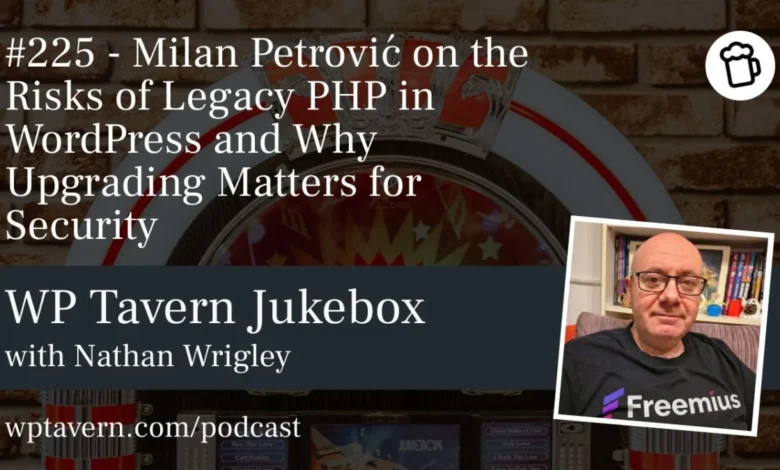
The critical need for WordPress websites to migrate to modern PHP versions, particularly PHP 8.x, was a central theme at WordCamp Europe, highlighted in a compelling discussion on the Jukebox Podcast from WP Tavern. Hosted by Nathan Wrigley, the episode featured Milan Petrović, a seasoned full-stack developer at Freemius, who underscored the severe security risks and substantial performance benefits associated with upgrading from legacy PHP environments. His insights, drawn from nearly two decades of experience within the WordPress and PHP ecosystems, reveal a pressing call to action for developers, hosting providers, and end-users alike.
Petrović’s presentation at WordCamp Europe, titled "Secure by Design: Hardening Plugins with PHP 8.x," served as the bedrock for the podcast discussion. WordCamp Europe, one of the largest annual gatherings for the global WordPress community, provides a vital platform for addressing key technological advancements and challenges facing the platform. Against this backdrop, Petrović’s message resonated with a diverse audience, from core contributors and agency owners to individual site administrators, emphasizing that continued reliance on outdated PHP versions is not merely a bad habit but an "active invitation for automated exploitation."
The Looming Threat of Legacy PHP
A significant portion of the conversation focused on the inherent dangers of operating WordPress sites on unsupported PHP versions. Petrović revealed alarming statistics, noting that PHP 7 and PHP 5, still widely used by millions of WordPress websites, harbor between 3,000 and 4,000 confirmed, open bugs that will never be patched. These vulnerabilities are publicly documented, making them readily accessible to malicious actors and prime targets for automated exploitation. The implication is stark: websites running on these versions are exposed to known security flaws at the PHP language level, irrespective of the WordPress installation itself.
PHP 7.4, for instance, reached its official End-of-Life (EOL) in November 2022, meaning it no longer receives security updates or bug fixes from the PHP development team. Similarly, PHP 5.6, an even older version, ceased active support in December 2018. Despite these clear EOL designations, official WordPress statistics indicate that a substantial segment of the WordPress ecosystem continues to operate on these vulnerable versions. As of recent tracking, approximately 20% of WordPress sites still run on PHP 7.4, with a small but concerning percentage remaining on PHP 5.x. This creates an expansive "attack surface" that poses a significant threat to the integrity and security of the entire WordPress network.
Petrović likened the situation to owning a bicycle that, while seemingly functional, is prone to rust and flat tires if not regularly maintained. Just as physical assets require upkeep, digital assets like websites demand continuous updates to remain secure and efficient. The "set it and forget it" mentality, prevalent among some non-technical users who view their websites as static commodities, directly contributes to this problem.
Performance and Efficiency: Beyond Security
While security concerns form the core of Petrović’s argument, he also highlighted the substantial performance and efficiency gains offered by modern PHP versions. Each new PHP release brings incremental improvements, typically yielding a 5-10% performance boost without any code changes. This cumulative effect is profound: PHP 8.x, particularly versions like 8.2 or 8.3, can be more than 50% faster than PHP 7.4.
Beyond speed, modern PHP versions significantly reduce memory consumption. Petrović presented a compelling demonstration, showing how the same piece of code could utilize almost half the memory on PHP 8.x compared to older versions. This efficiency translates directly into tangible benefits for hosting companies, enabling them to serve more websites with the same server resources, reduce operational costs, and improve overall service quality. For individual site owners, it means faster loading times, a better user experience, and improved SEO rankings. The argument is simple yet powerful: modern PHP offers enhanced security, superior performance, and greater resource efficiency – a compelling trifecta that should drive widespread adoption.
The WordPress Backward Compatibility Dilemma
The slow adoption of modern PHP versions within the WordPress ecosystem is a complex issue, deeply rooted in WordPress’s long-standing commitment to backward compatibility. This policy, which ensures that older versions of WordPress and plugins continue to function with minimal disruption, was instrumental in the platform’s initial rapid growth and widespread adoption. By lowering the barrier to entry, it enabled countless individuals and businesses to launch websites without needing frequent server or software upgrades.
However, this strength has evolved into a significant challenge. The WordPress Core project is inherently constrained by this policy, often delaying the adoption of newer PHP versions as minimum requirements. While WordPress itself is compatible with PHP 8.x, officially deprecating support for older PHP versions like 7.4 would effectively "break" millions of existing sites and plugins that have not yet updated. This balancing act between stability for the existing user base and embracing modern, secure technologies creates a persistent lag. Petrović suggested that while an immediate leap to the absolute latest PHP version might be impractical, a quicker pace of adoption, perhaps mandating PHP 8.0 or 8.1 as the next minimal required version, would be a crucial step forward.
Roles and Responsibilities in the Upgrade Journey
The transition to modern PHP requires a concerted effort from multiple stakeholders:
- WordPress Core Developers: While constrained by backward compatibility, the Core team can play a more proactive role in advocating for and gradually implementing modern PHP features. Updating dashboard notices to provide more actionable information and setting clearer timelines for deprecating older PHP support would empower users and developers.
- Hosting Companies: These providers are perhaps the most influential players. Managed hosting solutions are often at the forefront, actively forcing updates or providing clear migration paths. However, many budget hosts still support legacy PHP to cater to the lowest common denominator, fearing customer support burdens if updates cause site breakage. Petrović argued that the long-term gains in resource efficiency and reduced security incidents would justify the initial investment in upgrading infrastructure and educating customers.
- Plugin and Theme Developers: Developers face a dilemma: support the widest possible user base (including those on legacy PHP) or leverage modern PHP’s security and performance features. Petrović, for instance, has adopted PHP 8.0 as a minimum requirement for his plugins since this year. He noted that the increasing reliance on third-party libraries, which often quickly bump their own PHP requirements to utilize new language features and maintain security, is gradually forcing plugin developers to update. This external pressure is a significant driver for change within the ecosystem.
- Website Owners and Agencies: End-users, often non-technical, need to be educated about the "maintenance" aspect of their websites. Agencies, in particular, can serve as crucial intermediaries, guiding clients through the upgrade process.
Practical Tools and Gradual Modernization
To aid developers in understanding and demonstrating the impact of PHP versions, Petrović created the Vulnerability Lab plugin. This tool, available on GitHub, allows developers to run code snippets on different PHP versions and observe how common exploits (like authentication bypass or server-side request forgery) succeed on legacy code but are neutralized by the "native shields" of modern PHP. It also visually demonstrates performance and memory usage differences, offering a clear, quantifiable illustration of the benefits. The plugin is primarily designed for developers to:
- Test their own code against different PHP environments.
- Document potential vulnerabilities and show how modern PHP mitigates them.
- Educate clients about the practical implications of outdated PHP.
Petrović stressed that modernization doesn’t need to be an all-at-once, disruptive process. It can happen gradually, "one update, one plugin at a time." Developers can start by implementing stricter typing, adopting new attributes, and replacing deprecated functions with their modern equivalents. This iterative approach makes the transition more manageable and less daunting for the vast and varied WordPress ecosystem.
The Path Forward
The conversation concluded with a strong emphasis on a collaborative, community-driven approach. While WordPress’s built-in security enhancements (escaping, sanitization) remain vital, they must be complemented by the fundamental security improvements and performance boosts offered by modern PHP. The combination of WordPress’s robust security architecture and the inherent strengths of PHP 8.x creates a far more resilient and efficient web environment.
As new PHP versions, such as the upcoming PHP 8.6, continue to be released annually, the gap between the cutting edge and the widely adopted standard within WordPress is a growing concern. The call from experts like Milan Petrović is clear: for WordPress to maintain its leadership, security, and performance edge in the evolving digital landscape, a more proactive and unified push towards modern PHP adoption is not just advisable, but absolutely essential. The future of millions of websites depends on it.